- Type
- Lesson plan
- Ages
- Ages 11-18
- Duration
- 1 hour
- Level
- Beginner
How can we use technical vocabulary and the passive voice to clearly describe the processes of vertical farming?
Overview
In this English language lesson, students investigate modern vertical farming concepts including hydroponics, aquaponics, and aeroponics. Rather than treating grammar as an abstract set of rules, the lesson demonstrates how the passive voice is naturally used in scientific, technical, and environmental contexts to describe complex procedural flow charts.
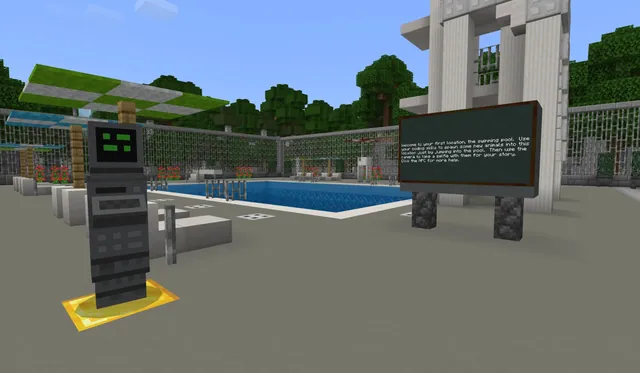
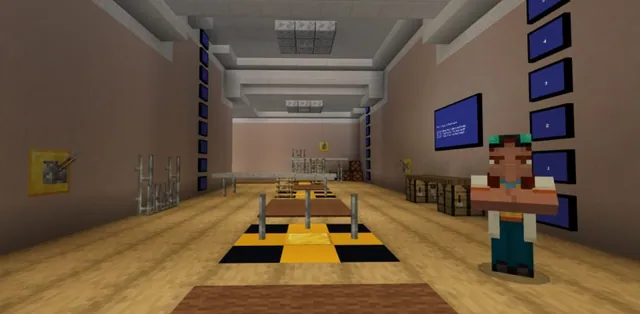
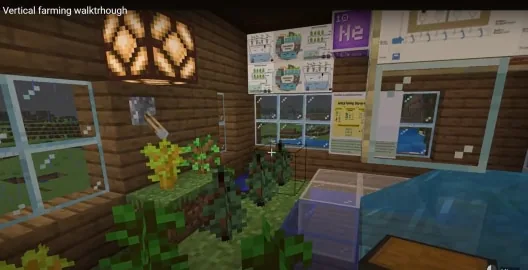
Using a collaborative Minecraft Education environment, learners navigate a custom laboratory setting to locate non-player characters and process posters. Whenever students encounter process statements written in the active voice, they collaborate in teams to convert the text into passive voice constructions, using simple block coding whenever needed to overcome in-game obstacles.
Learning objectives
By the end of this lesson students will be able to:
- Transform active-voice process descriptions into accurate passive-voice sentences.
- Explain key vertical farming methods including aquaponics, hydroponics, and aeroponics using appropriate technical vocabulary.
- Collaborate in teams to navigate a virtual lab and complete tasks assigned by non-player characters.
- Apply simple block coding strategies to solve in-game challenges when necessary.
Blocks and items used in this lesson


Key vocabulary
- Aquaponics
- A food production method that integrates aquatic animal farming with plant cultivation in water.
- Hydroponics
- The process of growing plants without soil by using mineral-rich water solutions.
- Aeroponics
- A technique where plant roots are suspended in the air and nourished with a fine nutrient mist.
- Passive Voice
- A grammatical structure where the subject receives the action, commonly used to describe scientific processes.
- Flow Chart
- A step-by-step diagram illustrating the sequence of actions in a system or process.
Before class
Lesson sequence
Suggested timing: about 60 minutes in total.
- Introduction and Process Analysis10 min
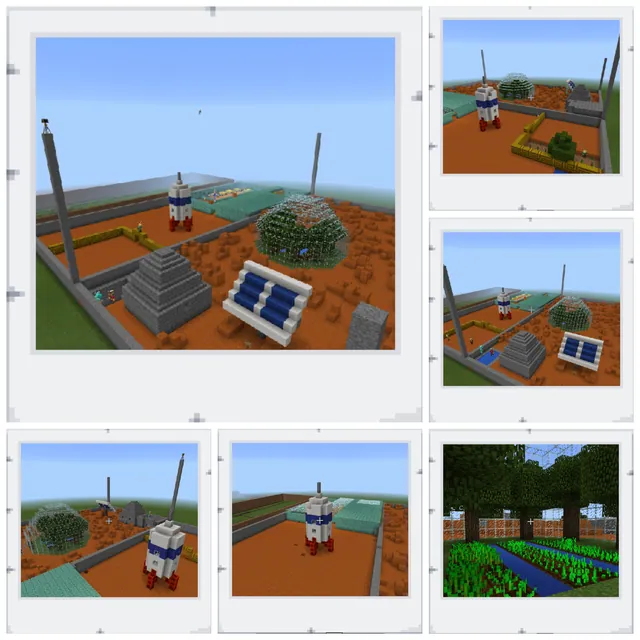
Project the vertical farming world and a vertical farming flow chart on screen. Send students into breakout rooms with designated group leaders to review the diagram and identify the target language needed to describe it.
- Language Practice and Coding Review10 min
Groups practice describing the stages of vertical farming using passive voice structures. Group leaders record vocabulary needs, and teams review basic block coding concepts to prepare for in-game problem solving.
- Virtual Lab Navigation and Poster Tasks25 min
Students navigate the virtual lab and interact with non-player characters. Whenever they discover posters or instructions written in the active voice, learners pause to rewrite the text into the passive voice and justify their choices.
- Debrief, Feedback, and Reflection15 min
Reconvene in the main room to address language challenges, evaluate group collaboration, and distribute reference handouts. Assign the follow-up reflective post for the school blog.
Assessment: success criteria
- Students accurately convert active-voice statements into well-formed passive-voice descriptions.
- Students correctly use terminology related to hydroponics, aquaponics, and aeroponics.
- Teams demonstrate active communication and mutual support while solving in-game tasks and coding problems.
Differentiation
Provide sentence frames and verb form charts to guide learners through the mechanics of passive voice construction.
Challenge advanced learners to implement custom block coding sequences and analyze the climate benefits of vertical farming in their written work.
Knowledge check
5 questions to check understanding after the lesson. Tap an answer to see if it is right; the score appears at the end.
1What is the primary grammar focus of this vertical farming lesson?
Answer: B. The lesson specifically focuses on revising and forming the passive voice to describe processes.
2Which three farming techniques are highlighted in the lesson flow chart?
Answer: A. The source identifies aquaponics, hydroponics, and aeroponics as the core processes depicted in the flow chart.
3What must students do when they encounter an in-game poster written in the active voice?
Answer: C. Students are instructed to pause the game and interact to transform active descriptions into passive voice.
4How can students solve complex challenges within the Minecraft lab?
Answer: A. The lesson includes using simple block coding to solve simple or more complex challenges.
5What follow-up activity is assigned at the end of the lesson?
Answer: B. The teacher assigns a blog post for the school blog where students share their gains and experiences.
Resources
- Lesson package (.zip)Everything the author attached to this lesson in one download.
- How Vertical Farming Can Save WaterBenefits of vertical farming.
- Vertical Farming informationInformation about Vertical Farming.
- Lesson PlanDetailed lesson plan used in an ELT classroom
- VERTICAL FARMING-DESCRIBING A PROCESSA Teacher's Guide for the instructors.
- Vertical Farming-the future of farming.A ppt to facilitate the game.
Frequently Asked Questions
How can the teacher manage multiplayer access if remote sharing limits simultaneous controls?
The teacher displays the world on a shared screen and rotates remote control permissions among breakout groups in turn, allowing each group to participate while maintaining class cohesion.
Why is the passive voice suitable for teaching vertical farming?
Technical and scientific descriptions naturally use the passive voice to focus on system operations and outcomes rather than individual human actors.
Adapted from Vertical Farming is the Future of Farming in view of climate and energy crisis by DIDA PAPALEXIOU on Minecraft Education, last updated Mar 7, 2025. This classroom version, the timings and the quiz were written by 9Minecraft Education.