- Type
- Lesson plan
- Ages
- Ages 8-13
- Duration
- about 1.8 hours (suggested)
- Includes
- Quiz: 5 questions
How can a statue symbolize both the current identity of a country and the challenges it faces in the 21st century?
Overview
In this lesson, students explore what makes their nation unique today and how emerging 21st-century challenges might shape its future identity. By analyzing current cultural symbols alongside pressing modern issues like global warming and technological change, learners evaluate how their country can be thoughtfully represented to the world.
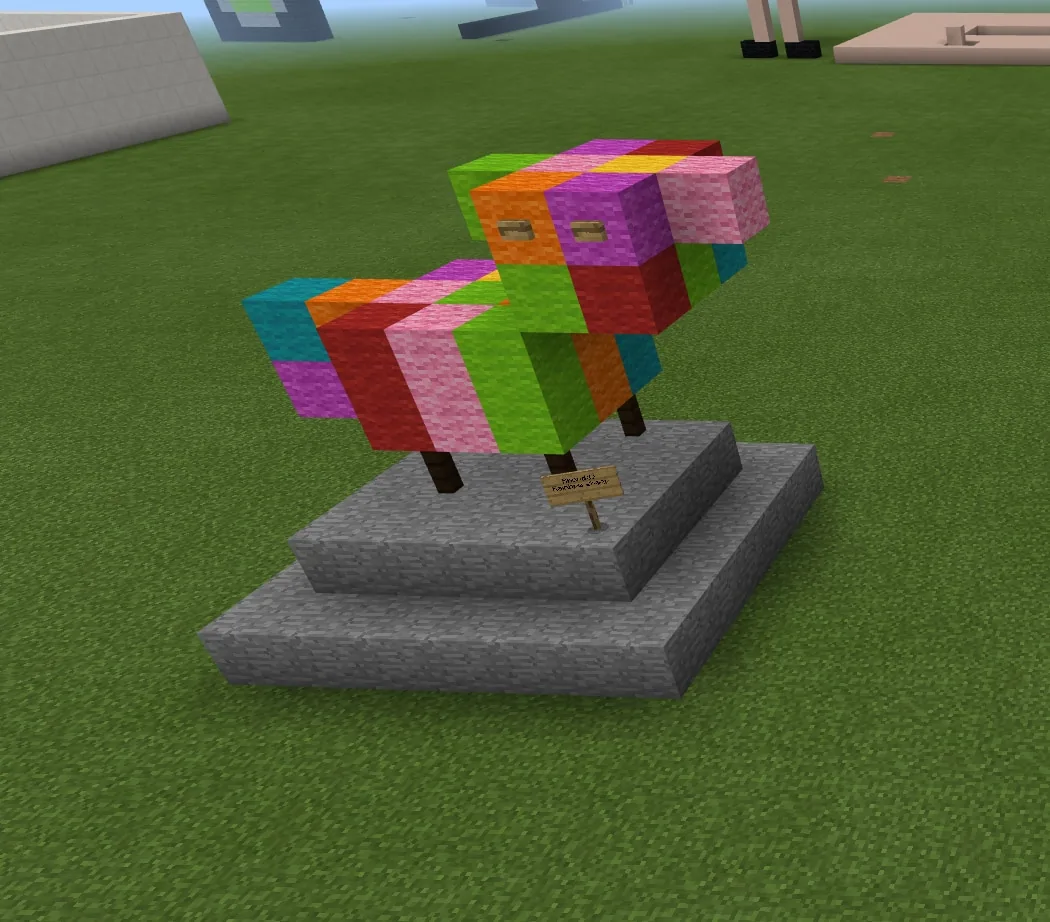
Working individually or collaboratively in a shared Minecraft Education world, students translate their reflections into a symbolic monument. After planning their dimensions and block choices, learners construct their statue within defined boundaries, label it with a sign, critique peer creations, and present their work to classmates or partner schools.
Learning objectives
By the end of this lesson students will be able to:
- Discuss the unique qualities of a country alongside the modern challenges it faces in the 21st century.
- Plan a symbolic monument using sketches, labeled diagrams, charts, or written paragraphs.
- Build a 21st-century national statue within a designated area in a shared Minecraft world.
- Evaluate peer monuments, provide constructive feedback, and refine designs accordingly.
- Present the completed statue and explain its symbolic representation to an audience.
Blocks and items used in this lesson


Key vocabulary
- Symbol
- An object, mark, or visual feature that represents an idea, quality, or identity.
- 21st Century
- The current hundred-year era spanning from the year 2001 through 2100.
- Monument
- A statue or physical structure built to represent a place, people, or significant idea.
- Peer Feedback
- Helpful suggestions and observations shared between students to improve each other's work.
Before class
Lesson sequence
Suggested timing: about 110 minutes in total.
- Class Discussion15 min
Introduce the lesson objectives. In small groups, students discuss what makes their country unique and famous, whether those features will remain unchanged by the end of the 21st century, and what modern problems or issues the nation faces.
- Statue Planning15 min
Students decide on a concept for their 21st-century statue and plan their build on paper. Their plans may include sketches, labeled diagrams, charts, or explanatory paragraphs outlining specific Minecraft block choices and estimated dimensions.
- Minecraft Construction45 min
Students enter a shared Minecraft Education world individually, in pairs, or in small groups. They construct their statue within their assigned space, ensure it reflects their planning, assign it an official name, and place an informational sign next to the base.
- World Tour and Peer Feedback15 min
Learners explore the shared world to view the statues built by their peers. Students exchange constructive feedback and spend time refining their own builds based on the suggestions received.
- Sharing and Presentation20 min
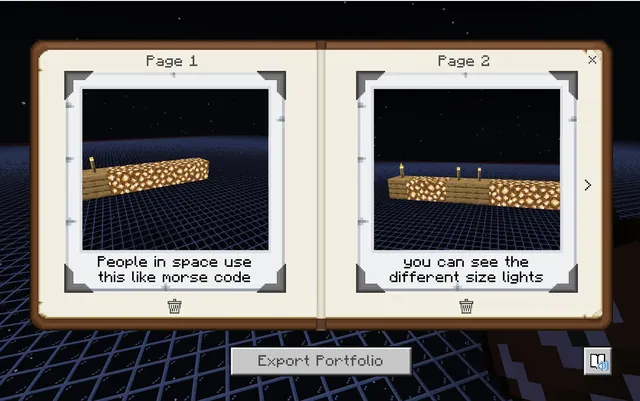
Students capture in-game photographs of their finished statues and compile them into presentations. Learners share their representations and symbolic reasoning with the class, with potential options to export 3D models or present over a video call to a partner school.
Assessment: success criteria
- The student participates in discussions about national identity and 21st-century issues.
- The student produces a clear plan featuring sketches, diagrams, or written explanations with block choices.
- The student constructs a statue in Minecraft that symbolically represents the country in the 21st century.
- The student labels the statue with a name on an adjacent sign.
- The student offers feedback to peers, refines their build, and presents their work.
Differentiation
Provide a pre-marked building boundary and a guided planning sheet with prompts to help students select appropriate blocks and symbols.
Encourage fast finishers to export their completed build as a 3D model or prepare an extended presentation comparing their ideas with another region.
Knowledge check
5 questions to check understanding after the lesson. Tap an answer to see if it is right; the score appears at the end.
1What is the main purpose of the statue students create in this lesson?
Answer: B. The lesson requires students to design a statue representing their country now and in the 21st century.
2What must students place next to their completed statue in Minecraft?
Answer: A. The teacher instructions specifically state that students should name their statues and create a sign to place next to them.
3Which formats are suggested for students to plan their monument before building?
Answer: D. The planning phase suggests students draft sketches, labeled diagrams, a chart, or a written paragraph.
4What should students do after touring their classmates' monuments in the shared world?
Answer: C. Students are asked to provide feedback to one another and use that feedback to refine their builds.
5What duration does the lesson plan suggest allocating for the building phase in Minecraft?
Answer: B. The source recommends giving students between 30 and 60 minutes to complete their build.
Frequently Asked Questions
Can students work collaboratively or must they build alone?
Both options work well. The lesson states that students can work individually, in pairs, or in small collaborative groups to construct their monuments.
How can build space be managed in a shared multiplayer world?
Teachers can establish clear boundaries by designating specific build plots in advance or having students construct a fence around their workspace before starting on the statue.
What options exist for sharing the final monuments?
Students can take in-game screenshots to create slide presentations, export their builds as 3D models, or share their rationales during a video call with a partner school.
Adapted from Think of the Future by james protheroe on Minecraft Education, last updated Oct 25, 2017. This classroom version, the timings and the quiz were written by 9Minecraft Education.