How can we work as an effective team to compete fairly and creatively in a Minecraft league?
Overview
Organizing a school-based esports competition provides a structured way for students to explore collaboration, sportsmanship, and personal growth. By establishing teams, creating tournament ladders, and defining community goals, learners develop social and emotional skills in a structured, competitive setting.
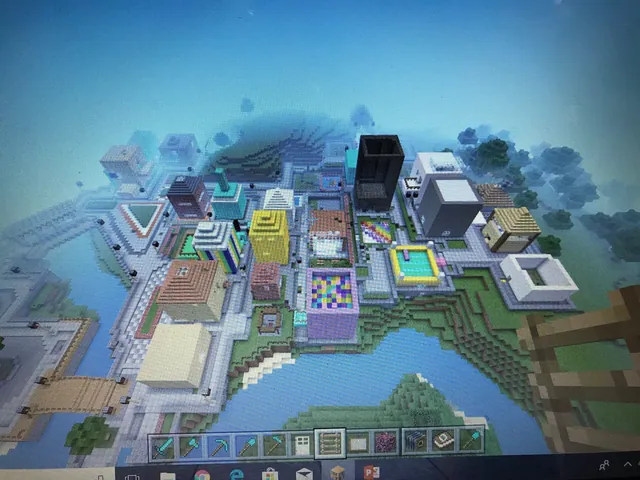
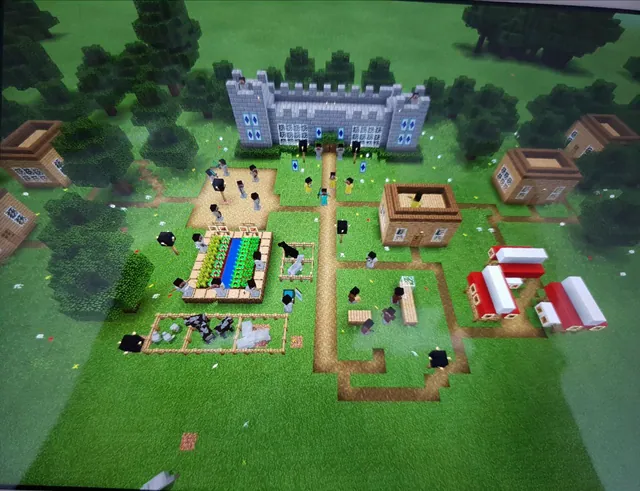
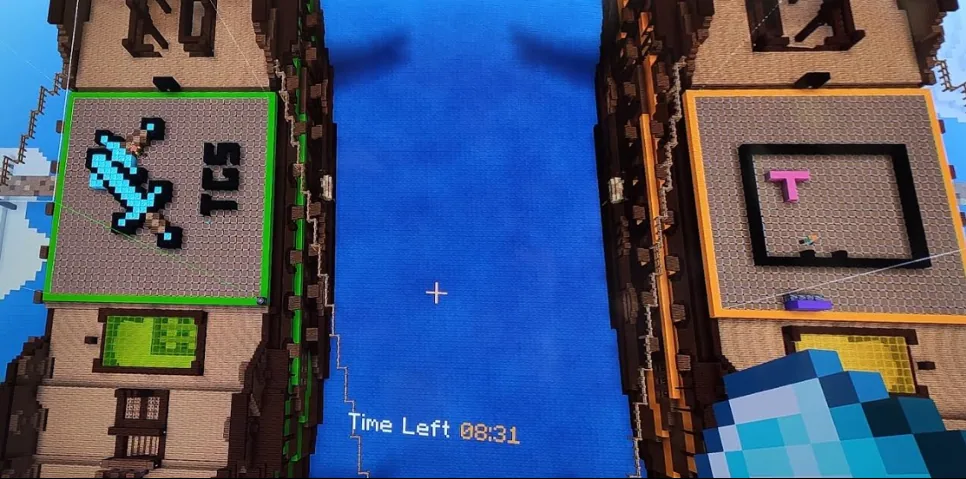
Minecraft Education serves as the competition platform using a Make and Model world. Teams draft their concepts on grid paper using labeled scientific drawings and then work together under a 15-minute time limit to replicate their designs block for block inside the game.
Learning objectives
By the end of this lesson students will be able to:
- Establish a functional team identity by choosing a name, submitting reflections, and creating a tournament card.
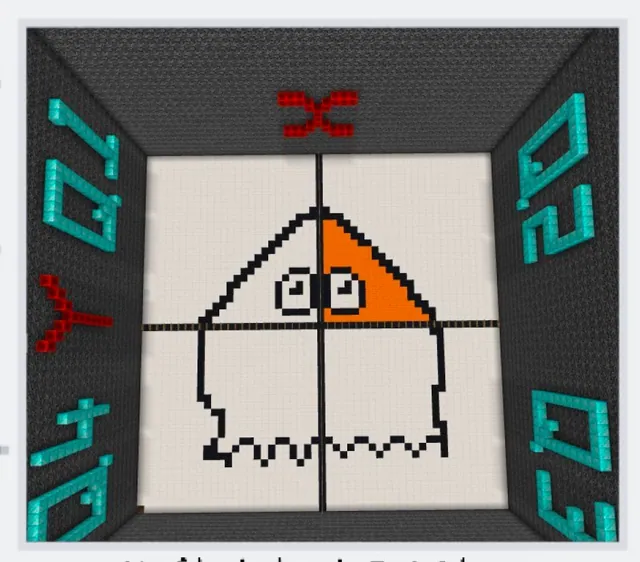
- Draft a build schematic on 32x32 grid paper using clear labels and annotations.
- Replicate a paper design accurately within a timed in-game build challenge.
- Demonstrate positive sportsmanship by collaborating effectively and supporting peer teams during matches.
Blocks and items used in this lesson


Key vocabulary
- Esports
- Organized competitive gaming where teams or individuals play games under set rules.
- League ladder
- A tournament ranking board or schedule showing team standings and match pairings.
- Grid paper
- Paper printed with a grid of squares used to map out block builds before placing them in-game.
- Sportsmanship
- Respectful, fair, and encouraging behavior toward teammates and opponents.
Before class
Lesson sequence
Suggested timing: about 15 minutes in total.
- League Orientation and Team Formation
Place students into teams of 4 to 5 or allow them to choose their groups. Each student submits a short personal reflection stating why they want to join the league and what they hope to gain from the experience.
Teams select a team name and create a display card to place on the tournament ladder.
- Grid Paper Design Phase
Teams receive 32x32 grid paper to plan their first build challenge: a team logo. Students must map out their design square by square and use scientific drawing techniques, such as labeling key parts, to earn league points.
- Head-to-Head Build Challenge15 min
Two teams enter the Make and Model world for a 15-minute build match. Both teams work against the clock to build their planned logo in the game. The round is judged on how faithfully the Minecraft build matches the original paper design.
- Spectating, Analyzing, and Supporting
Teams that are not actively competing during a round take on alternative roles. They may work on future grid paper designs, observe and analyze match play, practice build concepts, or support competing classmates to earn team points.
- Scoring and Reflection
Award league points for planning quality, match performance, and positive sporting behavior. Hold a brief class discussion addressing the advantages and challenges of working with others under timed pressure.
Assessment: success criteria
- The student submitted an individual reflection describing personal goals for the league.
- The team produced a complete 32x32 grid paper drawing with labeled elements.
- The team successfully translated their paper design into Minecraft during the 15-minute match.
- Students demonstrated positive collaboration and sportsmanship toward peers during competition.
Differentiation
Provide partially outlined grid templates or assign specific team roles, such as timekeeper or materials planner, to help groups coordinate.
Invite experienced students to help manage the league by organizing tournament schedules, marketing matches, or proposing new build prompt topics.
Knowledge check
5 questions to check understanding after the lesson. Tap an answer to see if it is right; the score appears at the end.
1What is the recommended team size for the school esports league?
Answer: B. The lesson specifies that students are organized into groups of 4 to 5.
2What grid dimensions do students use to plan their first team build on paper?
Answer: C. Teams use 32x32 grid paper to map out their initial team logo design.
3How long does each head-to-head build competition last?
Answer: A. The build challenge runs as a 15-minute timed competition between two teams.
4How is the winning build of the initial challenge decided?
Answer: B. Judges determine the winner based on how well the in-game build replicates the paper plan.
5What should non-competing teams do while another match is in progress?
Answer: D. Non-competing teams can work on paper designs, spectate and support other teams, analyze play, or practice builds.
Frequently Asked Questions
Can our school league play directly against another school in the same world?
Players outside your school tenancy cannot join the same Minecraft world. To compete across different schools, run the matches at the same time in parallel, separate Make and Model worlds.
What additional build challenges can teams tackle after the logo competition?
You can challenge teams to build a sustainable house, an object that represents their school, a tool designed to help someone, or prompts suggested and brainstormed by the students themselves.
Adapted from School e-sports by Victorian Minecraft Innovators on Minecraft Education, last updated Sep 10, 2021. This classroom version, the timings and the quiz were written by 9Minecraft Education.