What do the architecture and daily functions of the Roman baths reveal about ancient Roman culture and beliefs?
Overview
Public baths were central to community life, hygiene, and religion across the ancient Roman world. Through this lesson, students explore the famous archaeological complex in Bath, United Kingdom, examining how its architecture and the temple of Sulis Minerva served citizens over two thousand years ago.
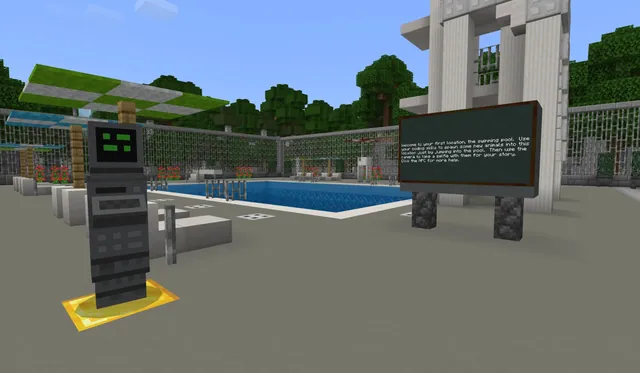
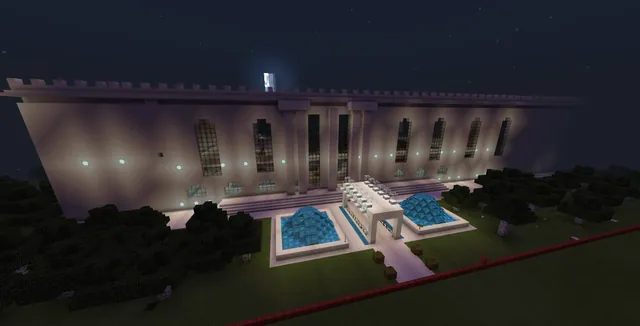
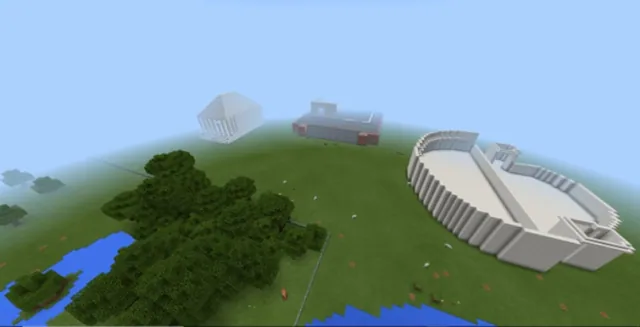
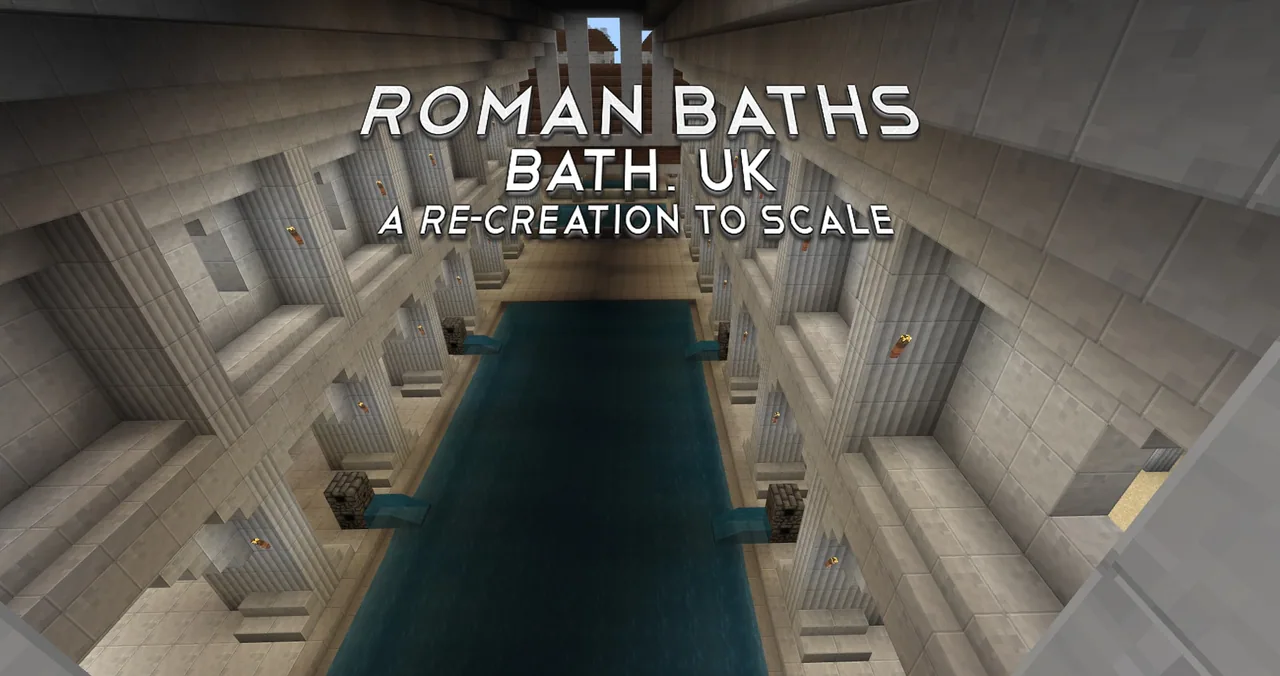
Using a to-scale Minecraft reconstruction equipped with custom textures and non-player characters, learners investigate historical design firsthand. Students evaluate the model's accuracy against archaeological evidence, place NPCs to stage historical narratives, and write essays reflecting on Roman cultural norms.
Learning objectives
By the end of this lesson students will be able to:
- Examine the architectural scale, layout, and structure of the ancient Roman baths in Bath, UK.
- Analyze the cultural and religious importance of the bath complex and the temple of Sulis Minerva.
- Position and configure custom NPCs to dramatize historical narratives of Roman daily life.
- Evaluate the physical accuracy of the digital reconstruction using archaeological findings.
Blocks and items used in this lesson


Key vocabulary
- Roman baths
- Public bathing, social, and wellness complexes central to daily life across ancient Roman territories.
- Temple of Sulis Minerva
- A sacred religious sanctuary constructed alongside the thermal hot springs in Bath, UK.
- NPC
- A non-player character placed in a virtual world to share dialogue, historical information, or role-play scenes.
- To-scale build
- A physical or digital model constructed to match the precise real-world dimensions and proportions of an original site.
Before class
Lesson sequence
- Site Exploration
Students walk through the to-scale Minecraft recreation of the Roman baths and the temple of Sulis Minerva to study their layout as they appeared two millennia ago.
- Archaeological Calculation
Learners compare in-game dimensions with documented archaeological findings to determine and verify the structural accuracy of the virtual build.
- Historical NPC Storytelling
Students place custom NPCs throughout the baths to create a Roman narrative, assigning dialogue and roles that reflect social ranks and everyday activities.
- Essay Synthesis
Students write analytical essays detailing what the architectural design, religious spaces, and social areas reveal about Roman societal values.
Assessment: success criteria
- Student accurately identifies the primary sections of the bath complex and the temple of Sulis Minerva.
- Student uses archaeological research to evaluate the structural accuracy of the virtual model.
- Student creates NPC scenes that depict realistic Roman cultural interactions and societal roles.
- Student produces a written essay explaining ancient Roman culture, architecture, and religion based on the site.
Differentiation
Provide students with a pre-selected list of archaeological dimensions and guided sentence stems for their NPC dialogue.
Ask advanced learners to calculate percentage variance between real archaeological measurements and the in-game block dimensions.
Knowledge check
5 questions to check understanding after the lesson. Tap an answer to see if it is right; the score appears at the end.
1Where is the preserved Roman bath complex featured in this lesson located?
Answer: B. The lesson is based on the well-preserved Roman bath complex located in Bath, UK.
2Which temple is reconstructed alongside the bath complex in the virtual world?
Answer: A. The source identifies the temple of Sulis Minerva as part of the original design in the recreation.
3How do students illustrate daily Roman social life inside the Minecraft environment?
Answer: C. Students place custom NPCs to build an ancient Roman narrative reflecting society.
4Approximately how long ago was the original bath complex designed and built?
Answer: C. The lesson states that students explore the baths as they looked over 2,000 years ago.
5What method do students use to verify the accuracy of the virtual reconstruction?
Answer: D. Students calculate the build accuracy using historical research and archaeological evidence.
Frequently Asked Questions
Is a world file provided directly with this lesson listing?
No, the original source marks the downloadable world as unavailable, so teachers will need to source or create a corresponding Roman baths world containing custom NPCs.
What school subjects does this lesson plan cover?
The activity connects World Languages, History, and Religion and Philosophy by examining the culture and architecture of ancient Rome.
What custom features are included in the lesson build?
The lesson uses a custom resource pack along with custom non-player characters to represent ancient Roman life accurately.
Adapted from Roman Baths: Bath, UK by Ben Spieldenner on Minecraft Education, last updated May 14, 2020. This classroom version, the timings and the quiz were written by 9Minecraft Education.