- Type
- Lesson plan
- Ages
- Ages 8-13
- Includes
- Quiz: 5 questions
How can we design an efficient, concealed electrical circuit that delivers solar power to every home in a community?
Overview
Electrical circuits allow energy generated from various sources to be transported and transformed into light and power. In this lesson, students explore sustainable energy concepts by treating daylight sensors as solar panels that distribute power across an entire community.
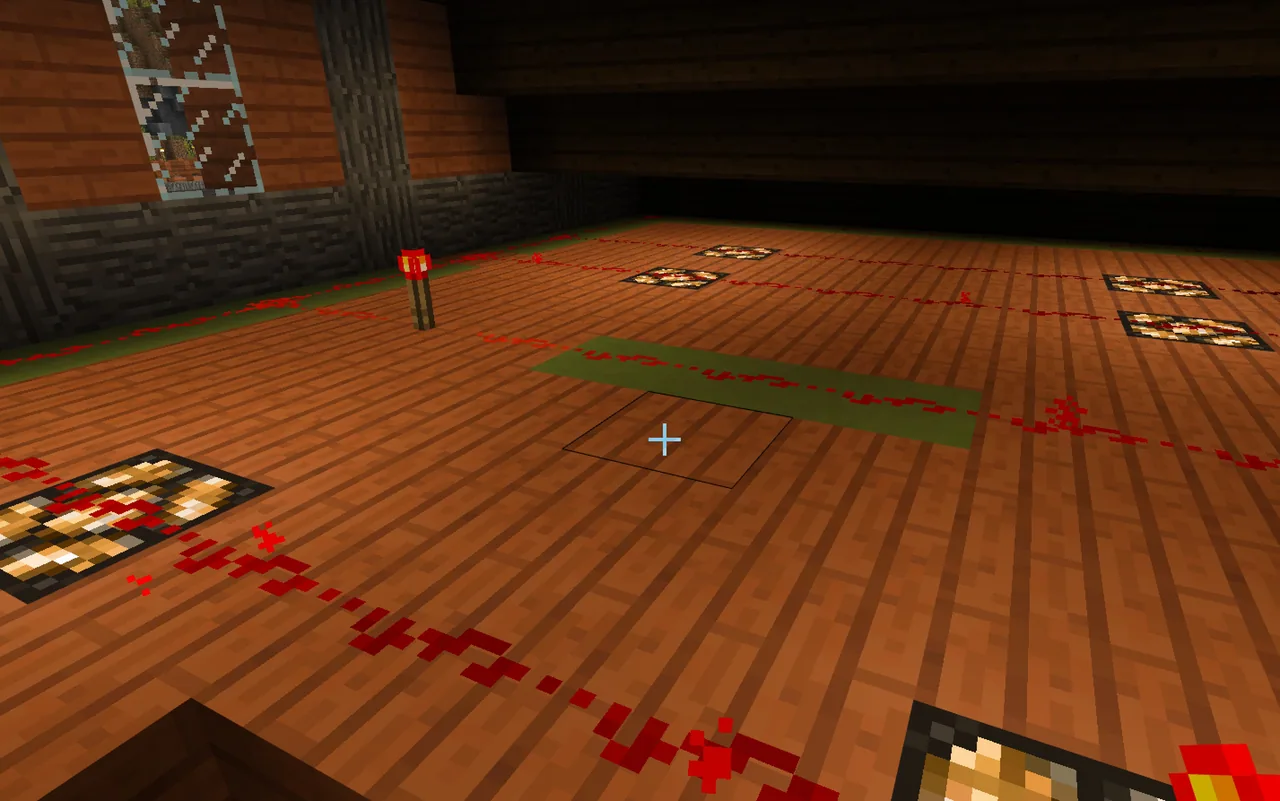
Using Minecraft Creative mode, learners select a village world, chart building layouts on grid paper, and install concealed redstone lines. Each home is equipped with a personal light switch, mirroring real-world municipal wiring and power management.
Learning objectives
By the end of this lesson students will be able to:
- Explain how electrical circuits transfer energy from a power source to produce light.
- Map out a village layout and circuit routes on grid paper before building.
- Construct a working redstone lighting network using daylight sensors as the primary power source.
- Install individual switches inside each building so residents can control their own lights.
- Conceal redstone wiring beneath the ground or inside building structures.
Blocks and items used in this lesson


Key vocabulary
- Daylight Sensor
- A Minecraft block that detects sunlight and emits a redstone signal, functioning like a real-world solar panel.
- Redstone Dust
- A material placed in lines to carry power between energy sources, switches, and electrical components.
- Circuit
- A complete path through which electrical energy travels from a source to an output device.
- Switch
- A control mechanism that opens or closes an electrical circuit to turn devices on or off.
Before class
Lesson sequence
- Seed Research and World Setup
Students search online for a Minecraft village seed. Once chosen, they create a new Infinite world in Creative mode using their selected seed and locate the village site.
- Grid Paper Mapping
Before building, students map the layout of the village on grid paper. They should take note of building heights and plan how to route electrical wiring up to roofs and beneath streets.
- Circuit Design and Installation
Students connect daylight sensors to village light fixtures using redstone lines. They must bury circuits underground or hide them in structures so the wiring remains invisible from outside.
- Interior Switching and Inspection
Each house must have at least one interior switch installed, allowing occupants to independently turn their lights off. Students test their systems and inspect neighbor circuits to compare layout strategies.
Assessment: success criteria
- The village lighting system successfully receives power from daylight sensors.
- Redstone circuits are concealed underground or hidden within architectural features.
- Every house in the village contains a functional switch to control its own lights.
- The student completed an accurate pre-build map of the village circuit on grid paper.
Differentiation
Allow students to wire a small cluster of two or three houses before expanding across the entire settlement.
Challenge students to route wiring across multi-story buildings with varied roof elevations while keeping all connections hidden.
Knowledge check
5 questions to check understanding after the lesson. Tap an answer to see if it is right; the score appears at the end.
1Which Minecraft block acts like a solar panel to power the village circuit?
Answer: B. The lesson uses daylight sensors as the renewable solar power source for the lighting network.
2What should students use to plan their electrical layout before building in Minecraft?
Answer: A. The activity requires students to map out the village and circuits on grid paper first.
3Where should the redstone circuits be placed throughout the village?
Answer: D. The guidelines state that wiring should not be visible and should aim to run underground.
4What requirement must each house or building meet regarding lighting control?
Answer: B. Every house needs its own switch so residents can turn lights off if they choose.
5Which world settings must students choose when generating their build site?
Answer: A. The instructions specify creating an Infinite world in Creative mode using an online seed.
Frequently Asked Questions
Why do students need to search for a seed online instead of using a flat world?
Generating a natural village from a seed creates realistic terrain challenges, such as variable building heights and street paths, forcing students to plan how municipal wiring travels underground and into roofs.
What concept does this lesson reinforce in science?
It demonstrates that energy from environmental sources can generate electricity, travel through a circuit, and transform into another form, such as light.
Adapted from Redstone Circuits by Rebecca Elliott on Minecraft Education, last updated Dec 1, 2017. This classroom version, the timings and the quiz were written by 9Minecraft Education.