- Type
- Lesson plan
- Grade
- Early years (Pre-K to Grade 2)Primary (Grades 3-5)Middle school (Grades 6-8)High school (Grades 9-12)
- Ages
- All ages
- Duration
- 1 hour
- Level
- Intermediate
How do engineering, aerodynamics, and teamwork work together to maximize a racing car's performance?
Overview
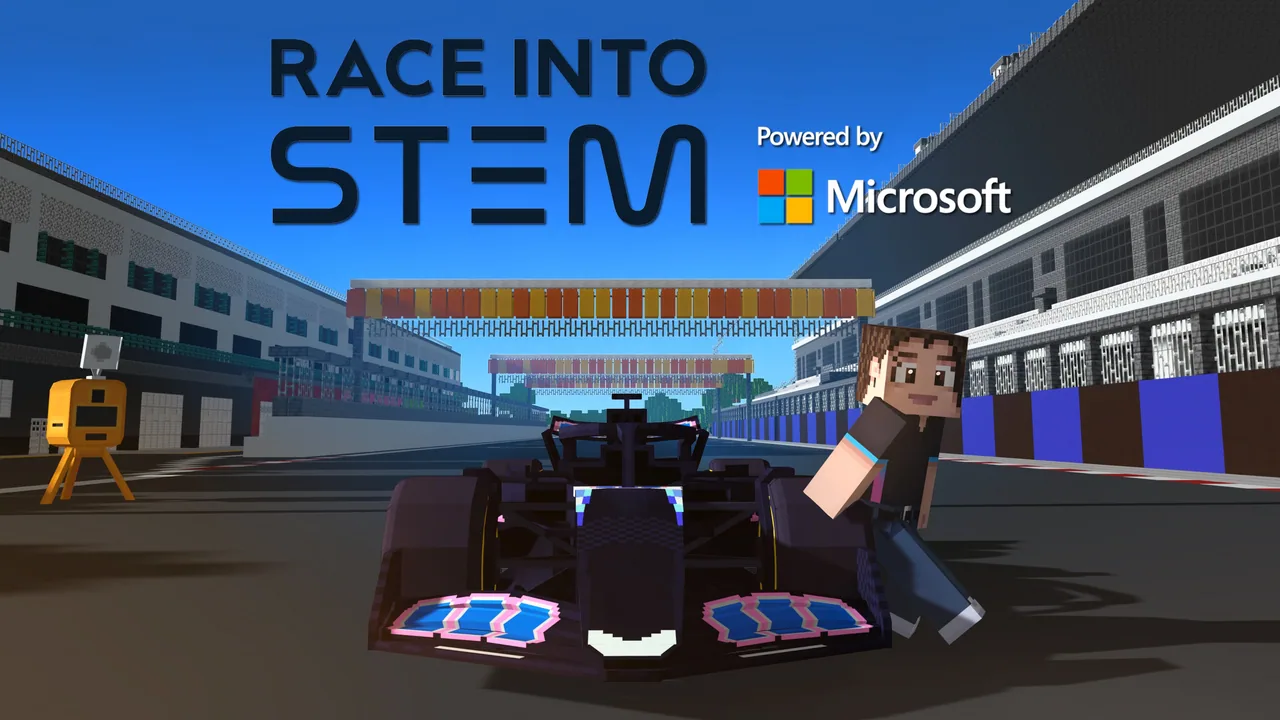
Formula 1 racing relies heavily on STEM disciplines to design vehicles that balance raw speed with control, stability, and safety. By analyzing how physical forces and specialized materials influence racing outcomes, students examine the vital link between science, engineering, and competitive motorsports.
In this interactive world, students tour specialized racing facilities, including a wind tunnel, an engineering office, and a material clean room. Using tools like interactive tuning panels and a wheel gun, learners test aerodynamic adjustments, examine carbon fiber properties, and collaborate under time constraints during pit stop drills.
Learning objectives
By the end of this lesson students will be able to:
- Explain how aerodynamics, downforce, and drag influence car speed and cornering stability.
- Analyze how lightweight carbon fiber materials improve vehicle performance.
- Iterate car design configurations in a simulated wind tunnel using interactive controls.
- Identify key STEM career roles that support a professional motorsport team.
- Demonstrate coordination and accuracy during a time-constrained pit stop challenge.
Blocks and items used in this lesson


Key vocabulary
- Aerodynamics
- The study of how air flows around moving solid objects.
- Downforce
- A downward aerodynamic force created by car surfaces that increases tire grip on the track.
- Drag
- Air resistance that opposes the forward motion of a vehicle, slowing it down.
- Material Science
- The study of physical substances to discover how properties like strength and weight affect engineering.
- Optimization
- The process of adjusting different variables to find the best possible balance and performance.
Before class
Lesson sequence
Suggested timing: about 70 minutes in total.
- Introduction to Racing Physics10 min
Lead an introductory discussion on the role of physics and engineering in Formula 1 racing. Define key principles including aerodynamics, downforce, and drag so students understand the physical forces they will encounter in the simulation.
- STEM Careers and Engineering Office20 min
Direct students to enter the world and speak with in-game characters representing various motorsport professions, such as aerodynamicists and race support engineers. Next, have them explore the Engineering Office to observe how computer models and simulation tools guide vehicle design decisions.
- Wind Tunnel and Material Testing25 min
Have students use the wind tunnel's interactive panel to modify wings and side pods, observing how different setups balance top speed against downforce. Afterwards, direct them to the Clean Room to examine carbon fiber manufacturing and learn why high strength-to-weight ratios matter in high-performance design.
- Pit Stop Challenge and Reflection15 min
Organize students into small groups to complete the timed pit-stop activity using the wheel gun tool, emphasizing speed and precision. Finish with a reflective discussion evaluating which adjustments improved car performance and how team roles, including the CFO, affect track success.
Assessment: success criteria
- Students can explain the trade-offs between downforce and speed during cornering and straightaways.
- Students can describe why carbon fiber is favored over heavier materials in car construction.
- Students demonstrate measurable improvements in speed and accuracy during repeated pit-stop drills.
- Students can identify at least two STEM career roles and explain how they contribute to a race team.
Differentiation
Pair students together during the wind tunnel and pit stop activities so they can share navigation and interactive tool operations.
Challenge students to explain how budgetary decisions made by a team's Chief Financial Officer (CFO) might limit or shape vehicle engineering choices.
Knowledge check
5 questions to check understanding after the lesson. Tap an answer to see if it is right; the score appears at the end.
1Why is downforce important for a car traveling through sharp corners on a racetrack?
Answer: B. Downforce creates downward aerodynamic pressure that helps tires grip the road during high-speed turns.
2What is the primary purpose of adjusting components in the wind tunnel simulation?
Answer: A. Engineers use the wind tunnel to find the optimal compromise between stability and forward velocity.
3Which property makes carbon fiber particularly useful for racing car components?
Answer: A. Carbon fiber provides strong structural support while keeping the vehicle exceptionally light.
4Which tool do students use to practice precision and timing during the pit-stop drill?
Answer: D. The source identifies the wheel gun as the specific tool used during pit stop practice.
5Which team member manages the financial choices that influence racing operations and engineering budgets?
Answer: A. The CFO is responsible for executive financial planning and budgetary decisions across the racing organization.
Resources
- Lesson package (.zip)Everything the author attached to this lesson in one download.
- Student WorkbookSupporting workbook for classroom use.
Frequently Asked Questions
Do students need prior knowledge of motorsport racing to participate?
No prior racing knowledge is required. The introductory discussion gives students the basic physics terminology they need before they test components in the game.
Can the pit stop activity be completed individually?
Yes, individual students can operate the wheel gun, but pairing them up helps highlight the communication and coordination needed in real-world pit crews.
Adapted from Race into STEM with Microsoft by Lifeboat Network on Minecraft Education, last updated Feb 4, 2025. This classroom version, the timings and the quiz were written by 9Minecraft Education.