How can traditional Anishinaabe teachings and respectful relationships with the land guide us to support communities in need and live in harmony?
Overview
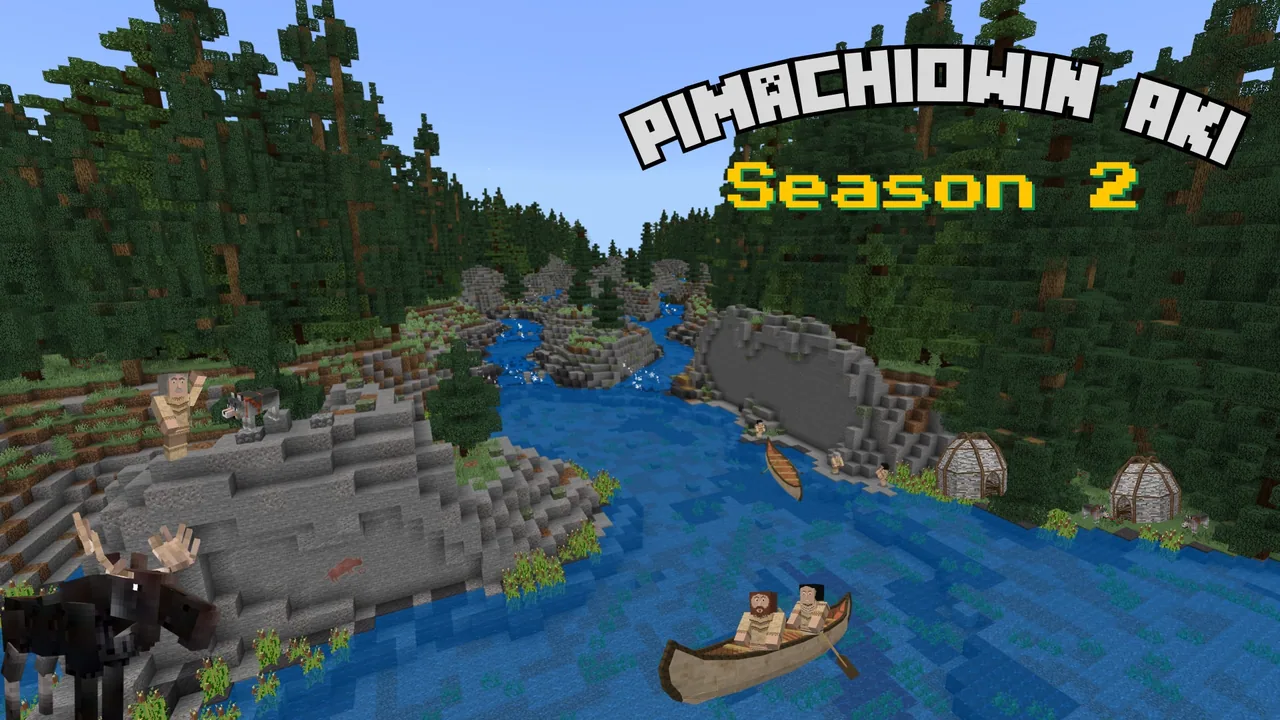
In this historical journey set along Miskweyaabziibi, the Bloodvein River, students travel back in time to a pre-contact Anishinaabe setting following a harsh winter. Guided by Elders and Knowledge Carriers, learners explore the river as a living teacher while discovering how traditional technologies, respectful harvesting, and environmental observation sustain communities through hardship.
Using Minecraft Education, students navigate by dog sled and birch bark canoe, gather food and medicines, document stories through pictographs and petroforms, and deliver vital aid to a struggling village. Finally, students return to the present era to construct an accessible gathering space that models peace, cooperation, and reciprocal relationships with the land.
Learning objectives
By the end of this lesson students will be able to:
- Navigate the Bloodvein River using traditional travel methods and guidance from Elders and Knowledge Carriers.
- Apply traditional ecological knowledge to harvest fish, gather plants, and navigate marshlands while taking only what is needed.
- Explain how pictographs, petroforms, and oral teachings preserve cultural knowledge, wayfinding, and memory across generations.
- Construct an accessible gathering place in Minecraft accompanied by a visitor guide explaining design choices rooted in peace and cooperation.
Blocks and items used in this lesson
 Birch Boat
 Wolf
 Trident
 Sweet Berries
 Book and Quill
Key vocabulary
- Miskweyaabziibi
- The Anishinaabe name for the Bloodvein River, which acts as a living teacher and vital travel route.
- Portage
- Carrying canoes and supplies overland between waterways or around river hazards.
- Pictograph
- A visual design painted on rock surfaces used for storytelling, wayfinding, and passing knowledge.
- Petroform
- Human-made arrangements of stones on bedrock used to record enduring stories and cultural teachings.
- Knowledge Carrier
- A respected community member who holds and shares traditional teachings, practices, and oral histories.
Before class
Lesson sequence
Suggested timing: about 190 minutes in total.
- Winter Travel and Canoe Building45 min
Students launch into the pre-contact world at the close of a harsh winter. They travel by dog sled while observing wildlife behaviors, such as aggressive wolves, before learning to craft a birch bark canoe and deciding whether to paddle or portage based on river conditions and advice from Knowledge Carriers.
- Stories, Wayfinding, and Harvesting60 min
Learners examine pictographs and petroforms as enduring records of memory and navigation, creating their own representations of personal learning. Along the route, they practice sustainable spearfishing, pick berries, and venture into marshland to gather medicinal plants while honoring the principle of taking only what is required.
- Delivering Aid to the Village35 min
Students arrive at the struggling village to deliver gathered food and medicine. They collaborate to construct protective defenses and supportive camp features to ensure the village can recover and survive after the brutal winter season.
- Summative Build: The Gathering Place50 min
Returning to the present era at the historic battle site along the river, students plan and construct an accessible gathering place. Working individually or in groups, they incorporate motifs of peace, mutual care, and land stewardship, documenting their design choices in a visitor guide.
Assessment: success criteria
- Student portfolio or Book and Quill documents personal pictographs, petroforms, and key insights learned from Elders during river navigation.
- Student successfully delivers harvested food and medicines to the struggling community and assists with defensive village improvements.
- Final gathering place build reflects traditional teachings of peace, cooperation, and environmental care, with clear design accessibility for all visitors.
- A completed visitor guide explains the deliberate structural choices and cultural connections embedded in the gathering place.
Differentiation
Allow students who find Minecraft controls or navigation challenging to team up with a partner for canoe travel and share documentation in a single Book and Quill.
Challenge advanced students to write an expanded visitor guide entry detailing how their gathering place design protects the surrounding ecological systems for future generations.
Knowledge check
5 questions to check understanding after the lesson. Tap an answer to see if it is right; the score appears at the end.
1What is Miskweyaabziibi?
Answer: B. The source identifies Miskweyaabziibi as the Bloodvein River, which serves as a living teacher throughout the journey.
2Why were the wolves in the forest behaving unusually aggressively during the sled journey?
Answer: A. The source states that the harsh and long winter impacted forest residents and made the wolves unusually aggressive.
3What is the primary cultural principle taught when gathering fish and marsh plants?
Answer: C. The guiding ideas emphasize taking only what is needed to maintain sustainable, reciprocal relationships with living systems.
4What two tools are painted or built in stone along the river to preserve enduring stories and wayfinding?
Answer: D. Students explore pictographs painted on rock and petroforms arranged in stone to study communication, wayfinding, and memory.
5What must students create alongside their final gathering place build in the present day?
Answer: A. The assessment criteria require students to write a visitor guide explaining how their site welcomes all peoples and remains accessible.
Resources
- Lesson package (.zip)Everything the author attached to this lesson in one download.
- Educators’ Guide: Pimachiowin Aki Season 2: The Bloodvein RiverContains preparation steps, guidance through each activity, and appendices including a world map, vocabulary, curriculum connections, and extensions.
Frequently Asked Questions
Do my students need to play Season 1 before starting Season 2?
No. While Season 1 and Season 2 share cultural connections and setting along the Bloodvein River, both experiences are independent and can be completed in any sequence.
What tools are used to capture student learning inside the world?
Students document their progress, pictographs, petroforms, and reflections primarily using the in-game Camera, Portfolio, and Book and Quill.
How long should I plan for this lesson?
The source indicates an overall duration of more than three hours, making it ideal to divide into multiple sessions across travel, harvesting, village aid, and the summative build.
Adapted from Pimachiowin Aki Season 2: The Bloodvein River by Logics Academy on Minecraft Education, last updated Jul 30, 2026. This classroom version, the timings and the quiz were written by 9Minecraft Education.