How can humans use design, technology, and marine protection to support the survival of Kororā and their coastal ecosystem?
Overview
In this lesson, students explore the Pōhatu Penguin Colony to learn about Kororā (Little Blue Penguins), the coastal environments that support them, and the conservation challenges they encounter from predators, human activities, and climate change. Through interactions with non-player characters based on real conservation staff, learners examine how marine reserves protect biodiversity and consider the broader ecological impact of food web disruptions.
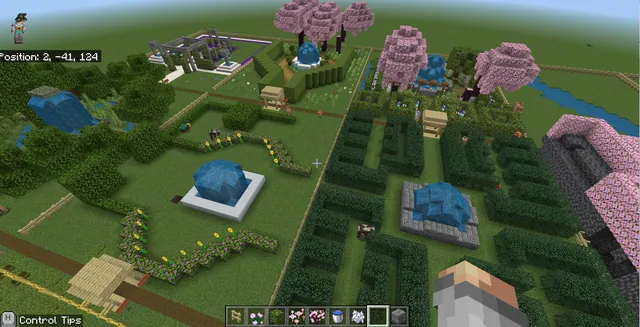
Inside Minecraft Education, students navigate a digital model based on real-world Land Information New Zealand data to observe wildlife and compare protected marine zones with unprotected areas. Learners document native species using in-game tools, prototype artificial penguin nest boxes to provide safe shelter, and reconstruct a damaged hut into an eco-friendly tour centre that balances tourism with wildlife rehabilitation.
Learning objectives
By the end of this lesson students will be able to:
- Describe key physical and behavioral adaptations of Kororā, including burrow nesting and waterproof feathers.
- Compare protected marine reserves with unprotected waters to explain how conservation zones support biodiversity.
- Design and prototype an artificial penguin nest box in Minecraft that addresses predator defense, shelter, and ventilation.
- Construct a sustainable tour centre featuring eco-friendly materials and a wildlife rehabilitation space to balance tourism and conservation.
- Document native coastal wildlife using in-game observation tools and evaluate the consequences of removing a species from the food web.
Blocks and items used in this lesson


Key vocabulary
- Kororā
- The Little Blue Penguin native to coastal areas such as the Pōhatu Penguin Colony.
- Marine reserve
- A protected coastal or ocean area where wildlife and natural habitats are shielded to maintain biodiversity.
- Nest box
- An artificial shelter engineered to protect penguins from predators and adverse weather.
- Food web
- A network of interconnected feeding relationships among living organisms within an ecosystem.
- Biotic factors
- The living parts of an environment that influence an ecosystem, including prey and predators.
- Abiotic factors
- The non-living physical components of an environment, such as landforms, rocky shores, and weather.
Before class
Lesson sequence
Suggested timing: about 210 minutes in total.
- Colony Exploration and Habitat Analysis45 min
Introduce Kororā and the coastal landscape of Pōhatu. Students enter the Minecraft world, which replicates the real-world terrain using Land Information New Zealand data, and explore features such as rocky shores, coastal cliffs, and natural burrows to identify living and non-living factors that support wildlife.
- Conservation Fieldwork and Marine Reserves45 min
Students locate and speak with non-player characters representing Pōhatu conservation workers to learn about monitoring, rescue, and guided eco-tours. Afterward, learners dive underwater and travel along the coast to compare marine reserve zones with unprotected waters, noting differences in fish populations and habitat condition.
- Wildlife Documentation and Food Web Discussion30 min
Learners use in-game recording tools to take photographs of native seabirds, penguins, and marine animals, logging their observations in a journal. The class then gathers to discuss biodiversity and predict the ecological consequences if Kororā or a key predator were removed from the coastal food web.
- Penguin Nest Box Challenge45 min
Students establish a design brief outlining what Kororā need in an artificial shelter, focusing on durability, airflow, and defense against land predators. Working in Minecraft, students prototype their nest boxes, test their placement along the terrain, and evaluate their designs against penguin survival criteria.
- Eco-Friendly Tour Centre Rebuild45 min
Learners examine a damaged hut on the site and collaborate to rebuild it into a sustainable tour facility. Students incorporate eco-friendly building materials, renewable energy, water collection, and a designated penguin rehabilitation area that allows visitors to learn without harming the surrounding habitat.
Assessment: success criteria
- Student accurately identifies key adaptations of Kororā and explains how removing an organism disrupts the coastal food web.
- Student contrasts protected marine reserves with unprotected areas and describes how protection affects biodiversity.
- Student designs an artificial nest box in Minecraft that provides durability, ventilation, and predator protection.
- Student rebuilds the damaged hut into an eco-friendly tour centre containing sustainable systems and a wildlife rehabilitation space.
Differentiation
Provide a guided checklist for non-player character dialogues and encourage the use of Immersive Reader for in-game text prompts.
Have students evaluate the ethical implications of conservation technology and design visitor-management features that further minimize human impact on the colony.
Knowledge check
5 questions to check understanding after the lesson. Tap an answer to see if it is right; the score appears at the end.
1What is another name for the Kororā penguin featured in this lesson?
Answer: B. Kororā is the indigenous New Zealand name for the Little Blue Penguin.
2Which adaptation helps Kororā survive along the coastal environment?
Answer: A. Kororā use waterproof feathers for swimming and nest in underground burrows to stay protected.
3What critical features must students consider when designing a penguin nest box?
Answer: C. Nest boxes must keep Kororā safe from predators, provide shelter and airflow, and withstand coastal weather.
4When exploring the Minecraft world, what difference should students notice in marine reserve areas?
Answer: D. Marine reserves safeguard aquatic ecosystems, resulting in healthier habitats and larger fish populations compared to unprotected areas.
5What should students include when rebuilding the damaged tour hut into a sustainable centre?
Answer: B. The rebuild challenge asks students to create an eco-friendly facility with sustainable features and an area for penguin rehabilitation.
Frequently Asked Questions
What real-world data was used to create this Minecraft environment?
The Minecraft replica of the Pōhatu Penguin Colony was constructed using official topographic data provided by Land Information New Zealand (LINZ) in collaboration with Pōhatu Penguins and Technology Education New Zealand.
How can teachers organize this lesson across multiple class periods?
Because the total duration exceeds three hours, teachers can divide the lesson into distinct units: one for colony exploration and marine reserve comparisons, one for wildlife documentation, and one or more sessions for the nest box and tour centre building challenges.
Adapted from Pōhatu Penguins: Protecting Our Kororā by Iain Cook-Bonney on Minecraft Education, last updated Aug 20, 2025. This classroom version, the timings and the quiz were written by 9Minecraft Education.