- Type
- Lesson plan
- Ages
- Ages 8-13
How can a community work together to protect limited natural resources and prevent societal collapse?
Overview
Human communities rely on fragile balances of natural resources to endure over time. By examining the real-world history and population collapse of Rapa Nui, also known as Easter Island, students explore the critical importance of sustainability, resource conservation, and collaborative planning.
In Minecraft, learners enter a modified island world set to Survival mode where trees and basic farm plots are strictly limited. Working together in larger groups, students must divide responsibilities, track daily resource consumption, document their progress through photos and captions, and evaluate what strategies are necessary to keep a settlement alive.
Learning objectives
By the end of this lesson students will be able to:
- Research the history and societal collapse of Easter Island (Rapa Nui).
- Identify essential natural resources needed for community survival.
- Collaborate in a group to sustainably manage limited supplies in Survival mode.
- Document and reflect on group strategies for environmental conservation.
Blocks and items used in this lesson


Key vocabulary
- Rapa Nui
- The indigenous name for Easter Island, an isolated island in the Pacific Ocean.
- Limited Resources
- Materials found in nature that exist in finite quantities and can run out if overused.
- Sustainability
- Using resources in ways that meet current needs without depleting them for the future.
- Collapse
- A sudden breakdown or severe decrease in the population and structure of a society.
Before class
Lesson sequence
- Map Study and Historical Research
Ask students to locate Easter Island on a global map and imagine life on an isolated tropical island. Provide selected readings detailing the history of Rapa Nui and the theories surrounding the collapse of its population.
- Survival Planning
Organize students into medium or whole-class groups rather than small pairs. Have teams discuss resource allocation, decide group roles, and make a collective plan to sustainably manage the scarce farmland and trees present on the island.
- Island Survival Simulation
Launch the Easter_Island_Rapa_Nui map in Survival mode. Students cooperate over a teacher-determined cycle of days and nights, relying on fixed inventory slots to capture in-game photographs, record captions, or maintain written journal entries of their daily choices.
- Debrief and Guided Reflection
Gather the class to review outcomes. Discuss which resources proved essential, what challenges threatened their survival, how the group maintained supplies, and what they would do differently in a future attempt.
Assessment: success criteria
- Student accurately identifies the primary factors that led to resource depletion on Rapa Nui.
- Group demonstrates collaborative resource sharing without completely exhausting farms and timber.
- Daily log or journal entries document daily survival challenges and supply management.
- Written or verbal reflection explains what resources were critical and evaluates group sustainability choices.
Differentiation
Allow students to take specific, defined roles within their team, such as journal recorder or food monitor, to keep tasks manageable.
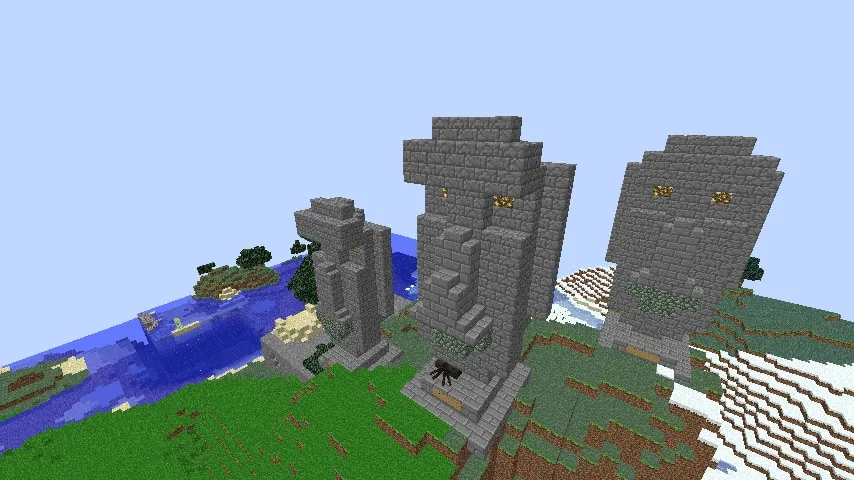
Switch the world to Creative mode and challenge students to reconstruct the Easter Island Moai heads using the provided pixel art angles worksheet as a template.
Knowledge check
5 questions to check understanding after the lesson. Tap an answer to see if it is right; the score appears at the end.
1What is another name for Easter Island?
Answer: B. The source identifies Easter Island by its indigenous name, Rapa Nui.
2Which game mode is used during the main island activity?
Answer: C. Students work collaboratively to endure conditions on the island in Survival Mode.
3Why does the lesson suggest forming larger groups rather than very small groups?
Answer: B. The source recommends avoiding groups that are too small because poor collaboration contributed to the island's historical collapse.
4How do students document their experience each day and night?
Answer: C. Students use fixed inventory slots to capture photos and write captions each day and night, or keep an island diary.
5What extension activity is suggested for students switching to Creative mode?
Answer: C. The source suggests switching to Creative mode to rebuild the Easter Island heads using a pixel art template.
Resources
Frequently Asked Questions
What pre-existing resources are on the map?
The Easter_Island_Rapa_Nui world is modified from an island village template with the village removed, leaving a few farms for food and added trees for basic timber.
How long should the survival simulation run?
The teacher determines the number of in-game days and nights based on available class time and the desired challenge level for student groups.
Adapted from Limited Resources: Rapa Nui by Mark Grundel on Minecraft Education, last updated Nov 21, 2016. This classroom version, the timings and the quiz were written by 9Minecraft Education.