- Type
- Lesson plan
- Subject
- History & Social Studies
- Ages
- Ages 11-18
How have treaty agreements between Indigenous nations and governments changed over time, and what role does education play in understanding these rights?
Overview
This lesson explores the history of treaty rights between Indigenous nations and European settlers from pre-contact to modern times. Students examine the historical experiences of Indigenous communities, analyze how agreements and government relationships evolved, and evaluate how treaties have been upheld or contested throughout history.
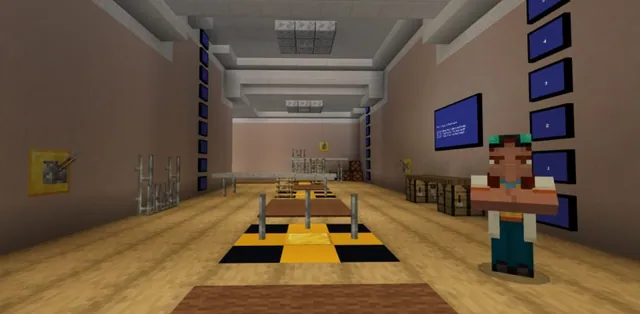
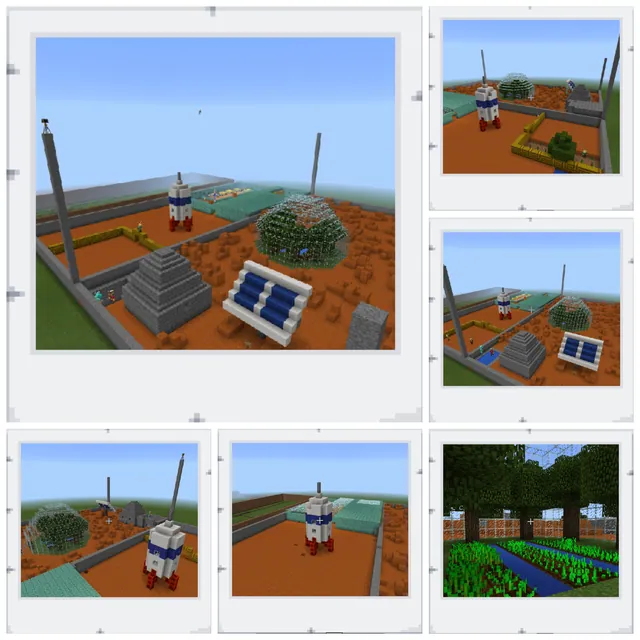
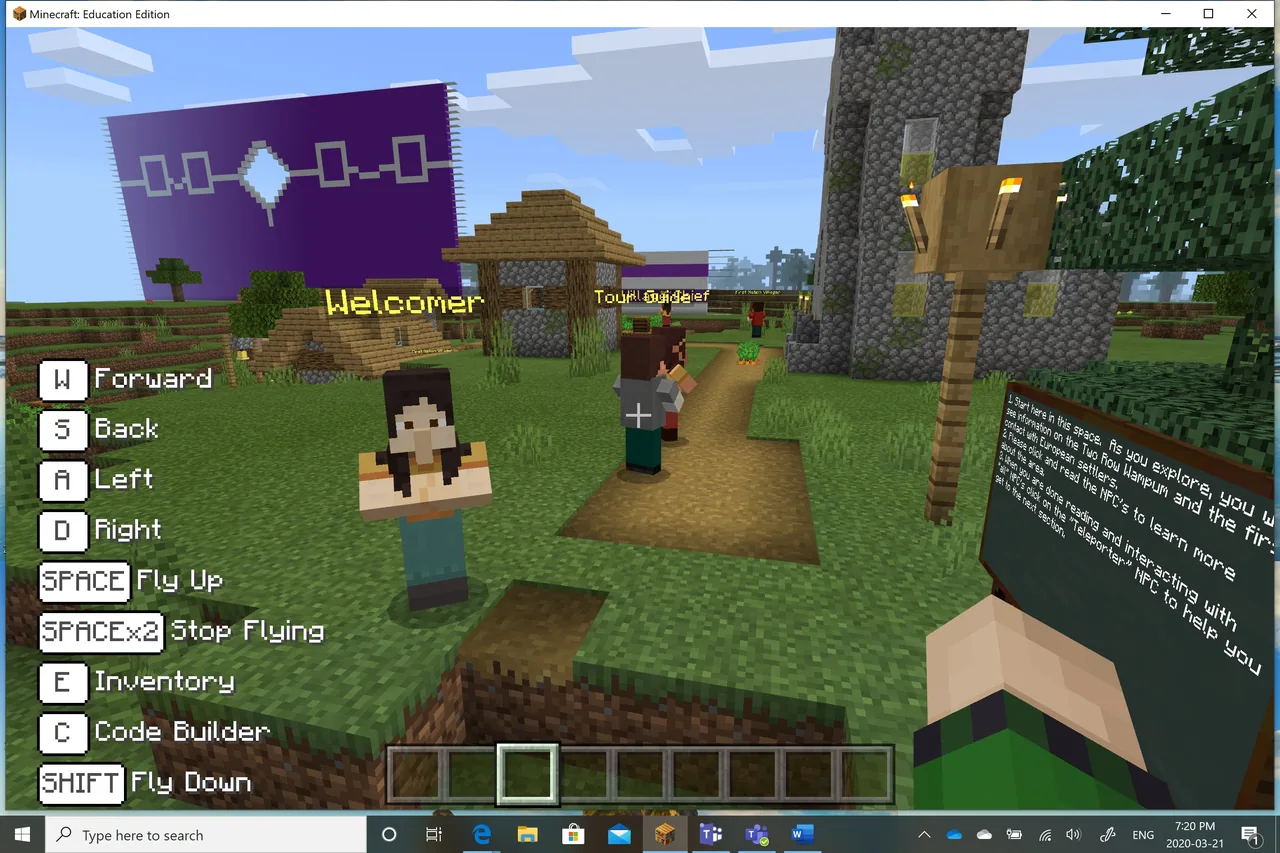
Minecraft Education serves as an interactive museum and storytelling medium. After conducting literature research and taking detailed notes, students plan and construct an in-game exhibit dedicated to a specific treaty, using non-player characters (NPCs) to communicate essential historical facts and context to visitors.
Learning objectives
By the end of this lesson students will be able to:
- Investigate historical and modern treaty agreements made between Indigenous peoples and European or Canadian governments.
- Record detailed research notes on the historical impacts and experiences surrounding a specific treaty.
- Plan and construct an interactive Minecraft exhibit illustrating the context of a chosen treaty.
- Program non-player characters with informational text to guide and educate visitors.
- Reflect on how historical treaties, conflicts, and modern governance continue to shape community rights.
Blocks and items used in this lesson


Key vocabulary
- Treaty
- A formal, legally binding agreement made between sovereign groups or governments establishing rights, land use, and mutual responsibilities.
- Pre-contact
- The historical era before European settlers and explorers arrived in the lands inhabited by Indigenous peoples.
- Non-Player Character (NPC)
- An in-game character that does not move or fight, used to display text, links, or dialogue to visiting players.
Before class
Lesson sequence
- Timeline Investigation & Discussion
Introduce the lesson with a historical treaty timeline. Lead a whole-class discussion examining agreements between Indigenous nations and European settlers across pre-contact and post-contact periods, considering how these treaties have been honored over time.
- Treaty Research & Note-Taking
Students select a specific treaty or group of treaties to investigate. Using curated articles and digital note-taking tools equipped with reading support features, students highlight important details and record the historical impacts on Indigenous communities.
- Exhibit Planning & Walkthrough
Students tour sample builds or previous student projects to explore ways to represent historical events visually in Minecraft. Individually or in groups, learners outline a floor plan and visual concept for their own treaty build.
- Minecraft Construction & NPC Dialogue
Working in the game, students construct their treaty representation. They draft informational dialogue on an NPC planning sheet and program non-player characters to explain the significance of the treaty to any player who visits the build.
- Learning Reflection
Students complete a reflective assessment, using a video recording tool or structured prompt to explain what they discovered about treaty rights, government relationships, and the importance of community education.
Assessment: success criteria
- Quality and completeness of research notes gathered from informational texts.
- Historical relevance and thoughtfulness of the physical Minecraft build.
- Accuracy and clarity of the explanatory text embedded within in-game NPCs.
- Depth of student reflection regarding the evolution and recognition of treaty rights.
Differentiation
Allow students to utilize text-to-speech tools and provide pre-structured sentence starters for their NPC dialogue sheets.
Have advanced learners analyze modern government adaptations or specific legal disputes connected to their treaty and present multiple perspectives using distinct NPCs.
Knowledge check
5 questions to check understanding after the lesson. Tap an answer to see if it is right; the score appears at the end.
1What is the primary role of NPCs in this Minecraft lesson?
Answer: C. Students write and assign dialogue to NPCs so they can teach visitors about the chosen treaty.
2Which time period is studied alongside post-contact agreements in this lesson?
Answer: B. The source explicitly states the lesson explores treaty rights from pre-contact to post-contact eras.
3What should students focus on when taking notes on their selected treaty?
Answer: A. Students research specific treaties to understand their historical terms and impacts on Indigenous communities.
4How do students complete the reflection phase of the assignment according to the lesson?
Answer: D. The teacher evaluates learning through a dedicated reflection rubric and video response tool.
5Which digital feature is highlighted in the source to assist students while reading research articles?
Answer: A. The source notes that students found the immersive reader helpful for understanding article content.
Resources
- Lesson package (.zip)Everything the author attached to this lesson in one download.
- Note Taking TemplateNote Taking word doc.
- Note Taking RubricRubric for note taking.
- Minecraft Build RubricRubric for Minecraft Build
- Reflection of Learning RubricIf you choose to use Flipgrid for responding after the build is done.
Frequently Asked Questions
Do I need an official downloadable world to deliver this lesson?
No downloadable world file is supplied; teachers can use a basic flat or open world, or have students tour past student builds before creating their own exhibits.
How is student learning evaluated across the project?
Assessment is divided into three distinct components: research and note-taking skills, the quality of the Minecraft build and NPC dialogue, and a final learning reflection evaluated with a rubric.
How do visitors learn about treaties while touring the Minecraft world?
Visitors interact with customized non-player characters (NPCs) placed throughout the build, which display written summaries and historical details drafted by the students.
Adapted from Indigenous Rights in Canada by Kristopher Sandberg on Minecraft Education, last updated Nov 20, 2020. This classroom version, the timings and the quiz were written by 9Minecraft Education.