- Type
- Lesson plan
- Subject
- History & Social Studies
- Ages
- Ages 11-13
- Duration
- about 2.8 hours (suggested)
- Skills
- Project Based Learning
- Includes
- Quiz: 5 questions
How did early colonial settlement shape Australian society, and what were the consequences of the choices colonists made?
Overview
This history and civics project introduces students to early Australian colonisation leading up to federation. Learners begin by researching local traditional Aboriginal lands, historical 18th-century occupations, and early pastoral life, confronting the realities, dilemmas, and impacts of European arrival on Indigenous populations.
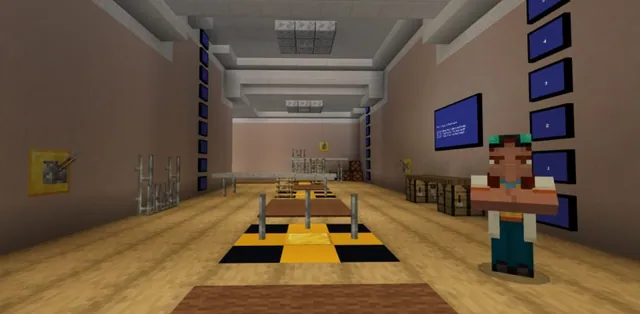
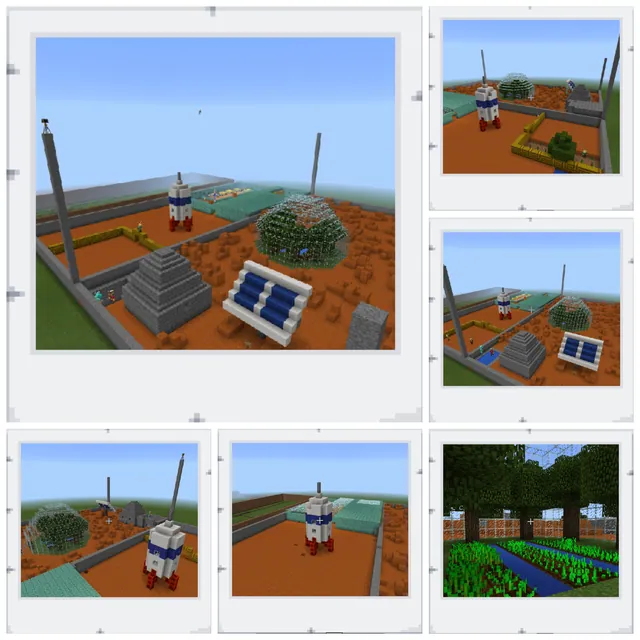
In Minecraft survival mode, small teams receive an assigned plot arranged around a central hub. Using limited initial supplies requested in advance, groups must establish self-sustaining towns with shelter, transport, food, trade goods, and perimeter boundaries while reflecting on how their presence affects existing inhabitants.
Learning objectives
By the end of this lesson students will be able to:
- Explain the motives, daily occupations, and resource challenges of 18th-century colonists in Australia.
- Examine the impact of European settlement on Aboriginal and Torres Strait Islander peoples and discuss alternative choices colonists could have made.
- Draft a formal request letter and resource manifest to secure permission to establish a settlement.
- Construct a collaborative survival town that includes shelter, food and water sources, trade infrastructure, transport, and protective boundaries.
Blocks and items used in this lesson


Key vocabulary
- Colonisation
- The process of establishing foreign control over a territory and its people, often leading to settlement and resource extraction.
- Federation
- The union of separate colonies or states into a single unified nation under a central government.
- Occupation
- A person's principal work or profession, particularly roles needed to build an early settlement.
- Resource Manifest
- A planned inventory of essential materials and equipment needed for a voyage or settlement.
- Villagers
- In-game non-player characters representing existing inhabitants already living on the land.
Before class
Lesson sequence
Suggested timing: about 170 minutes in total.
- Historical Research and Role Selection45 min
Students research the traditional Aboriginal landholders of their school's area and watch episodes of Outback House. In small teams, they examine 18th-century trades and assign specific occupations to each team member based on what skills would most benefit a frontier community.
- Application to the Governor30 min
Each team writes a formal letter to the Governor applying for permission to explore and settle. The application must justify their purpose and include a collaborative list of ten essential starter supplies needed for their journey.
- Settlement Briefing15 min
Gather students on the floor to explain the scenario: they are arriving as colonists instructed to establish towns on assigned land plots. Explain the settlement requirements, survival rules, and the reward conditions for timely log-off routines.
- Survival Town Construction60 min
Teams spawn into their spoke plot and open their starter chests containing their requested items. In survival mode, students gather materials and construct their settlement, ensuring each member has a house, stable food and water sources, two trading products, boundary fences, and road or rail transport leading out from the town.
- Wrap-Up, Reflection, and Rewards20 min
Call time and ensure all groups log off and seat together within five minutes to earn a bonus item for the next session. Lead a classroom debrief examining resource isolation, Aboriginal and Torres Strait Islander perspectives, and how students chose to interact with any villagers encountered on their plots.
Assessment: success criteria
- Letter to the Governor provides a reasoned argument for settlement and a complete list of ten practical starting supplies.
- Town includes individual houses for all team members, protected boundaries, and working food and water systems.
- Settlement features at least two distinct income sources for trade and a rail or road line extending outward.
- Student contributions in post-build debriefs reflect empathy and awareness of Aboriginal and Torres Strait Islander rights and colonial impacts.
Differentiation
Provide a curated list of common 18th-century trades and suggested starting items to help teams complete their letter to the Governor.
Challenge advanced teams to build advanced trade infrastructure and formulate written diplomatic guidelines governing relations with nearby settlements and native villagers.
Knowledge check
5 questions to check understanding after the lesson. Tap an answer to see if it is right; the score appears at the end.
1What prerequisite must teams complete before being granted access to settle their land in Minecraft?
Answer: B. Teams must write a letter to the Governor requesting permission to settle along with a list of ten essential supplies before entry is approved.
2How is the classroom Minecraft survival world laid out?
Answer: C. The source specifies that the world is designed like a wheel with a hub and spokes containing eight plots of land.
3Which feature is a mandatory requirement for each team's completed settlement?
Answer: D. The performance expectations state that settlements must include a road and rail transport system extending a small distance beyond the community.
4What incentive encourages teams to wrap up promptly and sit together on the floor?
Answer: B. Teams who log off and assemble on the floor within five minutes may request a chosen item for their chest prior to the next lesson.
5What critical historical perspective must teachers ensure is examined during the lesson reflection?
Answer: A. The source requires multiple perspectives to be discussed, specifically highlighting Aboriginal and Torres Strait Islander rights, isolation, and existing inhabitants.
Frequently Asked Questions
Do I need an official custom world download to teach this lesson?
No. You can easily recreate the wheel-and-spoke layout in a standard survival world by placing eight marked plots radiating outward from a central meeting hub.
What happens if a group submits an incomplete letter to the Governor?
Hold their access to Minecraft until they revise their letter and supply manifest, reinforcing the standard that thoughtful colonial planning was required before departure.
How do villagers in Minecraft represent historical themes in this activity?
Villagers can prompt discussions about pre-existing inhabitants, leading students to consider how their colonial towns encroached on, ignored, or displaced people already present on the land.
Adapted from Hoosland by Kynan Elliott on Minecraft Education, last updated Aug 20, 2018. This classroom version, the timings and the quiz were written by 9Minecraft Education.