- Type
- Lesson plan
- Subject
- Climate & Sustainability
- Topics
- Climate Science
- Grade
- Early years (Pre-K to Grade 2)Primary (Grades 3-5)Middle school (Grades 6-8)High school (Grades 9-12)
- Ages
- All ages
- Duration
- 1 hour
- Level
- Beginner
How do Earth's tilt and changing climate conditions affect the Arctic Ocean and the wildlife adapted to live there?
Overview
In this lesson, students investigate the Arctic Ocean, examining its global geography, harsh polar climate, and role within Earth's interconnected ocean basins. Through hands-on demonstrations using globes and paper-wrapped beakers, learners discover how axial tilt prevents direct sunlight from reaching polar regions and test how reflective ice surfaces influence global heat absorption.
Students then examine how declining sea ice threatens polar wildlife, focusing on polar bear adaptations and survival needs. Supported by presentation slides and a downloadable companion world, learners connect the principles of climate change directly to habitat loss and animal behavior.
Learning objectives
By the end of this lesson students will be able to:
- Locate the Arctic Ocean and identify its bordering continents and coordinate positions.
- Demonstrate how Earth's axial tilt and orbit limit direct sunlight in the Arctic.
- Model the albedo effect to explain how melting sea ice accelerates ocean warming.
- Research polar bear adaptations and describe how decreasing sea ice disrupts their habitat.
Blocks and items used in this lesson


Key vocabulary
- albedo effect
- The ability of light-colored surfaces, such as sea ice, to reflect solar energy back into space.
- axial tilt
- The angle at which Earth is tipped on its rotational axis, causing uneven sunlight and seasonal changes.
- sea ice
- Frozen ocean water that naturally expands during cold winters and contracts during warmer summer months.
- adaptation
- A physical trait or behavior that enables an organism to survive in its specific environment.
Before class
Lesson sequence
Suggested timing: about 60 minutes in total.
- Global Oceans & Arctic Geography10 min
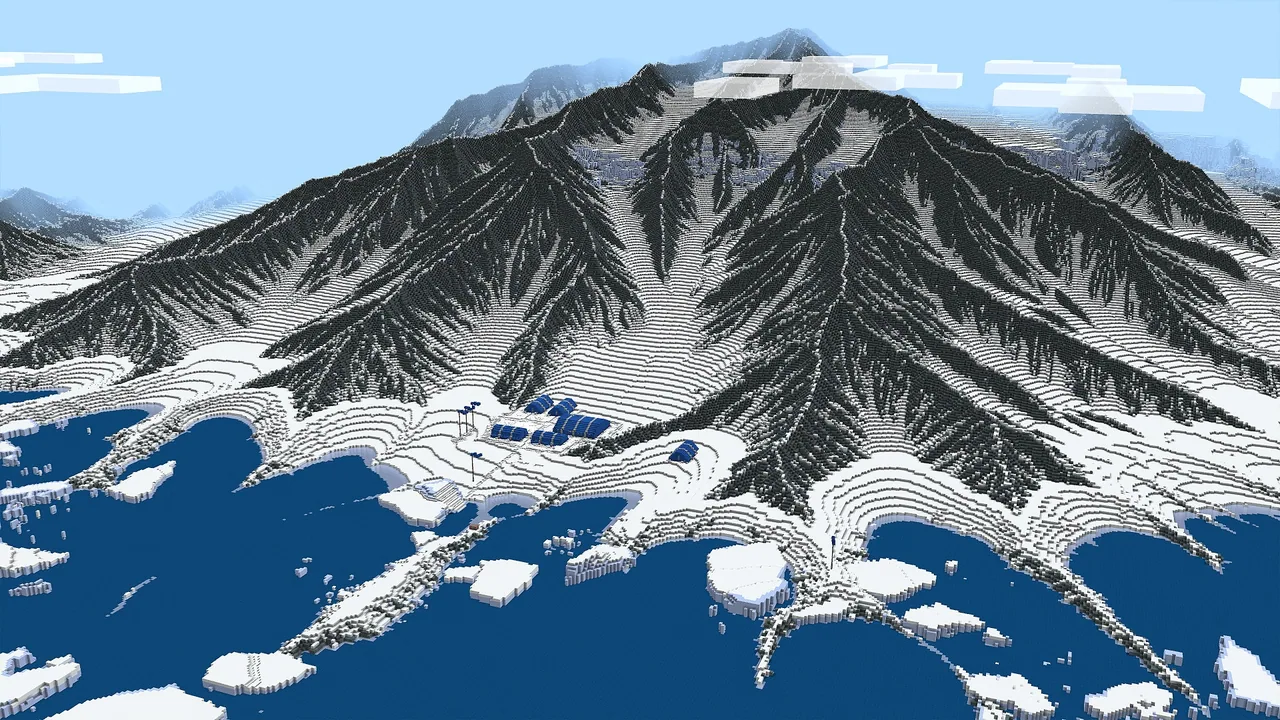
Introduce the idea that all five world oceans are connected. Have student pairs use world maps and atlases to locate the Atlantic, Pacific, Indian, Southern, and Arctic oceans. Display the image of the Arctic Ocean to observe visual clues about temperature, and locate its coordinates and bordering continents.
- Sunlight and Tilt Demonstration15 min
Explain that the Arctic experiences brief two-month summers near 0 degrees Celsius and winters down to -40 degrees Celsius. Have students shine a torch on a tilted globe while orbiting the light source to observe how the Arctic never receives direct sunlight, keeping the sun low on the horizon throughout the year.
- Albedo Effect Investigation15 min
Conduct the beaker investigation by securing white paper to one water-filled beaker and black paper to another. Place both in sunlight or near a heat source, measure the temperature changes, and discuss how dark ocean water absorbs heat while bright sea ice reflects it away, noting that Arctic sea ice has declined rapidly since 1979.
- Polar Bear Adaptation Research15 min
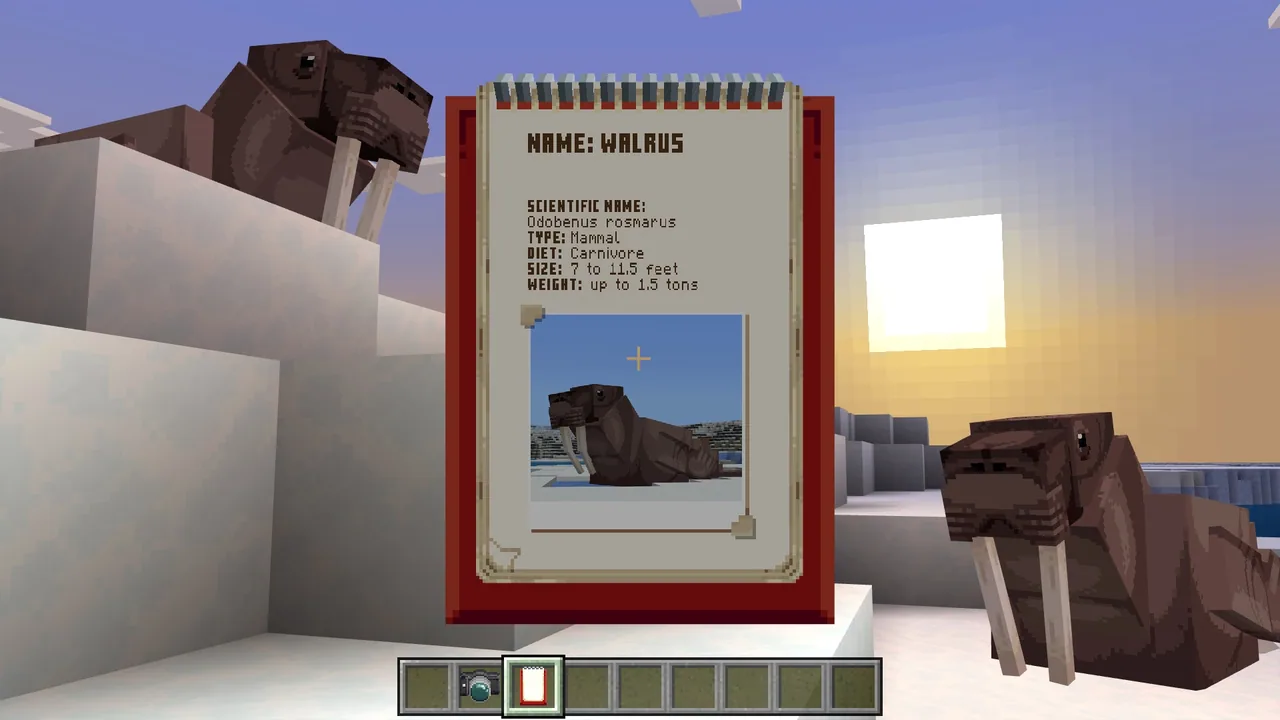
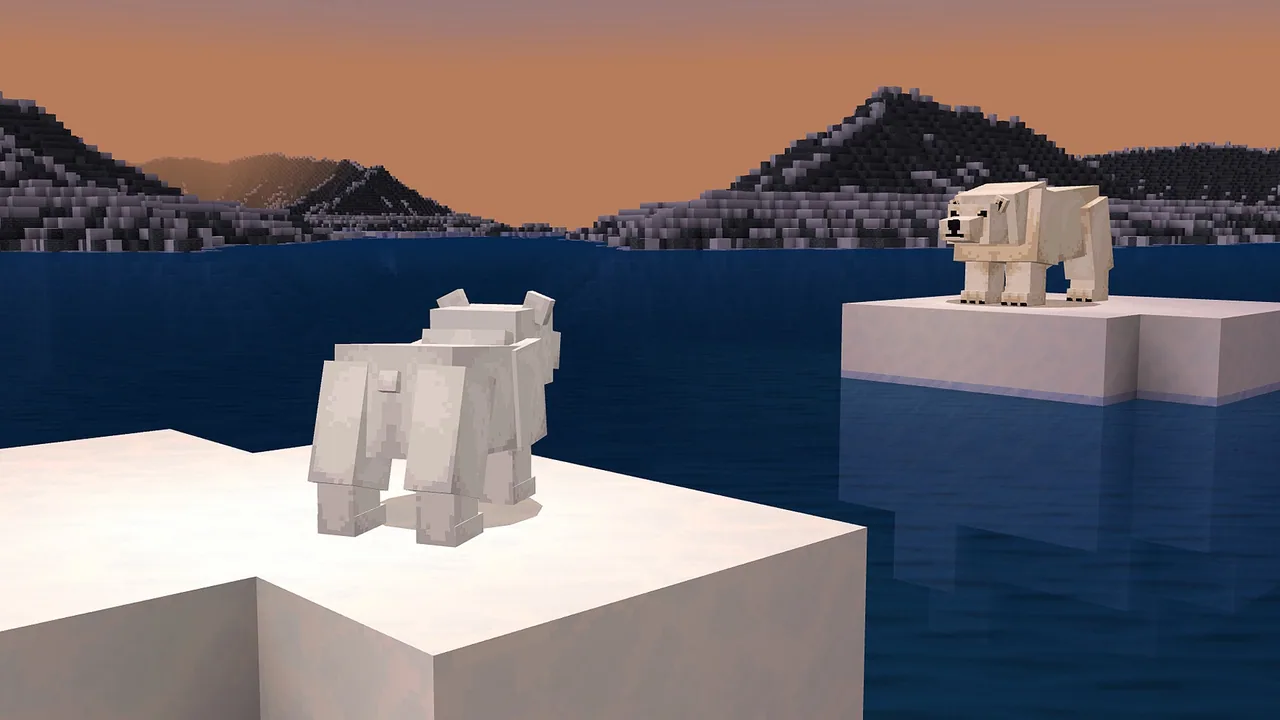
Show an image of a polar bear and collect students' existing knowledge on sticky notes. In small teams, have learners use internet research and the provided fact sheets to complete the slide challenge grid, identifying physical adaptations and recording new findings on a shared learning wall.
- Class Reflection & Synthesis5 min
Bring the class together to review findings. Discuss how reduced sea ice coverage impacts hunting, migration, and survival for Arctic wildlife, connecting their hands-on experiments directly to global climate change issues.
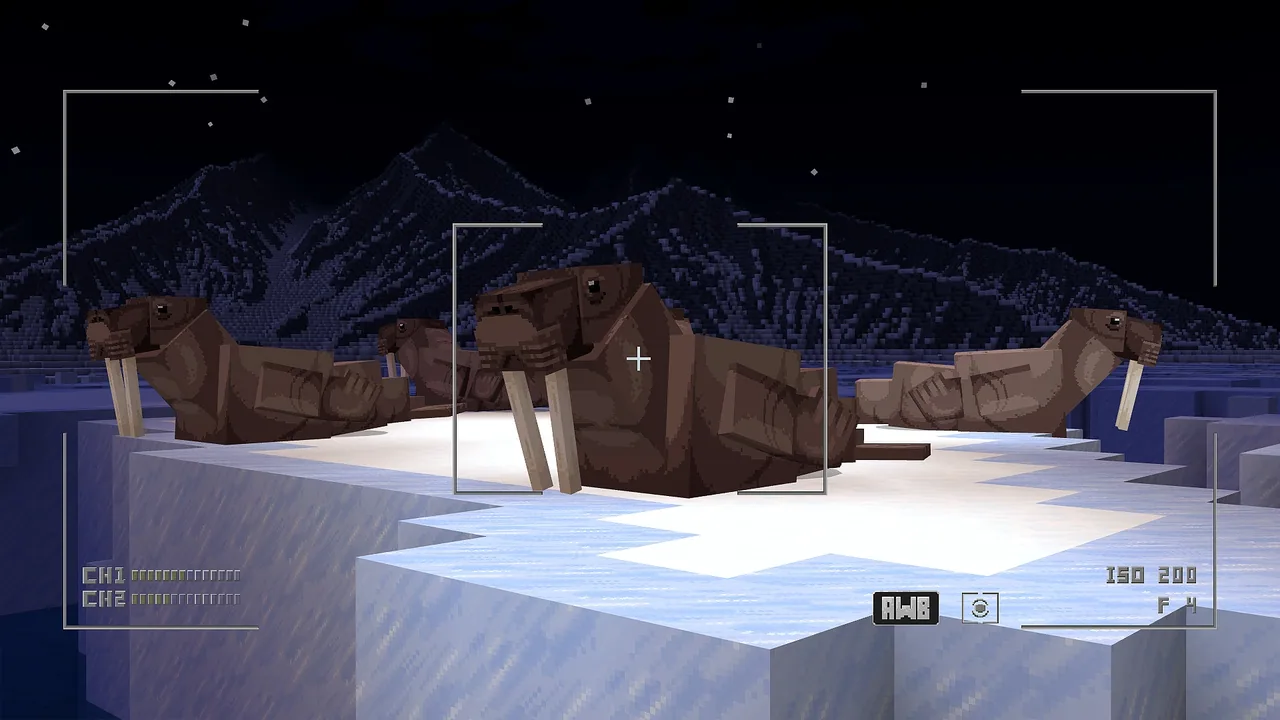
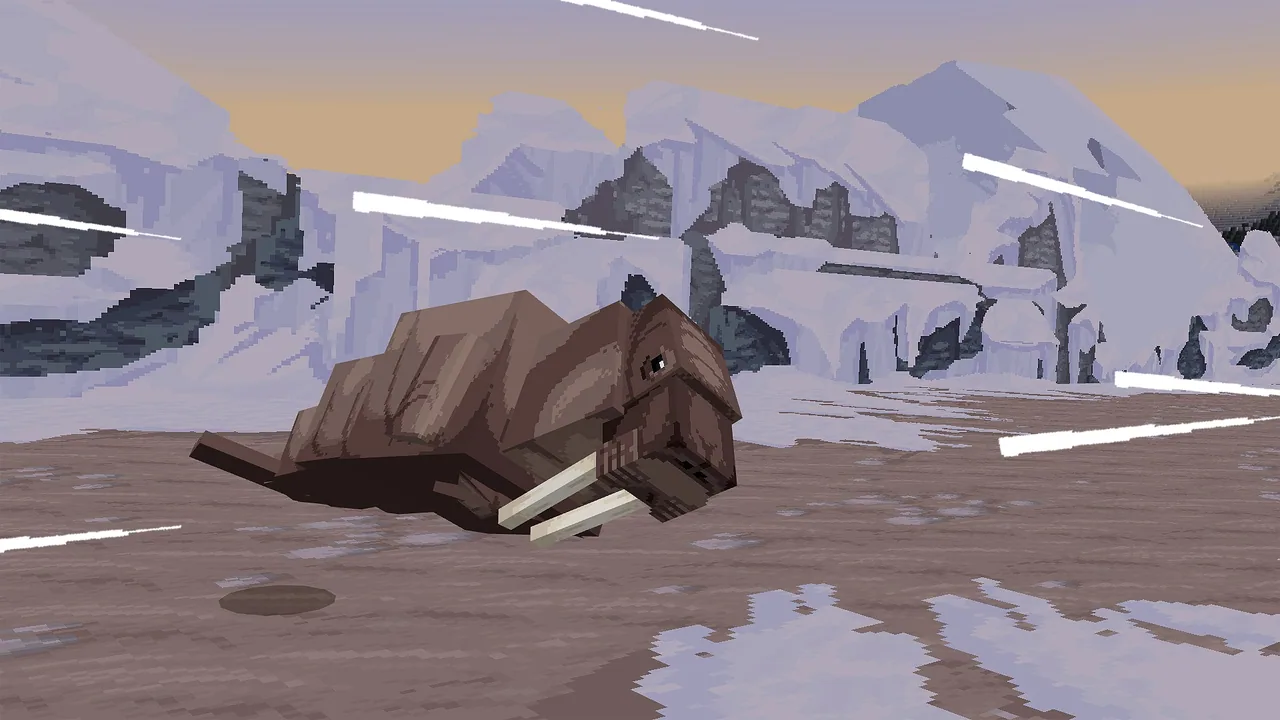
Inside the lesson world
Assessment: success criteria
- Students can pinpoint the Arctic Ocean on a map and identify bordering landmasses.
- Students can explain why polar regions remain cold using the concept of Earth's axial tilt.
- Students can explain why darker surfaces absorb more heat than reflective ice based on the beaker experiment.
- Students can name specific structural or behavioral adaptations that help polar bears survive Arctic conditions.
Differentiation
Provide highlighted fact sheets and structured sentence starters for the polar bear research grid.
Challenge students to describe how global weather patterns and polar seasons would change if Earth had zero axial tilt.
Knowledge check
5 questions to check understanding after the lesson. Tap an answer to see if it is right; the score appears at the end.
1Why does the Arctic Ocean receive limited solar heat even during its summer season?
Answer: B. Because Earth is tilted on its axis, the Arctic never receives direct sunlight, leaving the sun low on the horizon.
2What role does the albedo effect play in the Arctic environment?
Answer: A. The albedo effect refers to the ability of light-colored surfaces like sea ice to reflect the sun's energy away from Earth.
3What happens to the Arctic Ocean when sea ice melts and exposes darker open water?
Answer: C. Darker surfaces absorb more heat than reflective ice, causing Arctic waters to warm when ice melts.
4Since which year do scientific records show a rapid decline in the extent of Arctic sea ice?
Answer: D. Official records show that the extent of sea ice in the Arctic has been declining rapidly since 1979.
5What temperature does the Arctic typically reach during its two-month summer season?
Answer: A. The average Arctic summer lasts roughly two months and reaches temperatures around 0 degrees Celsius.
Resources
- Lesson package (.zip)Everything the author attached to this lesson in one download.
- Frozen Ocean PPTAccompanying PPT Presentation For Lesson Plan.
- Walrus Fact SheetFacts about walruses.
- Polar Bear FactsheetFacts about polar bears.
- Lesson worldOpens the world page in Minecraft Education (sign-in with a school account may be needed).
Frequently Asked Questions
What materials are needed to run the classroom demonstrations?
You will need a globe and a handheld torch to demonstrate seasonal sunlight angles, as well as two glass beakers, sheets of black and white paper, rubber bands, water, and thermometers to demonstrate heat absorption.
What animal species are covered in the supporting resources?
The main lesson activity focuses on polar bear adaptations using a challenge grid, while the supporting files also include fact sheets for both polar bears and walruses.
Adapted from Frozen Planet II: Frozen Ocean by Minecraft Education on Minecraft Education, last updated Sep 29, 2025. This classroom version, the timings and the quiz were written by 9Minecraft Education.