- Type
- Lesson plan
- Topics
- Art and DesignHistory
- Grade
- Primary (Grades 3-5)
- Ages
- Ages 8-10
- Includes
- Quiz: 5 questions
How can we use historical details and landforms to accurately recreate Fort St. Augustine as it appeared in the mid-1500s to late 1600s?
Overview
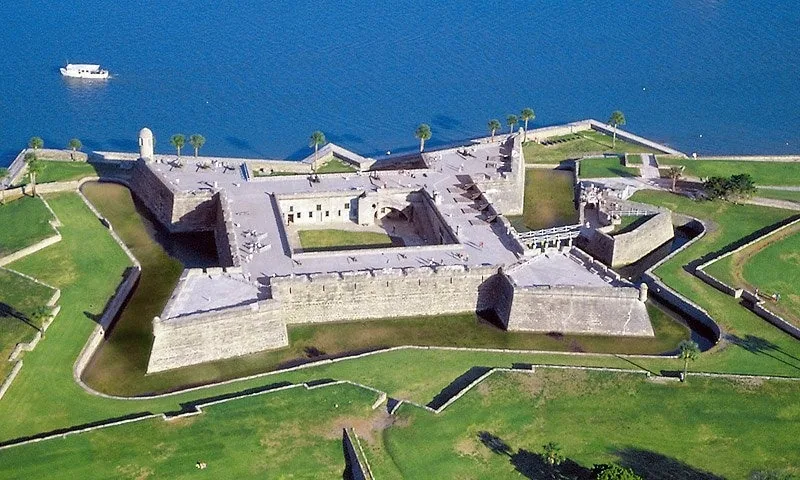
In this lesson, students investigate the historical background of Fort St. Augustine during the mid-1500s through late 1600s. By analyzing reading passages and primary sources, learners examine where the fort was located, its surrounding landforms, and the architectural elements that defined the settlement during that era.
Using Minecraft as a design environment, students apply their research to build an authentic model of the fort. They work to reflect period-accurate construction choices, integrating key structural details and geographical features identified in their source material.
Learning objectives
By the end of this lesson students will be able to:
- Identify key historical details and landforms connected to Fort St. Augustine from the mid-1500s to late 1600s.
- Build an authentic digital recreation of Fort St. Augustine in Minecraft based on evidence from primary sources.
- Demonstrate historical understanding by explaining design choices that reflect the fort's specific time period and geography.
Blocks and items used in this lesson


Key vocabulary
- Primary Source
- Firsthand historical evidence or documentation created during the time period under study.
- Fort
- A strong, fortified building or enclosure built for military defense.
- Landform
- A natural physical feature of the Earth's surface, such as a coastline, bay, or hill.
Before class
Lesson sequence
- Research and Guiding Questions
Introduce Fort St. Augustine through readings and primary sources. Pose the guiding questions: Where was the fort located, what landforms surrounded it, and how can designs reflect mid-1500s to late-1600s construction?
- Design Planning
Have students outline the main features of their fort design. Encourage them to list specific structural elements and natural terrain features they plan to recreate based on their readings.
- Minecraft Construction
Students enter Minecraft to construct their authentic versions of Fort St. Augustine, incorporating period-appropriate details and surrounding landforms.
- Sharing and Reflection
Students present their completed builds and explain how their architectural and geographical choices connect to the primary sources they studied.
Assessment: success criteria
- The Minecraft build accurately reflects historical details from the mid-1500s to late-1600s timeframe.
- Relevant natural landforms are included to make the fort's geographic setting authentic.
- Student can identify specific information from primary sources that influenced their design.
Differentiation
Provide visual references and highlighted reading passages showing the basic layout and natural surroundings of the fort.
Challenge students to research and include specialized defensive elements and complex terrain features matching exact historical accounts.
Knowledge check
5 questions to check understanding after the lesson. Tap an answer to see if it is right; the score appears at the end.
1What historical time period does this Fort St. Augustine design challenge focus on?
Answer: B. The source specifies that students will build a version of the fort set in the mid-1500s to late 1600s.
2What evidence should students use to determine the details of their fort design?
Answer: A. The learning objectives require students to use details learned from primary sources and reading about St. Augustine.
3What environmental features are students asked to add to make their design authentic?
Answer: C. The guiding questions prompt students to consider which landforms they need to add for authenticity.
4Which two subjects are combined in this design project?
Answer: D. The source lists Art and Design along with History as the subject areas.
5What is the primary objective of the building activity?
Answer: B. Students are tasked with building their own authentic version of Fort St. Augustine based on their historical research.
Frequently Asked Questions
Does this lesson require a specific downloadable world template?
No, the lesson does not include a downloadable world file, so students can construct their forts in any standard Minecraft world.
What age group is this design challenge aimed at?
The lesson plan is designed for students ages 8 through 10.
Adapted from Fort St. Augustine Design Chal by Michael Zang on Minecraft Education, last updated Nov 21, 2016. This classroom version, the timings and the quiz were written by 9Minecraft Education.