- Type
- Lesson plan
- Ages
- Ages 8-13
- Duration
- about 70 min (suggested)
How do our payment choices, budgeting habits, and banking decisions impact our ability to reach financial goals?
Overview
Personal financial literacy involves balancing daily necessities, unforeseen obstacles, and future ambitions. This lesson places students in an active municipal environment where every choice carries financial trade-offs, helping them explore how budgeting, payment methods, and interest rates shape economic independence.
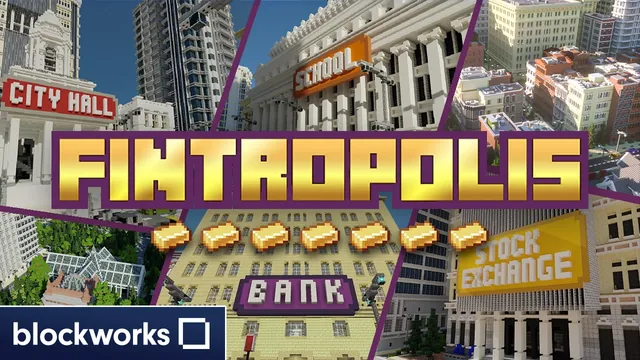
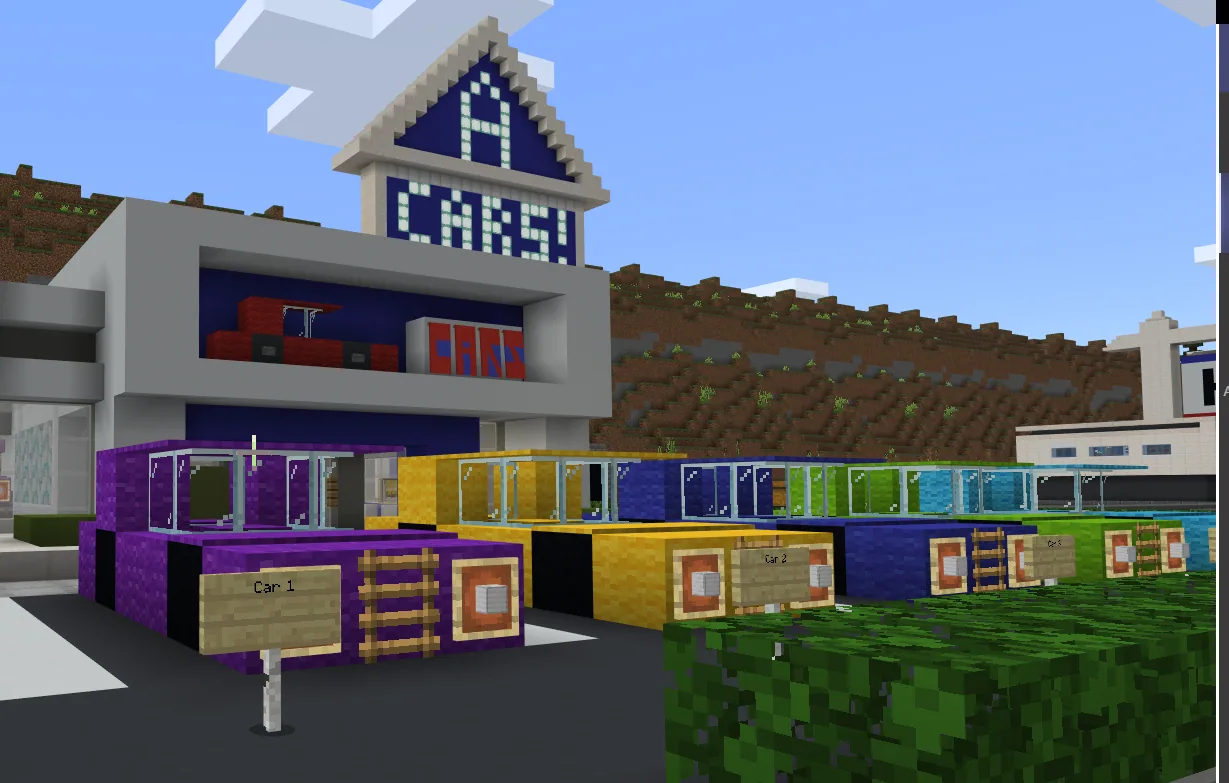
Inside Minecraft, learners explore a virtual community featuring a bank, shopping plaza, auto mall, and residential areas. As the world automatically deducts costs and delivers income, students experiment with purchasing essentials, opening accounts, and using credit, concluding their session at city hall to audit their final balances.
Learning objectives
By the end of this lesson students will be able to:
- Compare the advantages and disadvantages of using cash, savings accounts, and credit accounts.
- Distinguish between essential expenses and non-essential spending in a personal budget.
- Explain how interest rates and unforeseen expenses influence long-term financial security.
- Document spending choices and evaluate economic outcomes using in-game documentation tools.
Blocks and items used in this lesson


Key vocabulary
- Savings Account
- A bank account that securely holds money, often earning interest over time.
- Credit Account
- An account that allows a buyer to purchase items with borrowed money that must be repaid later.
- Interest Rate
- A percentage paid on top of borrowed money or earned on deposited funds.
- Essential Expense
- Necessary spending required for basic living needs, including food, shelter, and transportation.
- Non-Essential Expense
- Optional spending on wants and entertainment, such as fashion items, movies, and restaurant food.
Before class
Lesson sequence
Suggested timing: about 70 minutes in total.
- Introduction to Budgeting and Payment Types10 min
Introduce the distinction between cash, savings accounts, and credit lines. Ask students to share examples of necessary living expenses versus discretionary purchases and consider how unexpected costs can impact savings.
- Entering the Economy10 min
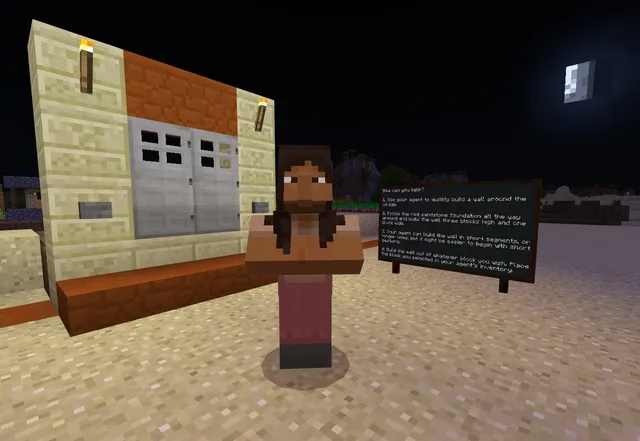
Students enter the world, speak to the initial Non-Player Character to start the activity, and collect a camera. Encourage them to visit the bank early to explore opening a savings or credit account.
- Town Exploration and Spending Choices25 min
Students travel through the auto mall, shopping plaza, model homes, and residential neighborhoods. As the game tracks passive earnings and costs, learners decide whether to purchase or lease assets, spend on entertainment, and balance their cash flow.
- City Hall Finalization10 min
When exploration time ends, students enter city hall and talk to the Non-Player Character to halt ongoing costs and earnings. Students calculate their ending funds and can sell owned homes or vehicles to recoup money.
- Debrief and Reflection15 min
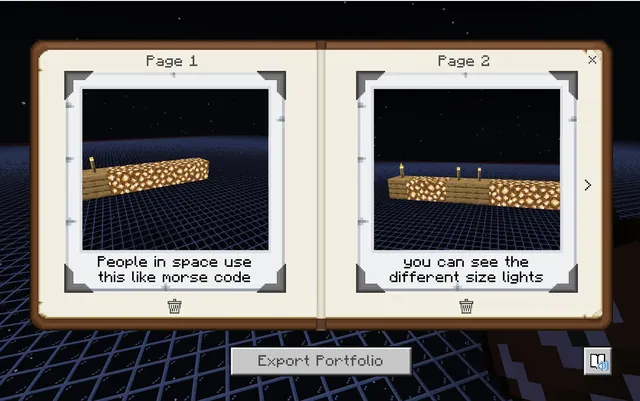
Students compile their notes and photographs in a Book and Quill, then join a class conversation comparing who ran out of money, who saved, and how banking choices altered their outcomes.
Assessment: success criteria
- Student articulates the benefits and risks of using credit versus cash or savings.
- Student categorizes their in-game purchases correctly into essential and non-essential expenses.
- Student accurately tallies remaining funds and explains the impact of recurring expenses.
- Student presents an organized Book and Quill documenting major transactions and reflections.
Differentiation
Have students work in pairs to cross-check prices and categorize expenses as wants or needs before buying.
Challenge students to run a second playthrough attempting to maximize net wealth through disciplined savings account interest while avoiding credit fees.
Knowledge check
5 questions to check understanding after the lesson. Tap an answer to see if it is right; the score appears at the end.
1Which location must players visit to end passive expenses and stop the simulation?
Answer: C. Speaking to the Non-Player Character inside city hall halts the ongoing income and expense calculations.
2What major assets can students sell back at the end of the simulation to gain extra funds?
Answer: A. Players who bought a home or vehicle have the option to sell them to receive additional cash before calculating final balances.
3Which of the following is considered an essential expense in the activity debrief?
Answer: B. Basic living necessities like shelter, groceries, and transportation are classified as essentials.
4What tool is available from the starting Non-Player Character to help students document their choices?
Answer: D. Students can pick up a camera at the start or return for one later to photograph their experiences.
5How does using a credit account differ from paying with pocket cash?
Answer: B. Credit accounts allow purchases using borrowed money that require future payments and often involve interest fees.
Resources
- Lesson package (.zip)Everything the author attached to this lesson in one download.
- Teacher Preparation NotesA document that outlines important notes to consider when facilitating the activity.
- Financial Literacy World Lesson PlanA document that includes all of the information needed for the Financial Literacy World activity.
Frequently Asked Questions
Can students repeat the simulation to test different financial strategies?
Yes. Students may replay the experience multiple times to compare how aggressive saving, renting, buying, or heavy credit usage changes their end balance.
How are money deductions and earnings tracked while students move around?
The virtual environment automatically processes income, routine living costs, and transactions until players trigger the stop mechanic at city hall.
Adapted from Financial Literacy World Gr. 6 by Blaise Patterson Patterson on Minecraft Education, last updated Nov 23, 2020. This classroom version, the timings and the quiz were written by 9Minecraft Education.