- Type
- Lesson plan
- Grade
- Early years (Pre-K to Grade 2)Primary (Grades 3-5)Middle school (Grades 6-8)High school (Grades 9-12)
- Ages
- All ages
- Duration
- 1 hour
- Level
- Beginner
- Includes
- Quiz: 5 questions
How can thoughtful urban planning and renewable energy sources help a city achieve a net-zero carbon footprint?
Overview
Sustainable city planning requires balancing human infrastructure needs with environmental responsibility. In this lesson, students explore how urban development impacts carbon emissions and examine how clean energy sources can help a community achieve net-zero environmental impact.
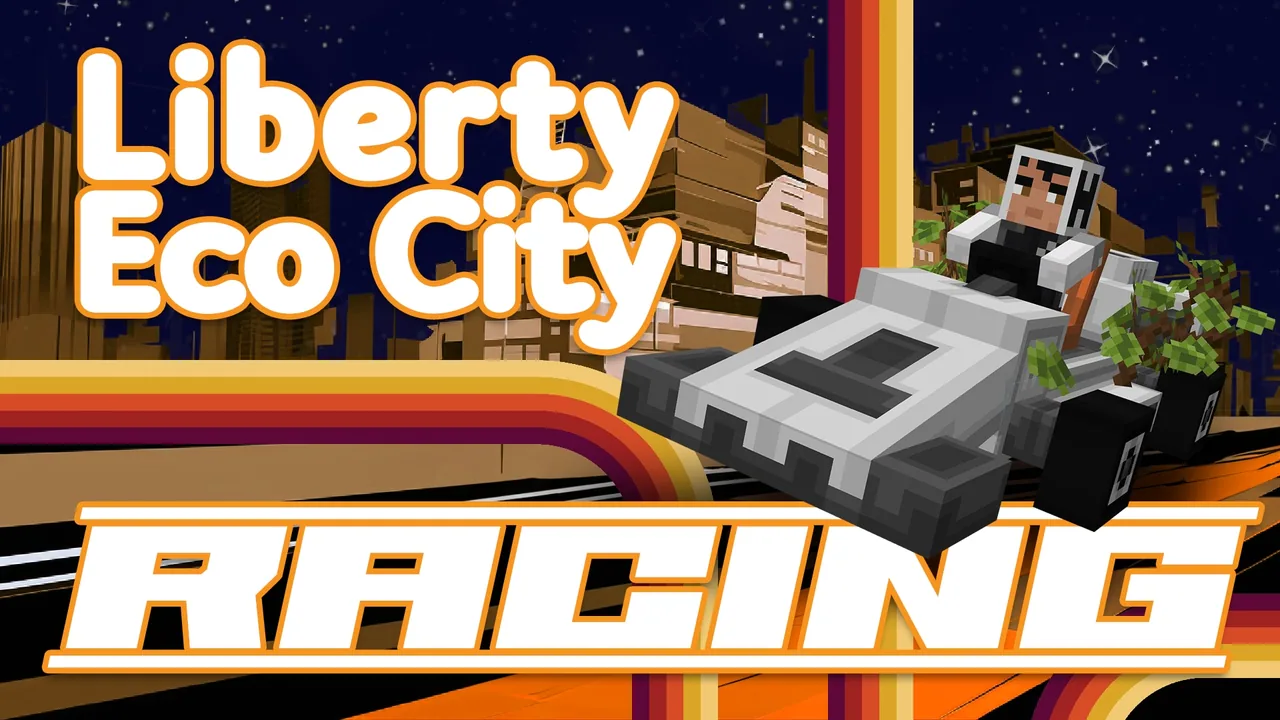
Using the pre-programmed Liberty Eco City world in Minecraft Education, learners arrange urban components on a 16x16 simulation grid. Once they successfully offset carbon emissions using solar and wind power, they scan their build into a full-scale environment and explore their finished green city behind the wheel of a Formula E race car.
Learning objectives
By the end of this lesson students will be able to:
- Explain the relationship between urban development, carbon emissions, and renewable energy.
- Construct a balanced city layout on a simulation grid to achieve a net-zero carbon footprint.
- Evaluate the environmental trade-offs of different municipal structures and clean power sources through written reflection.
Blocks and items used in this lesson


Key vocabulary
- Net-Zero Carbon
- A state where the total amount of carbon emissions produced is completely balanced out by clean energy or carbon reduction measures.
- Renewable Energy
- Energy derived from natural resources that replenish continuously, such as sunlight and wind.
- Carbon Footprint
- The total amount of greenhouse gases generated by human activities, buildings, or communities.
- Urban Planning
- The process of designing and organizing how land, structures, and services are arranged across a city.
Before class
Lesson sequence
Suggested timing: about 60 minutes in total.
- Introduction and Orientation10 min
Introduce the challenge of balancing city infrastructure with environmental health. Have students open the Liberty Eco City map individually or in small groups and interact with the Eco Guide NPC to understand the simulation goals and rules.
- Building the Simulation City25 min
Students work on their 16x16 grid plots, selecting and placing city elements while observing their carbon output. Learners must strategically incorporate renewable power sources, such as wind and solar installations, to balance total emissions and achieve a net-zero rating.
- Scanning and Formula E Exploration15 min
Once the simulation reaches net-zero, students trigger the scan to generate their city at full scale outside the laboratory. They then unlock Formula E electric race cars and drive around their full-sized sustainable city to inspect their planning work.
- Debrief and Written Reflection10 min
Conclude with a class discussion about which energy strategies worked best and what trade-offs students encountered. Have each student capture a screenshot of their completed build and write a brief reflection explaining their choices.
Assessment: success criteria
- Student successfully balances their 16x16 grid simulation to reach a net-zero carbon status.
- Student captures and submits a clear screenshot documenting their completed city layout.
- Written reflection accurately describes the environmental impact of their chosen buildings and energy sources.
Differentiation
Allow students to work in collaborative pairs so they can talk through the balance of emissions and renewable power together.
Ask students to analyze how varying the proportion of wind power versus solar power affects their layout efficiency on the grid.
Knowledge check
5 questions to check understanding after the lesson. Tap an answer to see if it is right; the score appears at the end.
1What is the primary goal students must accomplish inside the simulation lab?
Answer: A. The core simulation challenge requires students to balance city emissions and clean energy until they achieve net-zero carbon.
2Which character introduces the game mechanics and lesson goals when entering the world?
Answer: B. Students begin the lesson by interacting with the Eco Guide NPC to learn how the simulation functions.
3Which two renewable energy sources can students use to balance their carbon emissions?
Answer: D. The source explicitly states that students balance carbon output using wind and solar energy sources.
4What reward unlocks after students achieve a net-zero carbon rating on the grid?
Answer: A. Reaching net-zero allows students to scan their city to full scale outside the lab and race Formula E cars through it.
5What items are students asked to submit for their final assessment?
Answer: B. Teachers assess student progress through a submitted screenshot of the city and a written reflection on their strategies.
Frequently Asked Questions
Can this activity be completed if students work individually?
Yes. The Liberty Eco City world is designed to support both individual single-player exploration and small multiplayer teams.
Do students need advanced Minecraft building skills for this lesson?
No. The world uses pre-programmed game mechanics suitable for beginners of all ages, so no complex manual building is required.
Adapted from Exploring Sustainability through "Liberty Eco City" by Adam Clarke on Minecraft Education, last updated Jul 2, 2024. This classroom version, the timings and the quiz were written by 9Minecraft Education.