- Type
- Lesson plan
- Ages
- Ages 6-13
- Duration
- 45 min
- Level
- Intermediate
How can investigating different biomes help us protect biodiversity and resolve real-world environmental challenges?
Overview
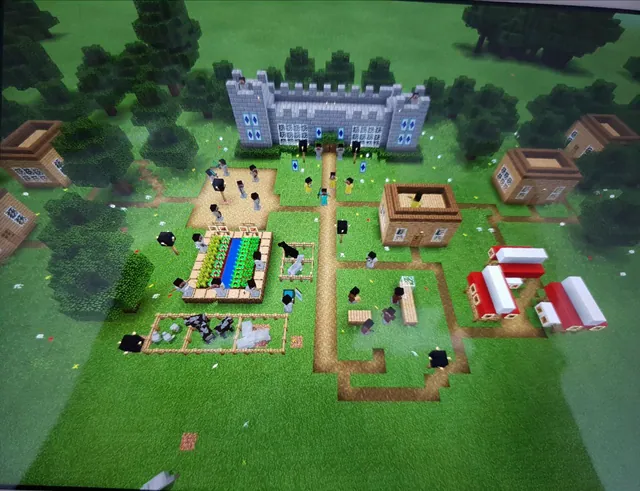
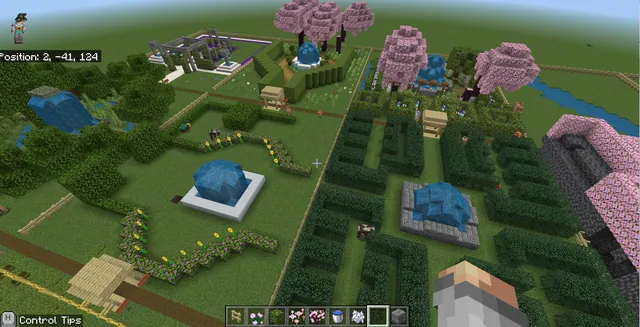
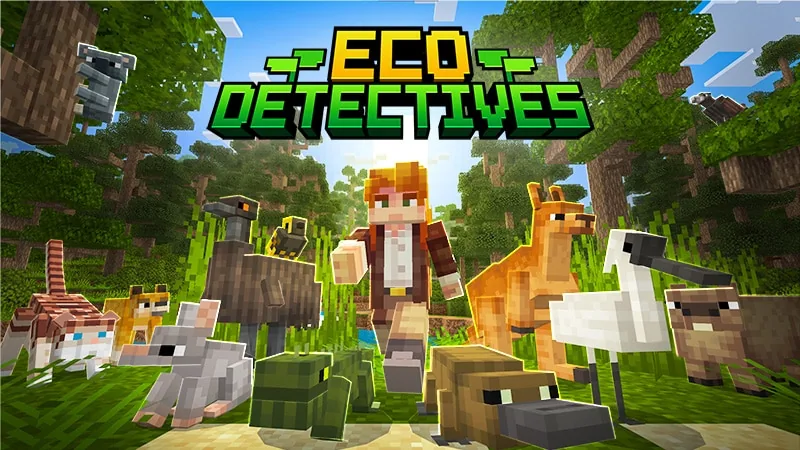
Eco Detectives invites students to investigate biodiversity across diverse Australian and New Zealand biomes, focusing on urban areas, wetlands, and drylands. Learners examine how human development, climate change, and habitat loss threaten living ecosystems, exploring the critical role that conservation plays in preserving native wildlife.
Inside the Minecraft world, students work collaboratively as environmental investigators to solve habitat problems and restore living communities. Throughout their journey, learners record their discoveries, problem-solving strategies, and conservation ideas in an accompanying Reflection Portfolio.
Learning objectives
By the end of this lesson students will be able to:
- Analyze how urbanization, climate shifts, and human activities influence biodiversity across different biomes.
- Identify unique adaptations that allow plants and animals to survive in dryland and wetland environments.
- Propose community-based conservation actions and sustainable practices to protect local habitats.
- Document problem-solving strategies and environmental observations inside the Reflection Portfolio.
Blocks and items used in this lesson


Key vocabulary
- Biodiversity
- The variety of plant and animal life living within a specific habitat or ecosystem.
- Urbanization
- The growth and expansion of cities, often altering or replacing native habitats.
- Wetland
- An ecosystem where land is covered or saturated by water, supporting distinct plant and animal species.
- Dryland
- An arid or semi-arid environment where organisms must adapt to limited water resources.
- Conservation
- The planned protection, management, and restoration of natural environments and wildlife.
Before class
Lesson sequence
Suggested timing: about 45 minutes in total.
- Mission Briefing10 min
Introduce the Eco Detective mission and discuss the key concepts of biodiversity. Share the guiding questions for the target biome (City, Wetlands, or Drylands), discussing how environmental pressures impact local wildlife and plant life.
- Biome Exploration & Restoration20 min
Students enter the Minecraft world in teams to navigate Australian and New Zealand biomes. They investigate habitat challenges, identify ecological threats, and collaborate on solutions to revive biodiversity.
- Portfolio Reflection10 min
Learners pause their gameplay to complete prompts in their Reflection Portfolio. They document the challenges encountered in-game, the strategies used to overcome them, and how these scenarios relate to real-world environmental problems.
- Class Debrief & Action Planning5 min
Gather the class to share portfolio reflections. Discuss how in-game problem-solving can translate into real-world conservation efforts and community stewardship in their own local area.
Assessment: success criteria
- Student accurately identifies the primary threats facing city, wetland, or dryland biomes.
- Student successfully completes entries in the Reflection Portfolio showing connections to real-world conservation.
- Student articulates at least one sustainable practice or community action that protects biodiversity.
Differentiation
Use the provided guiding questions as targeted writing prompts to help students structure their Reflection Portfolio entries.
Ask learners to contrast the ecological threats in drylands versus wetlands and propose a dual conservation strategy.
Knowledge check
5 questions to check understanding after the lesson. Tap an answer to see if it is right; the score appears at the end.
1Which three biomes are explored during the Eco Detectives missions?
Answer: A. The source explicitly lists City, Wetlands, and Drylands as the biomes included in the lesson plan.
2What is the main role of the Reflection Portfolio in this activity?
Answer: B. The Reflection Portfolio allows students to capture discoveries and connect in-game experiences to real-world applications.
3Which region's biomes are specifically featured in this learning experience?
Answer: C. The teacher prep notes indicate that the adventure travels through diverse Australian and New Zealand biomes.
4How can deliberate urban planning and green spaces support environmental health?
Answer: B. Green spaces and thoughtful urban design help maintain wildlife habitats and support biodiversity within cities.
5Why are unique physical or behavioral adaptations crucial for wildlife in drylands?
Answer: A. Dryland biomes require specialized adaptations to handle limited water availability and harsh climate conditions.
Resources
- Lesson package (.zip)Everything the author attached to this lesson in one download.
- Reflection PortfolioThe reflection portfolio for the students is available here.
- City Lessons 1&2City Lesson activities 1 and 2 are available here.
- Wetlands Lessons 1&2Wetlands Lesson activities 1 and 2 are available here.
- Drylands Lessons 1&2Drylands Lesson activities 1 and 2 are available here.
- UNICEF Climate activities + Teacher notesUNICEF Climate activities + Teacher notes are available here.
- Lesson worldOpens the world page in Minecraft Education (sign-in with a school account may be needed).
Frequently Asked Questions
Can I teach this lesson by focusing on only one biome at a time?
Yes. The lesson materials provide distinct guiding ideas and questions for the City, Wetlands, and Drylands biomes, allowing teachers to select whichever environment best matches their current curriculum goals.
What student resources must be prepared before starting the game?
Teachers should ensure every student has access to the Eco Detectives Reflection Portfolio so they can document their discoveries and reflections throughout the session.
Adapted from Eco Detectives by Team Workbench on Minecraft Education, last updated May 23, 2025. This classroom version, the timings and the quiz were written by 9Minecraft Education.