How do modern technology, sustainable practices, and biological science work together on a working dairy farm?
Overview
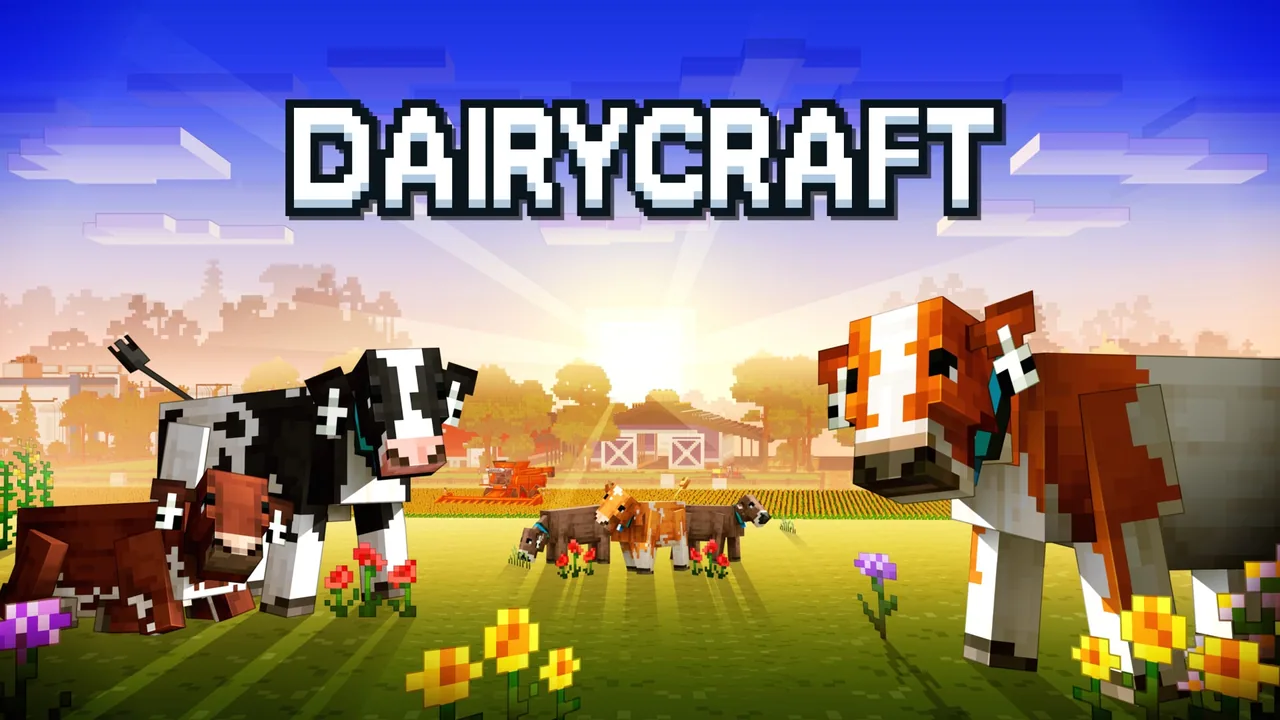
Modern dairy farms function as interconnected systems where animal welfare, food science, agricultural crops, and sustainable engineering work side by side. Students investigate how milk is produced and processed into foods like butter and yogurt, examine the nutritional value of dairy products, and explore how agricultural waste can be converted into clean renewable energy.
Using the custom Dairycraft world, learners tour working farm facilities, drive virtual tractors, operate biodigesters, and manage automated milking machinery. After mastering individual farm systems through automated guided modules, students apply their knowledge by designing and building their own sustainable dairy farm layouts.
Learning objectives
By the end of this lesson students will be able to:
- Identify key nutrients found in milk and explain their importance for human health.
- Distinguish between physical and chemical changes during the processing of dairy products.
- Explain how farm waste can be converted into renewable energy using biodigesters and biogas.
- Describe how automation, GPS tracking, and robotics support livestock care and farm efficiency.
- Design a functional, sustainable dairy farm layout that incorporates crops, livestock housing, and waste management.
Blocks and items used in this lesson


Key vocabulary
- Biodigester
- A farm system that breaks down animal manure to produce biogas and usable energy.
- Biogas
- A renewable gas produced from decomposed manure that can fuel electrical generators.
- Silage
- Fermented, high-moisture fodder such as preserved corn fed to cattle.
- Chemical Change
- A reaction that alters the molecular structure of a substance, creating new materials like yogurt or cheese.
Before class
Lesson sequence
Suggested timing: about 210 minutes in total.
- Farm Layout Orientation45 min
Students launch the Dairycraft world individually and start with Lesson 2 to explore the farm layout, speak with non-player character workers, complete an operational knowledge test, and herd different cow breeds in the pasture.
- Nutrition and Food Science45 min
Learners proceed through Lessons 1 and 3. In Lesson 1, they explore nutrient stations and complete a hay bale parkour challenge. In Lesson 3, they explore physical and chemical changes while crafting yogurt, cheese, butter, and ice cream in industrial kitchens before delivering goods to a market.
- Energy, Crops, and Automation60 min
Students complete Lessons 4, 5, and 6 to investigate modern agricultural systems:
- Repair manure robots and run biodigesters to generate biogas energy.
- Operate robotic milking stalls, use GPS devices to locate escaped cattle, and program feed-pushers.
- Drive virtual tractors to cultivate soil, harvest corn, manage silage production, and transport surplus feed.
- Design and Build Farm Project60 min
Students collaborate in small teams or work independently to design and build their own fully operational dairy farm, integrating sustainable energy, livestock housing, feed storage, and automated technology learned throughout the lessons.
Assessment: success criteria
- Completion of in-game knowledge checks across nutrition, matter changes, and renewable energy.
- Successful operation of simulated machinery including tractors, biodigesters, and robotic milking equipment.
- Correct identification of cow breeds, feed storage methods, and physical versus chemical changes.
- A final farm build that demonstrates practical animal care, sustainable power generation, and efficient workflow layout.
Differentiation
Allow students to work in pairs and focus on core navigation in Lesson 2 and Lesson 1 before attempting technical equipment modules.
Challenge advanced students to construct an automated redstone-enhanced feed delivery system or complex renewable energy grid in their custom farm design.
Knowledge check
5 questions to check understanding after the lesson. Tap an answer to see if it is right; the score appears at the end.
1What agricultural system is used in Lesson 4 to turn cow manure into usable energy?
Answer: A. Lesson 4 focuses on waste management by repairing manure equipment and using a biodigester to produce biogas.
2Which dairy product creation from Lesson 3 involves science concepts related to physical and chemical changes?
Answer: D. In Lesson 3, students make yogurt, cheese, butter, and ice cream in kitchens to study matter and changing states.
3What technology is used in Lesson 5 to help locate cattle that have wandered away?
Answer: B. Lesson 5 has students use GPS wearable devices to track down escaped cows on the farm.
4Why is Lesson 2 recommended as the starting point for students?
Answer: B. The teacher prep notes state that Lesson 2 introduces the farm layout and systems, providing essential navigation context.
5What crop is specifically cultivated, harvested, and converted into silage in Lesson 6?
Answer: C. Lesson 6 teaches students about corn growth stages and turning harvested crops into silage feed.
Resources
- Lesson package (.zip)Everything the author attached to this lesson in one download.
- Dairycraft (mctemplate)Dairycraft world template.
- Dairycraft (mctemplate)Dairycraft world template.
Frequently Asked Questions
Do students need to complete the lessons in numeric order?
No. The six core modules are designed to run independently, although starting with Lesson 2 is strongly recommended because it familiarizes learners with the farm geography and general daily operations.
Should students work in groups or individually?
Lessons 1 through 6 are built as single-player automated experiences. For the final farm design project, teachers are encouraged to have students collaborate in teams to build together.
Adapted from Dairycraft | A Working Dairy Farm by CrackedCubes Ltd on Minecraft Education, last updated Oct 2, 2026. This classroom version, the timings and the quiz were written by 9Minecraft Education.