- Type
- Lesson plan
- Ages
- Ages 6-13
How do climate and geography shape the plants, animals, and landscape of different biomes?
Overview
Ecosystems across the world are defined by their unique climates, physical geography, and native species of plants and animals. In this lesson, students begin by investigating how environmental conditions influence living communities, connecting geographical concepts like latitude and longitude to real-world biomes.
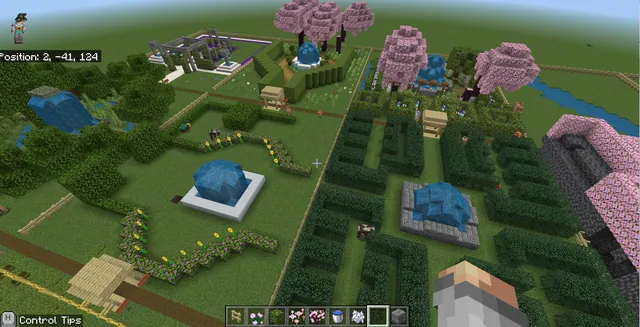
Entering Minecraft as recruits in the Explorer Guild, students venture out on survival expeditions to locate diverse biomes. Using in-game tools including cameras, portfolios, and coordinate maps, learners record field data, observe native wildlife and vegetation, and compare virtual landscapes to real Earth biomes.
Learning objectives
By the end of this lesson students will be able to:
- Compare and contrast real-world biomes with their in-game Minecraft counterparts.
- Research and identify native plant and animal species found in different global biomes.
- Navigate within Minecraft using coordinates and relate them to latitude and longitude on global maps.
- Communicate scientific observations through completed worksheets, portfolios, and group discussions.
Blocks and items used in this lesson


Key vocabulary
- Biome
- A large community of plants and animals adapted to a specific climate and environment.
- Latitude
- The distance north or south of the equator, measured in degrees on a map or globe.
- Longitude
- The distance east or west of the prime meridian, measured in degrees on a map or globe.
- Coordinates
- A set of numbers that identifies an exact location on a map or in a digital grid.
- Climate
- The long-term weather patterns, including temperature and precipitation, typical of an area.
Before class
Lesson sequence
- Real-World Biome Research
Introduce the mission and guide students in researching several real-world biomes. Learners document native plants, native animals, and geographic locations for each biome, noting how positions relate to lines of latitude and longitude.
- Explorer Guild Briefing
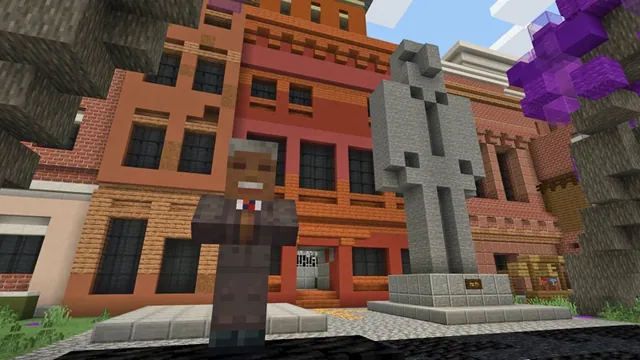
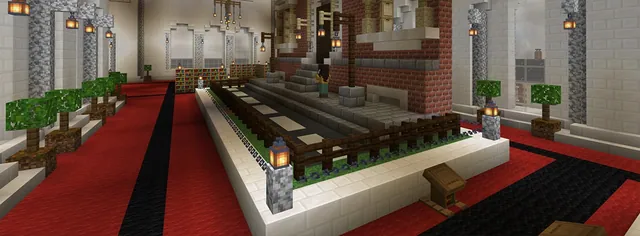
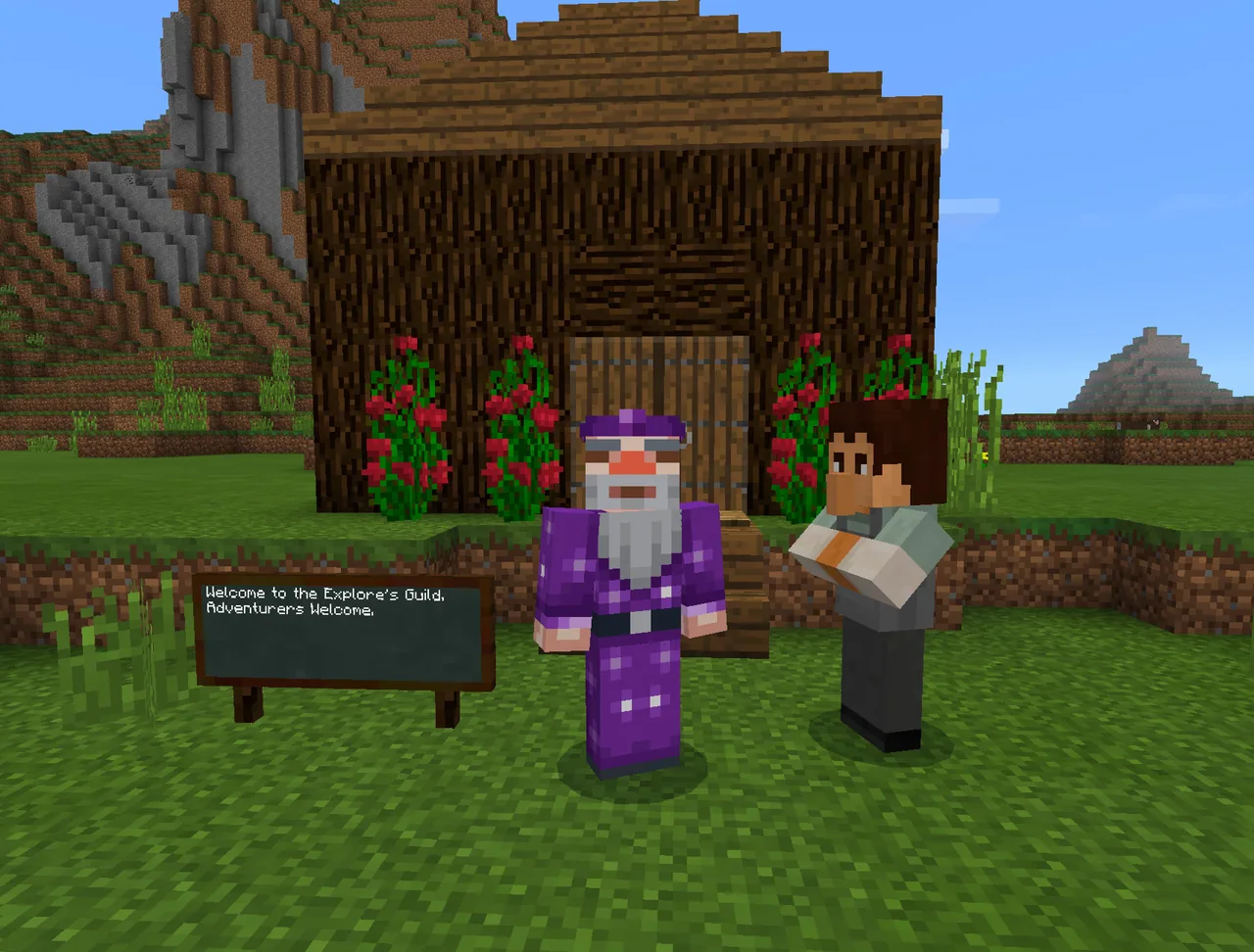
Students load into Minecraft in survival mode set to easy difficulty. At the Explorer Guild, they interact with the Henry Hudson NPC to receive travel supplies, food, and an information link detailing different biomes before setting off.
- Field Survey and In-Game Documentation
Working in teams, students travel outward to explore neighboring biomes. As they discover new areas, learners take photos using the in-game camera, save labeled entries in their portfolios, read their map coordinates, and record findings on their Biome Hunter Worksheet.
- Data Synthesis and Presentation
Learners complete their comparative plant and animal tables and fill out a Venn diagram conducting an in-depth comparison of one biome. Finally, students present their documented portfolios and discoveries to peers via classroom discussion, presentation, or digital post.
Assessment: success criteria
- Accurate completion of the Biome Hunter Worksheet documenting plants and animals from real-world and in-game biomes.
- Successful creation of a Venn diagram comparing and contrasting one real biome with its Minecraft equivalent.
- Proper use of camera, portfolio, and map coordinates to record and label observed biomes in the game.
- Clear communication of research and field findings during peer presentations or discussions.
Differentiation
Provide students with target coordinates or use teleport commands to transport them directly to nearby biomes like the plains, swamp, taiga, or desert.
Have students research how temperature and climate variations determine biome distribution across specific continents and geographic latitudes.
Knowledge check
5 questions to check understanding after the lesson. Tap an answer to see if it is right; the score appears at the end.
1Who greets students at the Explorer Guild to supply resources and biome links?
Answer: B. Henry Hudson is the non-player character located at the Explorer Guild who provides information and supplies.
2What game mode and difficulty setting are specified for this exploration activity?
Answer: C. The lesson instructions specify that the activity is played in survival mode and defaults to easy.
3Which in-game tools are required to capture images and record biome locations?
Answer: A. Students are instructed to document their findings by taking pictures and labeling them using the camera, portfolio, and maps.
4Which graphic organizer must students complete to compare a real-world biome with a Minecraft biome?
Answer: C. The assessment expectations state that students will complete a Venn diagram comparing and contrasting one biome in depth.
5According to the teacher coordinate guide, which biome is located at coordinates (2000, 63, 316)?
Answer: D. The coordinate reference list indicates that the Swamp biome is situated at 2000, 63, 316.
Resources
- Lesson package (.zip)Everything the author attached to this lesson in one download.
- Biome Hunter WorksheetEditable worksheet with a table and Venn Diagram in Word Document format for students to complete digitally.
- Biome Hunter WorksheetPDF Version of the worksheet with a table and Venn Diagram for students to complete by hand.
Frequently Asked Questions
What should be done if a student player dies while exploring?
Because the lesson runs in survival mode, explain to students that player death represents the authentic hazards and challenges involved in real exploration expeditions.
How can I support learners who cannot find a specific biome on their own?
You can give students the exact coordinates provided in the lesson plan for areas like the sunflower plains, swamp, taiga, or desert, or teleport them directly to those locations.
What worksheet do students need during their investigation?
Students need the Biome Hunter Worksheet to record their real-world research notes, flora and fauna observations, and in-game findings.
Adapted from Biome Hunter by Mark Grundel on Minecraft Education, last updated Mar 26, 2018. This classroom version, the timings and the quiz were written by 9Minecraft Education.