- Type
- Lesson plan
- Subject
- History & Social Studies
- Topics
- History
- Ages
- Ages 11-13
- Skills
- Project Based Learning
- Includes
- Quiz: 5 questionsLesson files
How can we combine historical research and mathematical scale to build an accurate model of an ancient landmark in Minecraft?
Overview
Studying ancient civilizations allows students to examine how past cultures engineered structures to meet religious, civic, or defensive needs within specific geographic environments. In this project-based history lesson, learners choose an ancient civilization and research an iconic landmark, collecting data on its purpose, construction era, biome, and physical dimensions.
Students then apply a conversion algorithm to translate those real-world measurements into Minecraft blocks. After claiming a plot, learners place an informational sign with core historical facts, build the structure to scale using appropriate environmental materials, and reflect on their accuracy by comparing their finished model to reference imagery in a recorded gameplay walkthrough.
Learning objectives
By the end of this lesson students will be able to:
- Identify an ancient civilization's landmark, its cultural purpose, construction era, biome, and real-world dimensions.
- Convert real-world measurements into Minecraft block dimensions using a mathematical algorithm.
- Construct a scale model on an assigned plot using blocks that reflect authentic historical materials.
- Present the finished model and compare it with reference images through a recorded gameplay walkthrough video.
Blocks and items used in this lesson


Key vocabulary
- Scale Model
- A physical or digital representation of an object that maintains proportional dimensions to the original structure.
- Algorithm
- A set rule or mathematical formula used to solve a problem or convert values consistently.
- Biome
- A large ecological area characterized by specific landforms, vegetation, and climate conditions.
- Landmark
- A prominent structure or monument of historical, cultural, or architectural importance.
Before class
Lesson sequence
- Historical Research
Students select an ancient civilization and choose a prominent landmark. Working on their planning sheets, they record the landmark's historical purpose, regional biome or landform, construction date, and physical length, width, and height.
- Mathematical Scaling
Using the provided conversion algorithm, students calculate the corresponding dimensions in Minecraft blocks. Learners explain their mathematical reasoning and confirm their scaled measurements before placing any blocks.
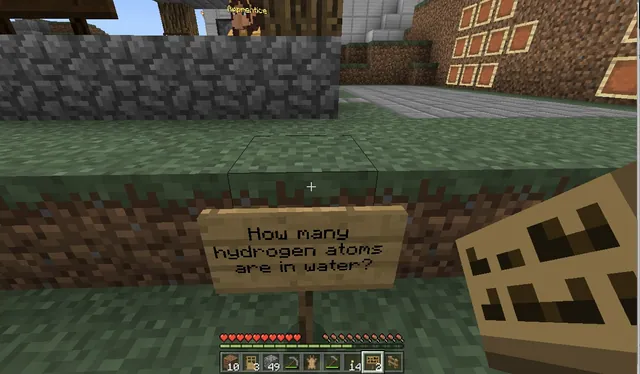
- Plot Claiming and Informational Signage
Students enter the world and choose a plot. They place a sign detailing their team names, the historical time period, the name of the structure, and three key facts discovered during their initial research.
- Replication Build
Students construct their landmark according to their scaled measurements. They select appropriate materials such as stone, wood, sand, or grass to reflect the genuine construction materials and geographical context of the original site.
- Visual Analysis and Gameplay Tour
Learners compare their finished build against photographs or reference art of the actual structure. Finally, students record a gameplay video walkthrough where they verbally present their research, explain material choices, and showcase their scale replica.
Assessment: success criteria
- The planning sheet accurately records historical data, geographic biome, and original dimensions for the chosen landmark.
- Real-world measurements are correctly converted into block scale using the established algorithm, with clear mathematical reasoning.
- The chosen plot displays a sign detailing names, era, landmark title, and three distinct research facts.
- The digital replica matches scaled dimensions and utilizes blocks corresponding to original historical materials.
- The recorded gameplay video clearly presents the landmark's history and compares the build to reference images.
Differentiation
Provide a fixed 1:1 metric-to-block conversion ratio and a curated bank of reference images to simplify measurement calculations.
Ask learners to research interior layouts and landforms in greater detail to replicate both the internal space and surrounding terrain accurately.
Knowledge check
5 questions to check understanding after the lesson. Tap an answer to see if it is right; the score appears at the end.
1Which set of details must students collect on their planning sheet before building?
Answer: C. The planning sheet requires students to research the landmark's purpose, biome or landform, construction date, and length, width, and height.
2How do students determine the dimensions of their structure in Minecraft?
Answer: B. The lesson objective states that students use an algorithm to convert real-world measurements into Minecraft dimensions.
3What information must be included on the sign placed at the build plot?
Answer: A. The activity instructions require a sign showing student names, time period, landmark or location name, and three facts from research.
4How do students verify the visual accuracy of their completed model?
Answer: D. Performance expectations state that students compare and contrast their finished building against a picture of the historical landmark.
5What method is used for students to explain and share their completed project?
Answer: C. The assessment plan specifies producing a gameplay video where students verbally introduce and explain their project.
Resources
Frequently Asked Questions
Is a specific custom Minecraft world download required for this lesson?
No custom world is needed. Teachers can host any standard flat or terrain-based world where students have enough room to claim plots and build.
What kind of video recording tools do students need?
Any basic screen recording software that captures in-game footage and microphone audio will work, allowing students to guide viewers through their landmark while speaking.
Adapted from Ancient Civilizations by Niko Lewman on Minecraft Education, last updated Jun 21, 2018. This classroom version, the timings and the quiz were written by 9Minecraft Education.