- Type
- Lesson plan
- Ages
- Ages 6-13
- Duration
- about 65 min (suggested)
How do the adaptations of living organisms differ between land and water environments?
Overview
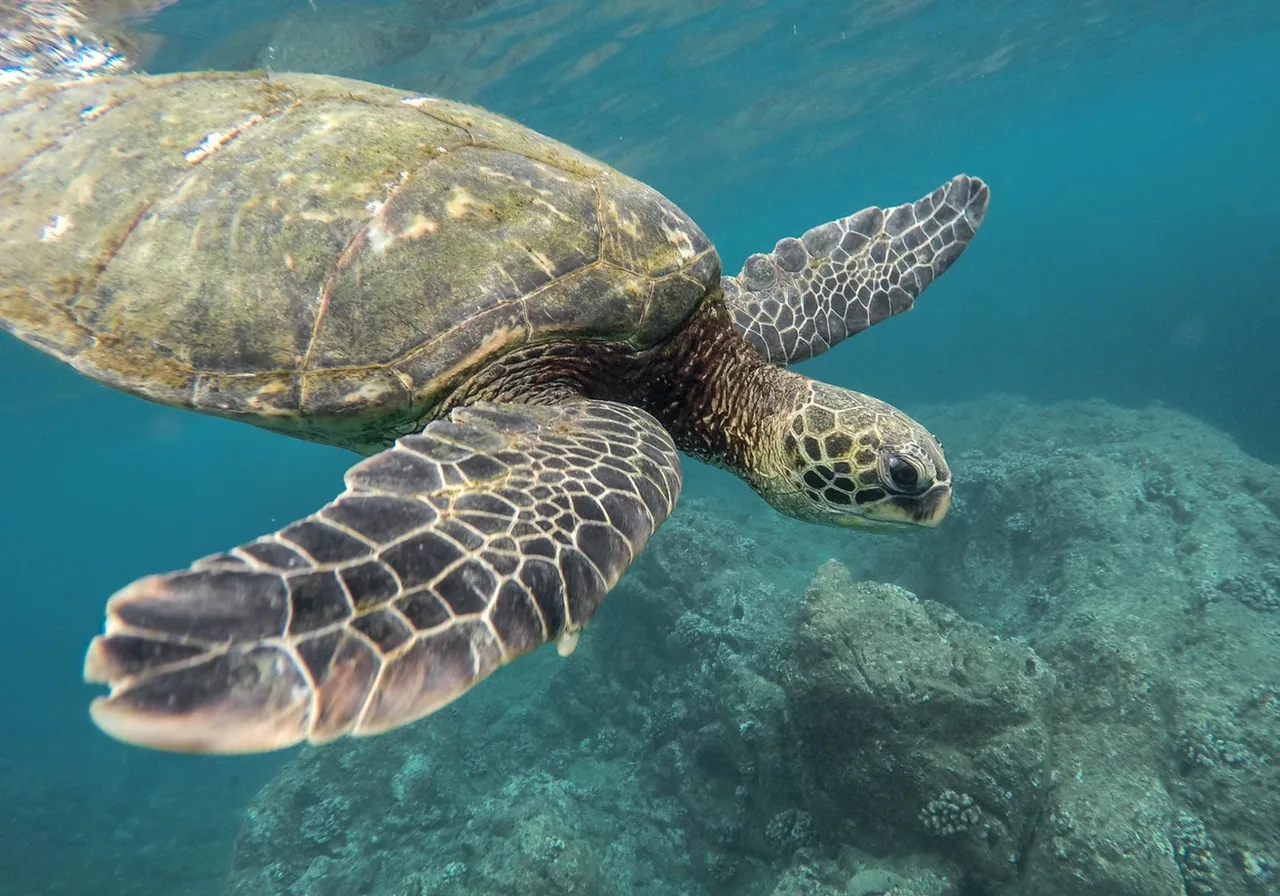
Living organisms develop specialized physical characteristics and behaviors to survive in their natural habitats. By comparing terrestrial environments such as rainforests to aquatic environments like the Mediterranean Sea, students discover how animals meet fundamental needs, such as breathing and movement, under contrasting conditions.
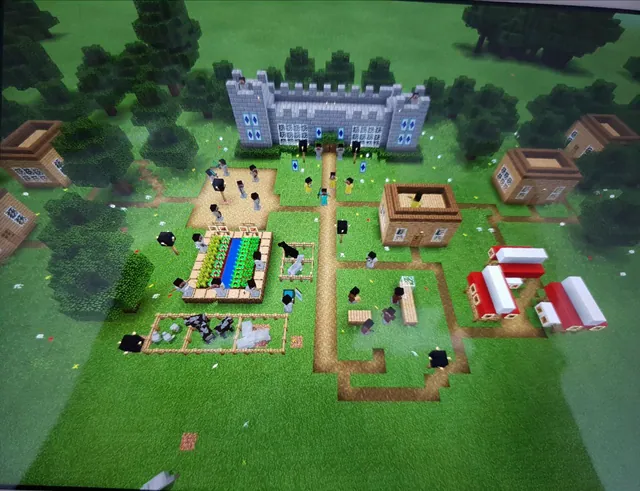
Students collaborate in teams using Minecraft: Education Edition to construct either a terrestrial or an aquatic ecosystem. Through building and presenting their virtual habitats, learners showcase environmental conditions and highlight structural adaptations in marine animals such as turtles, seals, and dolphins.
Learning objectives
By the end of this lesson students will be able to:
- Compare the environmental conditions of land habitats with aquatic habitats.
- Describe how marine organisms breathe, move, and adapt to underwater life.
- Build a collaborative Minecraft model representing a terrestrial or marine ecosystem.
- Present habitat features and animal adaptations to peer groups.
Blocks and items used in this lesson


Key vocabulary
- Adaptation
- A special physical trait or behavior that helps an organism survive in its environment.
- Aquatic Environment
- A habitat based entirely in water, such as an ocean, sea, or lake.
- Terrestrial Environment
- A habitat located on dry land, such as a forest or grassland.
- Marine Organism
- Any plant or animal that lives in salt water or the sea.
Before class
Lesson sequence
Suggested timing: about 65 minutes in total.
- Introduction and Guiding Questions10 min
Introduce the lesson by asking students to name animals that live on land versus those that live in the sea. Discuss what conditions define an aquatic environment and what physical features enable marine life to breathe and survive.
- Habitat Research15 min
Assign one group to research a terrestrial environment, such as a rainforest, and the other to research an aquatic environment, such as the Mediterranean Sea. Have students record key physical conditions and how resident animals, including turtles, seals, and dolphins, adapt to their surroundings.
- Minecraft Ecosystem Build25 min
Working in Minecraft: Education Edition, both groups design and construct a representative world for their assigned environment. Students build terrain features and incorporate organisms that illustrate adaptation to land or water.
- Peer Showcase and Reflection15 min
Under teacher supervision, each group presents its completed Minecraft world to the other group. Students explain the environmental conditions of their build, showcase animal adaptations, and compare how life functions on land versus in water.
Assessment: success criteria
- Identifies distinct environmental differences between land and water habitats.
- Explains how specific marine adaptations allow organisms to breathe and live underwater.
- Actively contributes to the design and construction of the team's Minecraft habitat.
- Communicates ecological concepts clearly during the final peer showcase.
Differentiation
Provide reference images and sentence starters focusing on the breathing differences between lungs and gills.
Challenge students to model specific anatomical features for marine species like seals, turtles, or dolphins directly within their builds.
Knowledge check
5 questions to check understanding after the lesson. Tap an answer to see if it is right; the score appears at the end.
1Which body part allows fish to extract oxygen underwater?
Answer: A. Gills are specialized organs that enable fish to breathe dissolved oxygen in water.
2What is the primary difference between marine and terrestrial habitats?
Answer: B. Marine environments are based in water bodies like oceans and seas, whereas terrestrial environments exist on land.
3Which aquatic ecosystem is suggested as an example for research in the lesson?
Answer: C. The Mediterranean Sea is specified as an aquatic environment example in the lesson plan.
4Which group of marine animals is listed in the lesson materials?
Answer: D. Turtles, seals, and dolphins are the marine animals noted in the lesson supporting materials.
5Why do living organisms develop physical and behavioral adaptations?
Answer: B. Adaptations are traits that help living things survive within the unique conditions of their environment.
Resources
- Lesson package (.zip)Everything the author attached to this lesson in one download.
- Turtles
- Seals
- Dolphins
Frequently Asked Questions
Is a pre-made downloadable world required for this lesson?
No custom world file is required. Students can build their land or water habitats starting from standard generated worlds in Minecraft: Education Edition.
How can teachers manage large classes with only two assignment topics?
You can split the class into smaller sub-teams of three to four students, assigning half the teams to land habitats and the other half to aquatic habitats before pairing them up to present.
Adapted from Adaptation of Marine organisms by Soheir Zaki on Minecraft Education, last updated Oct 19, 2018. This classroom version, the timings and the quiz were written by 9Minecraft Education.