- Type
- Lesson plan
- Ages
- Ages 8-13
- Duration
- 45 min
- Level
- Beginner
- Includes
- Quiz: 5 questions
How do ecologists investigate and protect wildlife habitats during major engineering projects?
Overview
In this lesson, students explore how ecological surveys are used in civil engineering projects to protect local wildlife and habitats. By stepping into the shoes of environmental surveyors, learners investigate the role of biodiversity and discover how major infrastructure schemes assess environmental impact.
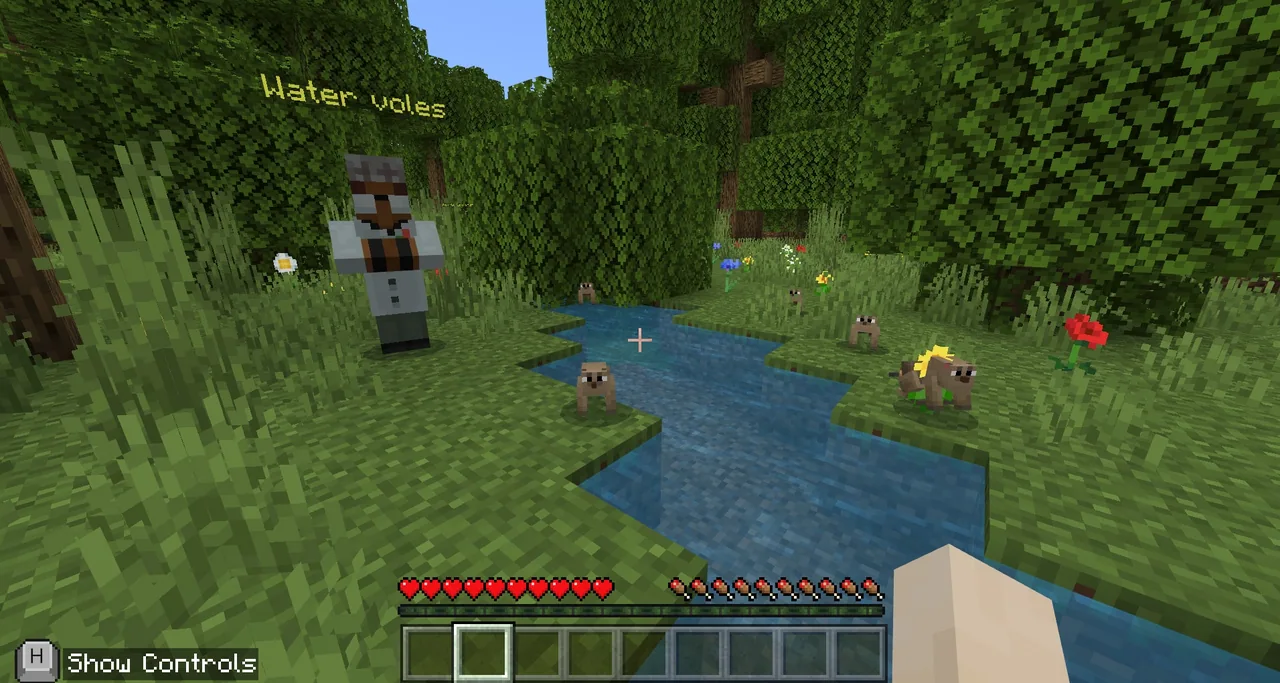
Using Minecraft, students start inside highway planning offices before traveling to the Lake Copse woodland. Armed with a camera and workbook, they document plant, fungal, and animal species, interview NPCs about professional roles, and—in the advanced route—construct a green bridge designed for safe animal passage.
Learning objectives
By the end of this lesson students will be able to:
- Identify key animal, plant, and fungal species living within the Lake Copse habitats.
- Document environmental findings by taking photos and writing species notes in an in-game workbook.
- Explain the importance of biodiversity and the professional job roles that support environmental conservation.
- Construct a functional green bridge section to provide safe passage for wildlife over roadways.
Blocks and items used in this lesson


Key vocabulary
- Biodiversity
- The variety of different plant, animal, and fungal species living within a particular environment.
- Habitat
- The natural environment where a specific organism finds food, shelter, and conditions needed to survive.
- Green Bridge
- A vegetated crossing built over roads or railways that allows animals to safely travel across transport corridors.
- Ecological Survey
- A structured investigation to record the species and environmental features present across a site.
Before class
Lesson sequence
Suggested timing: about 45 minutes in total.
- Office Briefing5 min
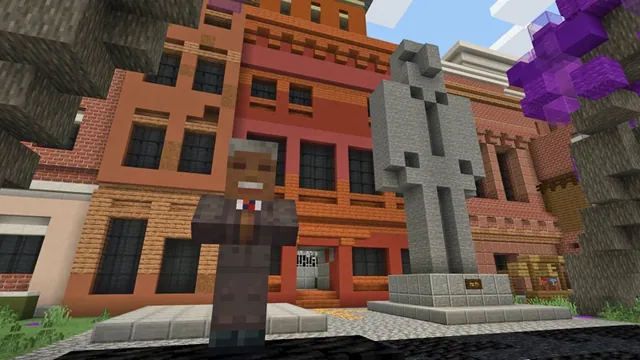
Students spawn inside the National Highways offices. Allow them five minutes to explore the building and talk to staff NPCs to gather general context. Direct students to find the corner office where the NPC Meg is stationed, without clicking her teleport button yet.
- Site Arrival and Portacabin Induction10 min
Students speak with Meg and click the button to teleport to the Lake Copse scheme. Outside the forest portacabin, learners receive their camera and workbook from an NPC, then enter the cabin to review the target species: Red Campion, Conifer Blueing Bracket, water voles, slow worms, bats, foxes, and bees.
- Habitat Survey and Documentation20 min
Learners venture through Lake Copse to locate target species habitats. They take a photograph of each habitat and record species facts in their workbook. Along the way, students speak to various NPCs scattered across the map to discover different professional job roles connected to the project.
- Green Bridge Build and Review10 min
Junior students finalize their workbooks and review findings. Senior students return to the portacabin, speak to an NPC to teleport to the roadway, and use materials from a chest to construct a green bridge section within designated building boundaries so wildlife can cross safely.
Assessment: success criteria
- Workbook contains photographs and written factual notes for the target flora, fungus, and fauna.
- Student can describe why ecological surveys are vital before major engineering schemes proceed.
- Student names and explains at least one environmental job role featured in the world.
- Senior students produce a completed green bridge section built within the specified boundaries.
Differentiation
Pair learners to locate habitats together and use the portacabin displays and sample fungus location as direct visual references.
Challenge senior students to research additional wildlife needs and add realistic vegetative cover to their green bridge build.
Knowledge check
5 questions to check understanding after the lesson. Tap an answer to see if it is right; the score appears at the end.
1Which NPC inside the National Highways corner office teleports students to the Lake Copse project?
Answer: B. Students must find and interact with the Meg NPC in the corner office to teleport to the scheme.
2Which items must students collect from the NPC outside the portacabin to record their survey?
Answer: C. Students are instructed to collect a camera and workbook (book and quill) to photograph habitats and write down facts.
3What is the primary function of a green bridge in infrastructure planning?
Answer: A. Green bridges are vegetated structures designed to let wildlife safely traverse transport routes.
4Which specific plant species are students asked to identify and document during the survey?
Answer: D. The lesson lists Red Campion as the designated plant species to locate in Lake Copse.
5Where do students begin their journey at the start of the lesson?
Answer: A. All players spawn into the National Highways offices to begin Part 1 of the activity.
Frequently Asked Questions
How do students select between the Junior and Senior game options?
Both pathways share the same initial spawn point and setup. An NPC later in the world presents learners with the choice between the KS2 Junior route and the KS3 Senior route.
What should I do if students do not locate all six species within the time limit?
The activity can easily be split across sessions. Students retain their saved workbooks and can resume their ecological survey in a subsequent lesson.
Adapted from A27 Biodiversity by Block Builders on Minecraft Education, last updated Feb 27, 2023. This classroom version, the timings and the quiz were written by 9Minecraft Education.