- Type
- Lesson plan
- Subject
- Language Arts
- Topics
- World Languages
- Grade
- Early years (Pre-K to Grade 2)Primary (Grades 3-5)Middle school (Grades 6-8)High school (Grades 9-12)
- Ages
- All ages
- Duration
- 3 hours
- Level
- Beginner
How can we describe an animal's likes, dislikes, and habitat needs using our target language?
Overview
In this world language lesson, students develop their descriptive fluency by expressing likes, dislikes, and care requirements for animals entirely within the target language. By moving beyond isolated memorization, the activity encourages meaningful communication and reciprocal peer teaching in an active, collaborative setting.
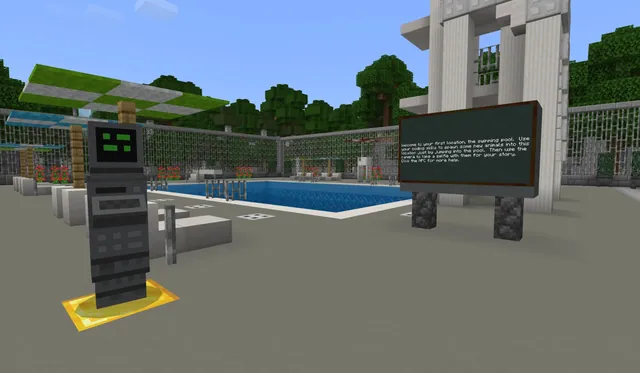
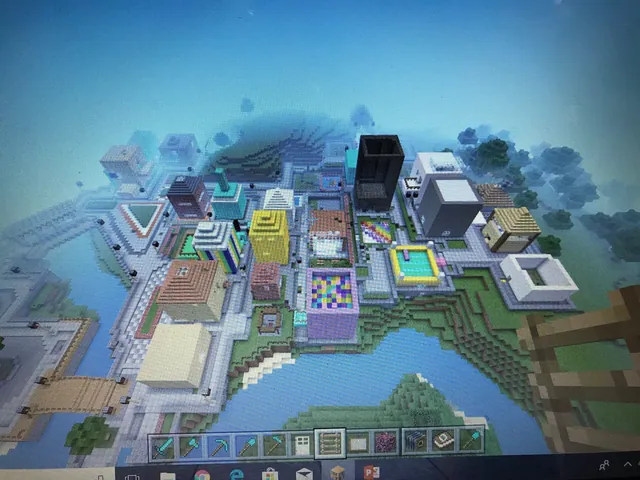
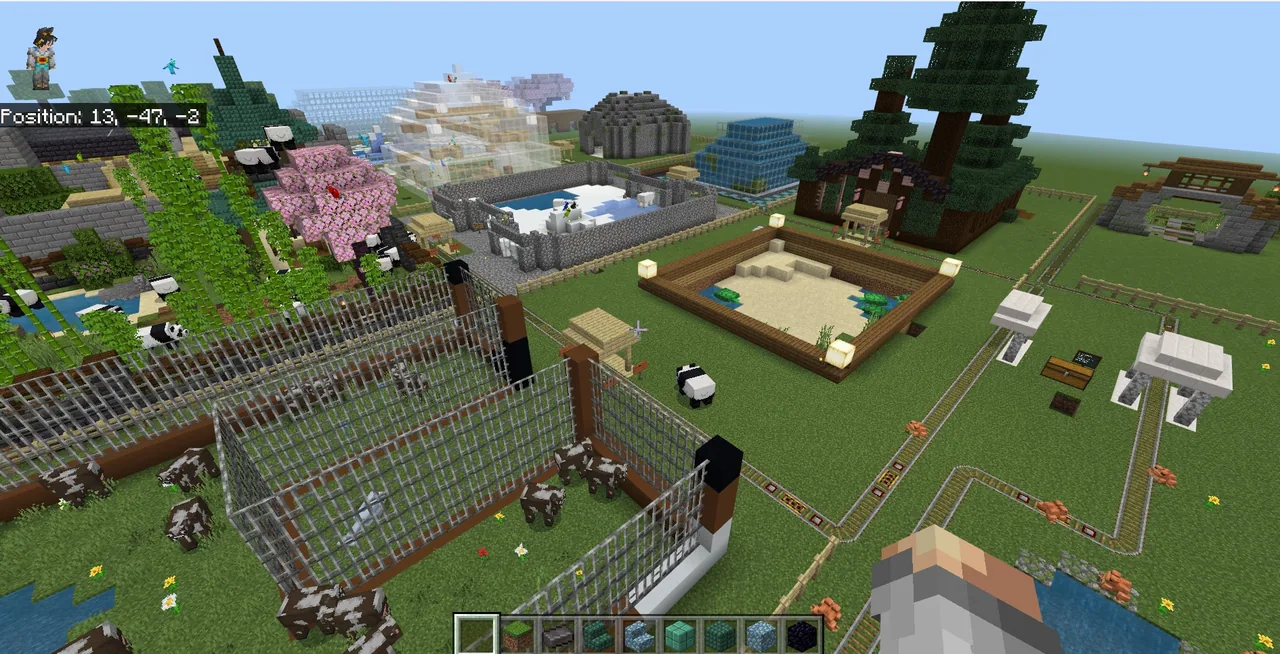
Students enter a shared Minecraft world featuring numbered building lots and informational kiosks. Each learner claims a plot, breaks an ice block to begin construction, and builds a dedicated enclosure suited to their animal's specific needs, dietary habits, and preferences, followed by peer tours and target-language conversations.
Learning objectives
By the end of this lesson students will be able to:
- Express an animal's likes, dislikes, and dietary needs exclusively in the target language.
- Build a custom zoo habitat in Minecraft that reflects the real-world needs of a chosen animal.
- Teach specialized animal and habitat vocabulary to peers through reciprocal conversation.
- Write descriptive evaluations of classmates' exhibits with accurate noun-adjective agreement and verb forms.
Blocks and items used in this lesson


Key vocabulary
- Target Language
- The specific language students are learning and practicing during instruction.
- Circumlocution
- The strategy of describing an object or idea using known words when the exact term is forgotten.
- Reciprocal Teaching
- An instructional activity where students take turns acting as the teacher to share knowledge with peers.
Before class
Lesson sequence
Suggested timing: about 180 minutes in total.
- Vocabulary and Big Book Review30 min
Read through the target language Big Book with the class to reinforce key terms regarding animals, food preferences, and habitat requirements. Explain that all speaking, listening, reading, and writing during the project must remain strictly in the target language.
- Lot Selection and World Entry20 min
Assign or allow students to choose a lot number between 1 and 30 using popsicle sticks or self-selection. Once inside the world, students navigate to their assigned kiosk and break the ice number block to clear the plot for construction.
- Habitat Construction70 min
Students construct their animal exhibits, building elements that satisfy what the animal likes, dislikes, and needs to stay healthy. The teacher circulates physically and in-game, prompting students in the target language and encouraging circumlocution when students search for words.
- Zoo Walk and Reciprocal Teaching40 min
Students visit peer exhibits using the numbered kiosks to identify creators. Learners hold sustained conversations in the target language, explaining why their enclosures were designed that way and teaching their chosen animal's specialized vocabulary to visitors.
- Written Reflection and Assessment20 min
Students complete a self-assessment rubric tracking their language progress. They write short descriptions of their own exhibits and peer lots, ensuring correct verb inflection and noun-adjective agreement.
Assessment: success criteria
- Consistent use of the target language during peer conversations and building phases.
- Accurate representation of animal likes, dislikes, and physical needs within the built environment.
- Correct grammatical inflection, noun-adjective agreement, and vocabulary recall in written descriptions.
- Completion of the student self-assessment rubric tracking metacognitive goals.
Differentiation
Allow students who are less comfortable to rely on simple, predictable sentence structures to describe items in their exhibits.
Prompt advanced students to use complex sentence structures, emergency circumlocutions, and rapid dialogue during construction.
Knowledge check
5 questions to check understanding after the lesson. Tap an answer to see if it is right; the score appears at the end.
1How do students unlock their assigned lot before starting construction in the world?
Answer: C. The source specifies that students find their numbered kiosk and break the ice number to begin construction.
2How much pre-teaching time does the author recommend before launching this Minecraft activity?
Answer: B. The teacher prep notes state that the teacher spends 10 to 15 minutes per class period for at least two weeks preparing vocabulary.
3What language rule must students follow during this zoo building project?
Answer: D. The learning objectives emphasize that students practice likes and dislikes using the target language exclusively.
4Which storytelling and reading technique is paired with Big Books to prepare vocabulary?
Answer: A. The source states that the Big Books combine the GLAD technique with Teaching Proficiency Through Reading and Storytelling (TPRS).
5What peer interaction is required during the zoo visit phase?
Answer: C. The source notes that students learn specialized vocabulary for their animal and reciprocal teach that vocabulary to classmates.
Resources
- Lesson package (.zip)Everything the author attached to this lesson in one download.
- PETA zooTwo worksheets, one for Day 1 (building the exhibit) and one for Day 2 (visiting their classmates' exhibits), in French, Spanish, and Japanese.
- Minecraft Lesson - Setting up for SuccessIdeas for how to set your students up for success, when using Minecraft Education as project-based and action-oriented learning.
- Big Book aimer françaisA Big Book of animals available in Minecraft Education, and what they like to eat. This one's in French.
- Big Book gustar españolA Big Book of animals available in Minecraft Education, and what they like to eat. This one's in Spanish.
- Big Book 好きA Big Book of animals available in Minecraft Education, and what they like to eat. This one's in Japanese.
Frequently Asked Questions
How do visitors identify which classmate built a particular enclosure?
Each lot is numbered from 1 to 30, and the numbers are displayed directly on kiosks so students know which classmate created each portion of the zoo.
Can this lesson be used for languages other than French, Spanish, or Japanese?
Yes. The source notes that teachers can delete the kiosk languages they do not need and insert their own target language materials.
Adapted from Zoo of Likes and Dislikes by Pamela Parks on Minecraft Education, last updated Jul 2, 2024. This classroom version, the timings and the quiz were written by 9Minecraft Education.