- Type
- Lesson plan
- Subject
- Language Arts
- Topics
- World Languages
- Grade
- Early years (Pre-K to Grade 2)Primary (Grades 3-5)Middle school (Grades 6-8)High school (Grades 9-12)
- Ages
- All ages
- Duration
- 3 hours
- Level
- Beginner
How do urban population pressures and cultural traditions influence what is essential in a living space?
Overview
In this world languages lesson, students explore how urban population density and high land costs shape living spaces within the target culture. By examining authentic architectural necessities, learners discover what makes a dwelling functional and culturally distinctive, comparing these concepts to their own personal living preferences.
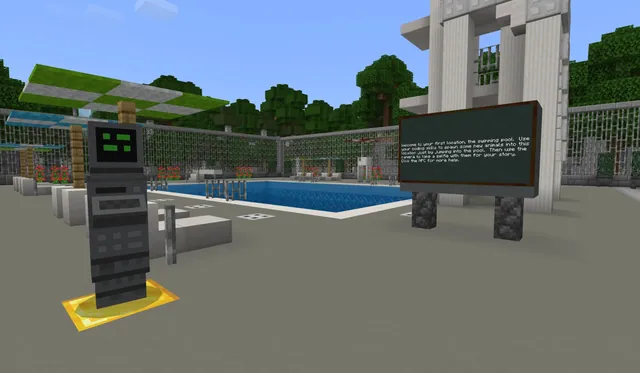
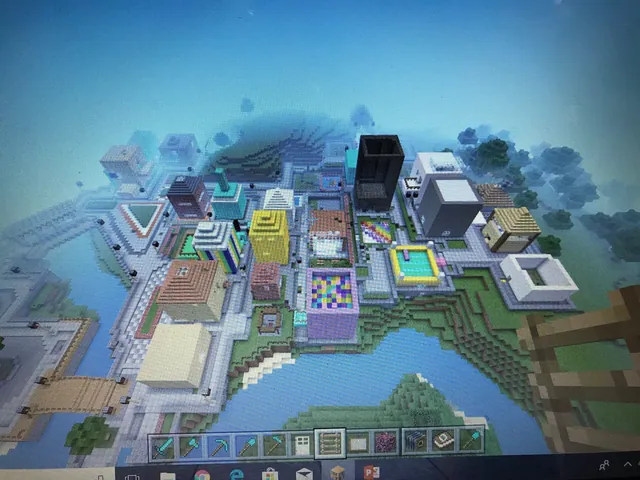
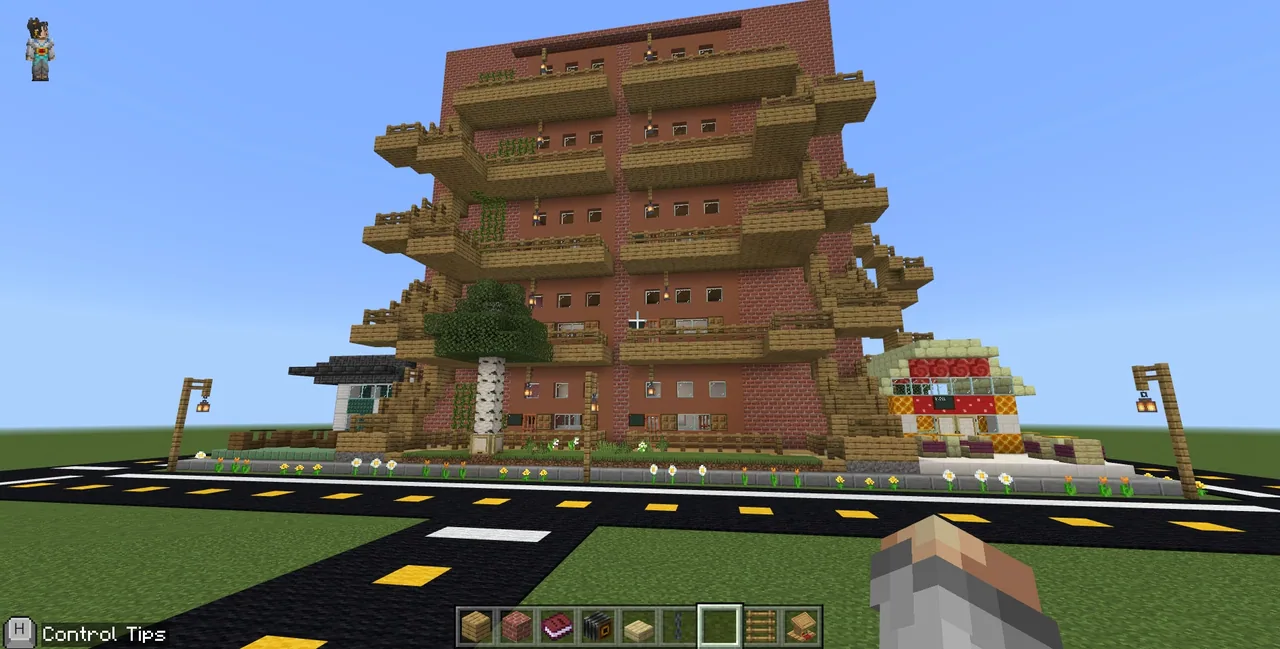
Using a shared Minecraft apartment complex featuring numbered units, students select an apartment and furnish it to reflect target-culture design and terminology. Throughout the collaborative building process, students maintain target-language communication to discuss layouts, describe furnishings, write descriptions, and tour peer spaces.
Learning objectives
By the end of this lesson students will be able to:
- Identify and apply target-language vocabulary for rooms, furniture, shapes, and colors.
- Incorporate specific cultural architectural features into a compact home design.
- Communicate continuously in the target language during building and peer discussions.
- Write descriptions of personal living spaces and classmates' furnished apartments using accurate grammar and agreement.
Blocks and items used in this lesson


Key vocabulary
- Genkan
- An entryway in a traditional Japanese home designed specifically for removing footwear before entering the living area.
- Rez-de-chaussée
- The French term for the ground floor of a building, distinct from the first upper floor.
- Action-Oriented Approach
- A language-learning method where students act as social agents using language to complete purposeful, real-world tasks.
- Circumlocution
- The strategy of describing an object or concept using familiar words when the exact term is unknown.
Before class
Lesson sequence
Suggested timing: about 180 minutes in total.
- Cultural Context and Shared Reading25 min
Introduce the driving questions regarding urban population pressures, real estate costs, and compact living in major cities within the target culture. Read through the culturally specific class guide together, highlighting key architectural traditions such as dedicated entryways or floor-naming systems.
- World Setup and Unit Assignment20 min
Guide students into the Minecraft world where apartments are numbered 1 through 36. Assign units randomly using numbered popsicle sticks or permit learners to select an available unit.
- Target-Language Construction75 min
Students furnish their assigned compact apartment while maintaining exclusive communication in the target language. Learners apply vocabulary for rooms, furniture, colors, and shapes, incorporating cultural essentials and exploring optional redstone features for secret rooms.
- Peer Tours and Spoken Discussion35 min
Students visit peer apartments to observe design choices and discuss layouts directly in the target language. Peers ask and answer questions about furniture, space-saving strategies, and cultural elements.
- Written Summary and Self-Assessment25 min
Learners complete written descriptions of their finished apartments and record observations of their classmates' spaces using the lesson worksheet. Students conclude by evaluating their own language use and project completion against the self-assessment rubric.
Assessment: success criteria
- Accurate use of target-language vocabulary for rooms, furniture, colors, and shapes.
- Inclusion of specific architectural features relevant to the target culture.
- Sustained target-language spoken communication and effective circumlocution during collaborative building.
- Written apartment descriptions demonstrating proper grammatical inflection, verb conjugation, and adjective-noun agreement.
- Completed student self-assessment rubric reflecting on personal language growth and construction goals.
Differentiation
Learners who need support can rely on structured sentence frames and basic descriptive phrases to identify objects and express immediate needs in the target language.
Advanced students can integrate redstone wiring into their apartment's secret room while generating complex, multi-clause explanations in the target language.
Knowledge check
5 questions to check understanding after the lesson. Tap an answer to see if it is right; the score appears at the end.
1Why is an entryway like a genkan essential in a Japanese home?
Answer: B. The genkan is specifically designed as a clean transition area where people remove their shoes before stepping into the living quarters.
2What urban challenge drives the need for compact living spaces in target culture cities?
Answer: A. Densely populated cities face high property costs and crowded conditions, requiring residents to be creative with smaller footprints.
3What should you do when you do not remember a specific target-language word while collaborating?
Answer: C. Circumlocution allows language learners to communicate meaning and sustain dialogue even when an exact term is forgotten.
4In French architecture, what is the term for the ground floor of a building?
Answer: D. The ground floor in France is the rez-de-chaussée, while the floor above a flight of stairs is considered the first floor.
5How are individual apartments assigned to students in this lesson's Minecraft world?
Answer: A. The lesson uses numbered units from 1 to 36, which can be selected by students or distributed randomly using popsicle sticks.
Resources
- Lesson package (.zip)Everything the author attached to this lesson in one download.
- Minecraft Lesson - Setting Up for SuccessA description of mini-games to ensure that your students are ready to use Minecraft as project-based learning and in an action-oriented approach.
- Big Book Tiny Home españolA TPRS story in Spanish that introduces vocabulary that the students will need in order to be successful.
- Big Book Tiny Home françaisA TPRS story in French that introduces vocabulary that the students will need in order to be successful.
- Big Book Tiny Home 日本語A TPRS story in Japanese that introduces vocabulary that the students will need in order to be successful.
- Big Book of Redstone日本語A Big Book in Japanese for students that want to add redstone contraptions to their homes.
- Big Book of Redstone españolA Big Book in Spanish for students that want to add redstone contraptions to their homes.
- Big Book of Redstone françaisA Big Book in French for students that want to add redstone contraptions to their homes.
- Minecraft 2-page worksheet - French Spanish and JapaneseA two-page worksheet, meant to be done over two days, in which the students explain what they created, and describe what their friends created.
Frequently Asked Questions
How should I handle students who struggle to stay in the target language?
Encourage learners to use circumlocution and simple sentence frames rather than reverting to their native language, and provide short designated breaks if immersion fatigue sets in.
Can this lesson be adapted to different target languages?
Yes, the lesson structure and supporting materials are designed for world language classes, including French, Spanish, and Japanese, focusing on the specific cultural home features of each.
How long should language vocabulary be introduced prior to entering Minecraft?
Dedicating 10 to 15 minutes per class session over at least two weeks to vocabulary games and shared reading ensures words are transferred into long-term memory before project work begins.
Adapted from What is Essential for a Tiny Home in the Target Culture? by Pamela Parks on Minecraft Education, last updated Jul 1, 2024. This classroom version, the timings and the quiz were written by 9Minecraft Education.