- Type
- Lesson plan
- Topics
- ScienceTechnologyGaming
- Ages
- Ages 8-13
- Duration
- about 80 min (suggested)
- Includes
- Quiz: 5 questionsLesson files
What raw materials are needed to build an electric vehicle, and how do different manufacturing steps combine them into functional parts?
Overview
As electric vehicles become more common worldwide, understanding how they are manufactured and where their components originate is an essential foundation for studying sustainable technology and engineering. This lesson introduces learners to the supply chain of electric vehicles by examining the connection between natural mineral resources, processing techniques, and finished mechanical systems.
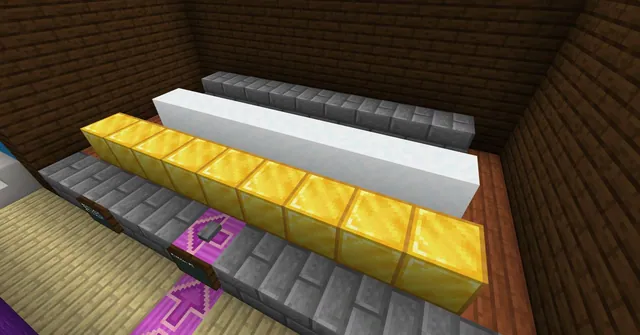
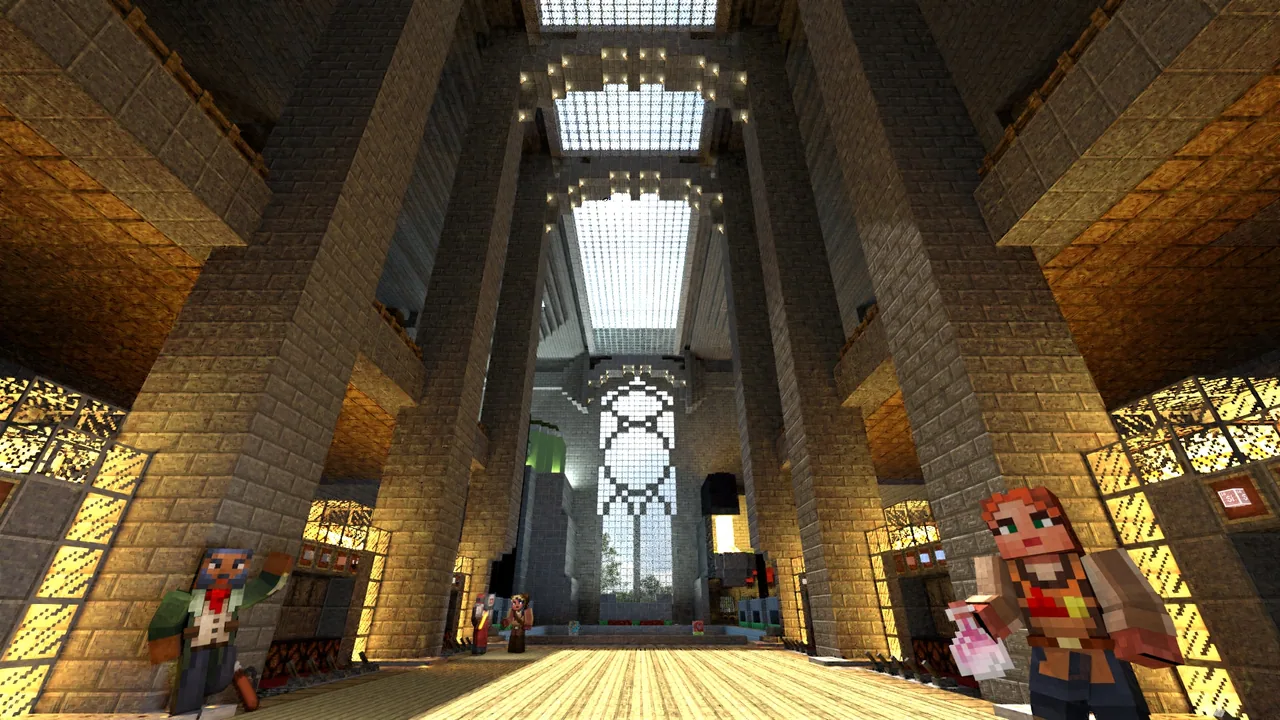
Set within the Institute for Voltaic Propulsion, the activity turns a Minecraft world into an automated vehicle assembly plant. Working in up to six small teams, students gather raw ingredients across specialized facility rooms, mine sites, and natural landscapes, feed them into Material Blenders, and trigger Fabricators to assemble a complete electric car on a central build floor.
Learning objectives
By the end of this lesson students will be able to:
- Identify key raw materials and refined components required to manufacture an electric car.
- Operate laboratory facilities including furnaces, crafting tables, and blenders to process collected resources.
- Collaborate within a small team to gather five required items for a designated vehicle component.
- Coordinate with the entire class to complete all six sub-assemblies and finalize the vehicle.
Blocks and items used in this lesson


Key vocabulary
- Material Blender
- A specialized machine in the lab that accepts five specific raw resources to produce a vehicle component.
- Fabricator
- A manufacturing station on the build floor that lights up with beacons once its corresponding materials are loaded.
- Smelting
- The process of using furnaces and fuel to heat raw substances, such as melting metal ore, baking terracotta, or turning sand into glass.
- Resource Scarcity
- The limited availability of raw materials in an environment, requiring careful planning and sustainable management.
Before class
Lesson sequence
Suggested timing: about 80 minutes in total.
- Orientation and Role Assignment10 min
Introduce the lesson by discussing electric vehicles and their role in modern transportation. Explain that students are visiting engineers at the Institute for Voltaic Propulsion tasked with completing a new vehicle.
Assign each student group to one of the six Material Blenders and establish clear team communication before entering the shared world.
- Facility Investigation and Resource Planning15 min
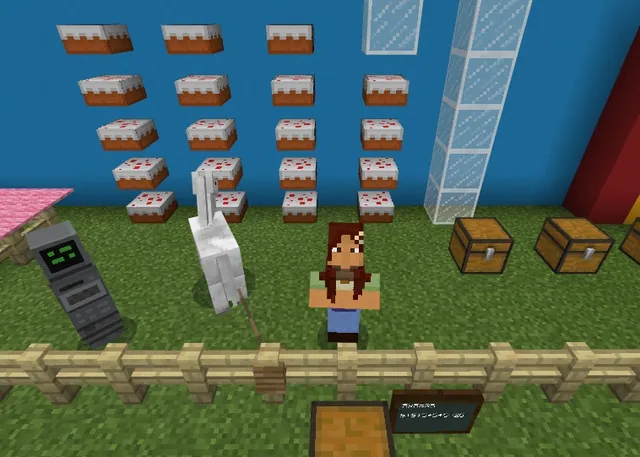
Teams enter the lab, consult non-player characters (NPCs) for guidance and trivia, and inspect their assigned Material Blender to identify the five required inputs.
- Locate the Element Storage Room for rare earth metals.
- Find the Storerooms for tools, redstone components, and gear.
- Use the high-tech Teleporter to access the lab mine or explore nearby terrain for ice and sand.
- Harvesting and Refining Resources25 min
Students mine minerals with pickaxes, harvest ice using enchanted tools, and bring items back to the processing zones. Teams use the Smelting Zone to process metals, bake terracotta, or produce glass, and use crafting tables to construct intermediate components.
- Component Fabrication and Final Assembly15 min
Teams deposit their five correct items into their Material Blender slots and flip the lever. When successful, the machine illuminates and activates the beacons on the corresponding Fabricator on the Build Floor.
Once all six Fabricators complete their components, a representative climbs the central pedestal to pull the final master lever and reveal the finished electric car.
- Debrief and Reflection15 min
Convene as a whole group to review the manufactured parts of the car. Ask students to reflect on the difficulty of gathering specific resources, how their teams divided labor, and how resource scarcity in the game parallels real-world industrial engineering.
Assessment: success criteria
- The student team correctly identified and collected all five resources specified by their Material Blender.
- The student utilized appropriate lab facilities, such as the Smelting Zone, crafting stations, or enchanting tools, to prepare refined materials.
- The student team activated their Fabricator on the Build Floor to construct their designated car component.
- The student completed a reflection evaluating team efficiency, resource accessibility, and real-world material scarcity.
Differentiation
Pair students with clear task checklists directing them to specific rooms, such as directing one partner to the Element Storage Room while the other uses the Smelting Zone.
Have early-finishing teams analyze the real-world scarcity of their gathered materials and write an assessment on supply challenges if a second vehicle were built in the same world.
Knowledge check
5 questions to check understanding after the lesson. Tap an answer to see if it is right; the score appears at the end.
1How many total Material Blenders are used in the lab to build parts for the car?
Answer: B. The source explains that the production line is fed by six Material Blenders that convert raw resources into parts.
2How many correct materials must be placed into a single Material Blender before its Fabricator lights up?
Answer: C. Students must correctly insert all five materials into their blender to activate the fabricator beacons.
3Which tool or technique is specifically mentioned in the lesson to retrieve solid ice blocks from an iceberg?
Answer: C. The source notes that enchanted, magical pickaxes are used to extract solid blocks of ice from an iceberg.
4Where do students go to inspect vehicle parts coming together and pull the final master lever?
Answer: A. The Build Floor is the elevated area where students inspect progress, activate Fabricators, and pull the final lever on the central pedestal.
5What happens after all six Fabricators have finished creating their components?
Answer: B. Once every Fabricator is activated and all parts are made, students climb the central pedestal and pull the final lever to complete the car.
Resources
Frequently Asked Questions
Can this activity be divided across multiple class periods?
Yes. Because the shared Minecraft world saves progress, teachers can introduce the concepts and gather materials in one session, then complete fabrication and the reflection in a subsequent session.
Do all students need to work on the same car component?
No. The activity is designed for small teams to each manage one of the six Material Blenders, requiring the whole class to coordinate so all parts are ready for final assembly.
Adapted from The Voltaic Propulsion Lab by Daniel Galbraith on Minecraft Education, last updated Jul 2, 2020. This classroom version, the timings and the quiz were written by 9Minecraft Education.