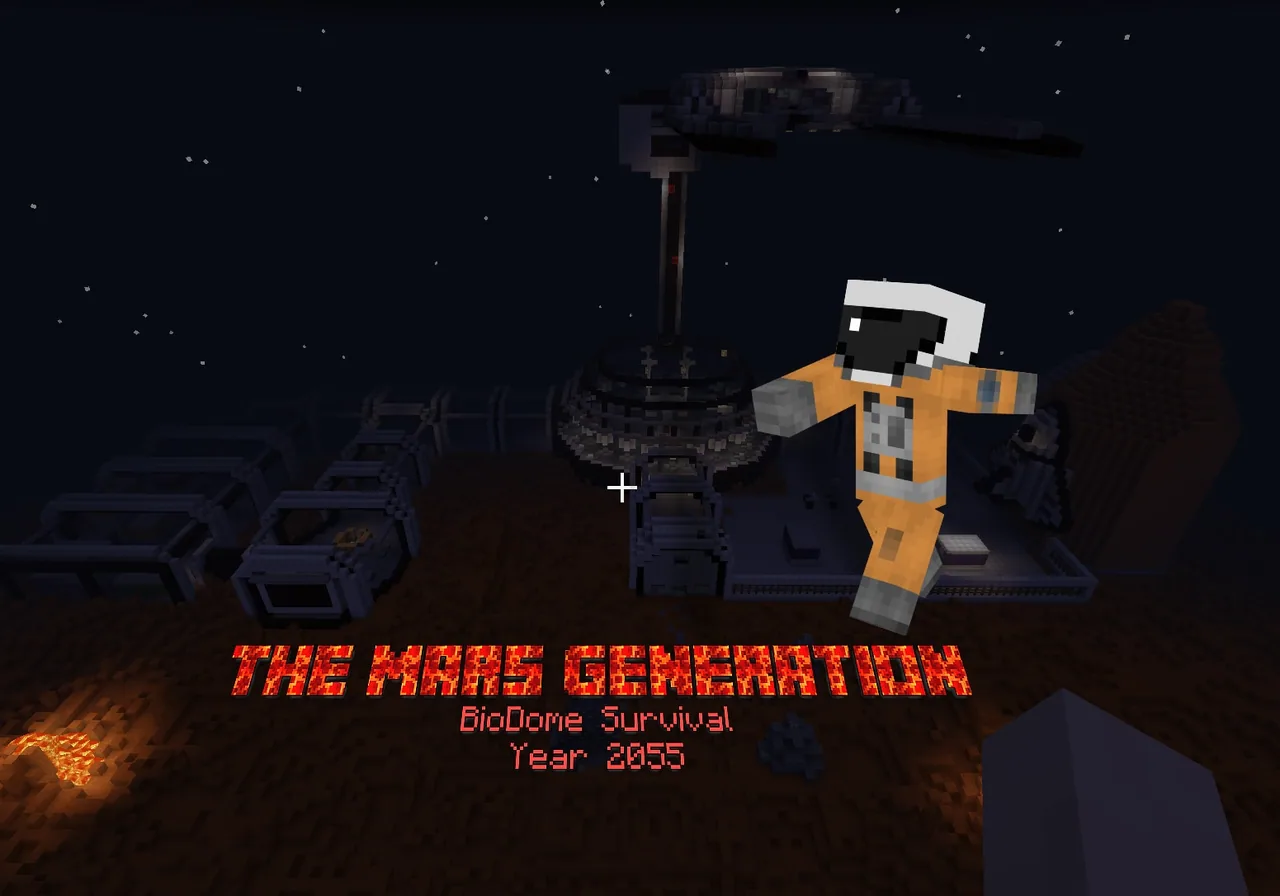
How can people work together and support one another to maintain a thriving community under extreme survival conditions on Mars?
Overview
Human survival on Mars requires more than technological capability; it demands shared responsibility, emotional resilience, and tight-knit collaboration. In this project, learners explore what it means to be part of the Mars generation by confronting the realities of communal life in an isolated habitat with limited resources.
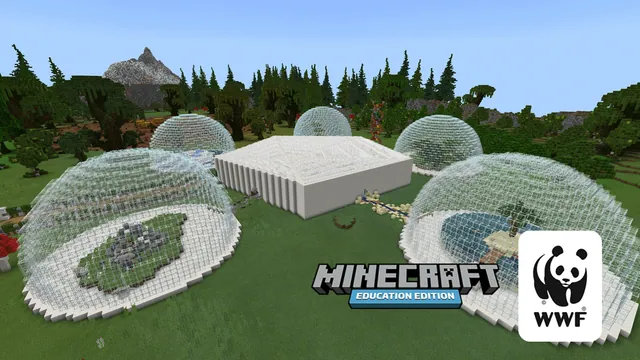
Using Minecraft Education as an interactive sandbox, students cohabit a single BioDome where they pool materials and establish a sustainable ecosystem. Throughout the project, the teacher introduces environmental or structural setbacks, requiring students to document their emotional journey and problem-solve together using in-game cameras and journals.
Learning objectives
By the end of this lesson students will be able to:
- Collaborate with peers to establish and sustain a balanced ecosystem inside a shared Martian habitat.
- Manage and share limited resources equitably to support the collective survival of the settlement.
- Document achievements and emotional responses using daily journal entries and in-game photography.
- Devise creative solutions to overcome unpredictable setbacks introduced into the habitat.
Blocks and items used in this lesson


Key vocabulary
- BioDome
- A sealed, self-contained habitat designed to support life in an otherwise uninhabitable environment.
- Ecosystem
- A community of living organisms interacting with their physical surroundings and shared resources.
- Resource Management
- The process of using and conserving limited supplies efficiently to meet community needs.
Before class
Lesson sequence
- Habitat Arrival and Shared Agreements
Introduce the simulation context: students are pioneers living together in a Martian BioDome with finite supplies. Have the group establish common ground rules for dividing communal storage, managing basic food and building supplies, and supporting one another.
- Ecosystem Construction and Co-Living
Learners enter the BioDome together and begin setting up essential life-support systems, farming areas, and living spaces. Emphasize that all building and harvesting should contribute to the group rather than private stockpiles.
- Responding to Environmental Setbacks
Introduce planned setbacks, such as simulated equipment failure, crop blights, or structural challenges. Students must assess the crisis as a unit and implement creative repairs or resource reallocations to stabilize the habitat.
- Documentation and Emotional Reflection
Students use cameras to photograph key survival milestones and capture habitat status. Have them record daily journal entries detailing practical solutions as well as reflections on the emotional pressure of living in isolation.
Assessment: success criteria
- Active participation in shared resource management without hoarding or depleting communal supplies.
- Regular completion of reflective journal entries featuring photographs of habitat achievements.
- Demonstrated ability to communicate personal emotions and collaborate constructively during stressful setbacks.
- Successful maintenance of a functioning, self-sustaining ecosystem within the BioDome.
Differentiation
Assign specific, structured roles within the BioDome so learners can focus on one survival task at a time.
Challenge advanced students to engineer automated conservation systems or coordinate response plans for multiple simultaneous setbacks.
Knowledge check
5 questions to check understanding after the lesson. Tap an answer to see if it is right; the score appears at the end.
1What is the primary setting for the student simulation in this lesson?
Answer: C. The project places students together inside a BioDome on the surface of Mars.
2How are students instructed to record their progress and achievements during the project?
Answer: A. The activity requires daily journal entries paired with photographs taken using the in-game camera.
3Which major element tests the resilience of the students throughout the simulation?
Answer: D. Students must sustain their ecosystem while handling teacher-implemented setbacks.
4Besides Science and Climate Science, which subject area does this lesson explicitly target?
Answer: B. The source identifies Social and Emotional Health as a key subject due to pressure and teamwork.
5What should students do with the resources available inside the BioDome?
Answer: C. The lesson directs students to share and contribute their limited resources for the good of the entire group.
Resources
- Lesson package (.zip)Everything the author attached to this lesson in one download.
- ScreenShot 1screenshot1
- Screenshot 2Screenshot 2
- Project title cardTitle card
Frequently Asked Questions
Is there a pre-built world file provided for this lesson?
No world download is supplied with the lesson source. Teachers can either build a dome beforehand or have students construct an enclosed dome structure together as part of their initial survival task.
What kinds of setbacks can the teacher introduce during the simulation?
Teachers can simulate habitat crises such as crop failure, supply shortages, or atmospheric breaches by restricting access to certain blocks, removing specific resources, or damaging parts of the structure that require collective repair.
What age group is this lesson plan designed for?
The source lists this lesson for all ages, making it adaptable for elementary through secondary learners by adjusting the complexity of the setbacks and the depth of the journal prompts.
Adapted from The Mars Generation Project by Benjamin Kelly on Minecraft Education, last updated Jan 17, 2017. This classroom version, the timings and the quiz were written by 9Minecraft Education.