- Type
- Lesson plan
- Ages
- Ages 8-13
- Includes
- Quiz: 5 questionsLesson files
How can we redesign our classroom with sustainable materials and energy-efficient systems to minimize our environmental footprint?
Overview
Classrooms and school facilities consume substantial energy every day. By investigating how renewable and non-renewable energy sources power a school, students discover practical ways that architectural choices, energy-efficient fittings, and eco-friendly practices can lower emissions and support surrounding natural environments such as forests, waterways, and oceans.
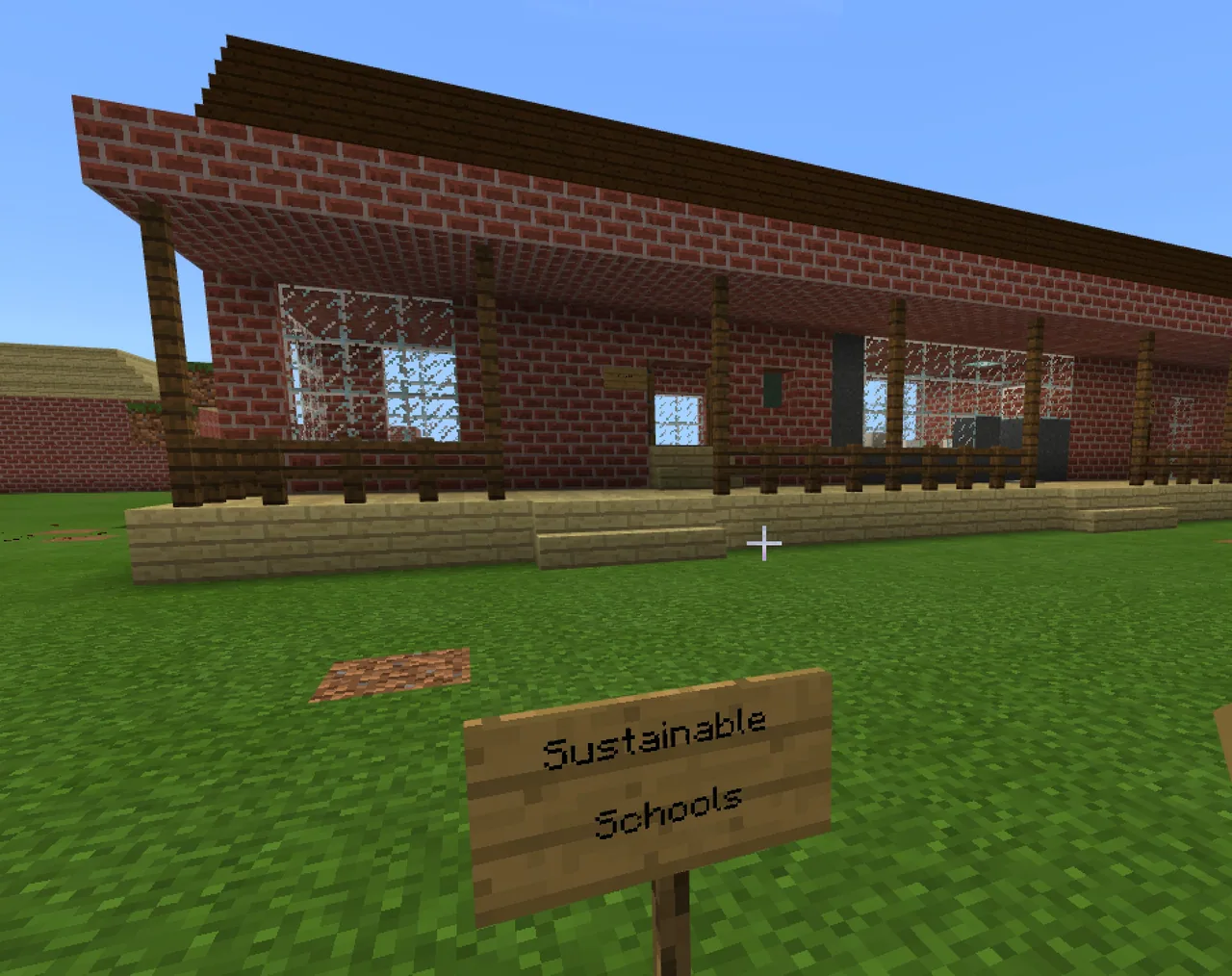
In this activity, students translate real-world measurements of their current classroom into Minecraft using a direct one-to-one scale. After constructing an accurate baseline model, teams collaborate to retrofit and renovate the structure with modern sustainable materials, fixtures, and energy systems, evaluating their designs against a shared rubric.
Learning objectives
By the end of this lesson students will be able to:
- Identify renewable and non-renewable energy sources currently used or missing in the school environment.
- Measure the physical classroom and convert dimensions into a Minecraft model using a 1 meter to 1 block scale.
- Collaborate within a team to establish build roles and construct an accurate digital replica of the room.
- Redesign and renovate the virtual classroom using sustainable building materials, fittings, and green practices.
- Evaluate peer and group designs using a student-developed assessment rubric.
Blocks and items used in this lesson


Key vocabulary
- Renewable Energy
- Power generated from natural resources that replenish continuously, such as solar, wind, and water.
- Non-Renewable Energy
- Energy sourced from finite reserves that deplete over time, such as coal, oil, and gas.
- Scale
- The ratio between the size of an object in real life and its representation in a model or drawing.
- Retrofit
- Adding new technologies, fittings, or features to an older structure to improve its efficiency.
- Marking Rubric
- A clear set of guidelines and criteria used to assess the quality of a project or assignment.
Before class
Lesson sequence
- Investigate Energy and Plan Rubric
Guide the class in examining how energy is used around the school. Discuss renewable versus non-renewable resources, identify which energy types dominate school facilities, and consider what green alternatives could be introduced. Work with students to establish the criteria for their final project marking rubric.
- Classroom Measurement and Scaling
Have student teams measure the real classroom walls, doorways, and fixtures. Establish the scale of one meter equal to one Minecraft block, and have groups sketch out their floor plans and assign building roles before opening the game.
- Baseline Replica Build
Students enter Minecraft in their teams to build an accurate digital model of the current classroom based on their real measurements and selected block materials.
- Sustainable Renovation
Teams research and select eco-friendly fittings, renewable power sources, and sustainable building materials. Students renovate their initial classroom build to transform it into an energy-efficient, 21st-century learning space.
- Rubric Assessment and Review
Students evaluate their completed builds against the co-created marking rubric. Facilitate peer-to-peer feedback and self-reflection to determine how effectively each design lowers environmental impact.
Assessment: success criteria
- The virtual classroom accurately reflects real-world measurements using the 1m = 1 block ratio.
- The redesigned classroom incorporates identifiable sustainable materials, energy fittings, and eco-friendly features.
- Students actively participate in their designated team roles and collaborate effectively during planning and building.
- The team uses the agreed-upon rubric to assess their progress and evaluate final renovation choices.
Differentiation
Provide students with pre-measured dimensions of the classroom floor plan so they can focus on conversion and digital building.
Challenge learners to research specific energy ratings for modern commercial fittings and incorporate multiple distinct renewable energy systems into their structure.
Knowledge check
5 questions to check understanding after the lesson. Tap an answer to see if it is right; the score appears at the end.
1What scale is used to convert the real classroom dimensions into Minecraft?
Answer: B. The lesson instructions specify that students replicate the room using a scale of one meter to one Minecraft block.
2What must student groups do before beginning their renovation in Minecraft?
Answer: A. Students first construct an accurate baseline model of their current classroom before planning and executing renovations.
3When should the project marking rubric be created according to the lesson?
Answer: B. The lesson states that students work to develop a marking rubric prior to starting their build.
4Which of the following is considered a primary focus during the classroom redesign phase?
Answer: C. The redesign task requires students to apply knowledge of sustainable resources, materials, and fittings to lower environmental impact.
5How is the marking rubric used throughout the activity?
Answer: C. Students refer to the rubric during the project to monitor their own progress and provide peer-to-peer or teacher-to-student feedback.
Resources
Frequently Asked Questions
Do I need a special custom world download to run this lesson?
No custom world file is required. Students can build inside any standard flat or open world, starting from scratch with a baseline model of their own classroom.
How should teams divide responsibilities during the Minecraft build?
Students should assign specific roles during the planning stage, such as measurer, primary builder, interior fittings coordinator, and rubric monitor, ensuring equal participation.
Adapted from Sustainable Schools by Joshua Bell on Minecraft Education, last updated Jul 10, 2018. This classroom version, the timings and the quiz were written by 9Minecraft Education.