- Type
- Lesson plan
- Ages
- Ages 8-18
- Duration
- about 65 min (suggested)
- Includes
- Quiz: 5 questionsLesson files
How do sensors automate everyday systems, and how can we model them using Redstone?
Overview
Sensors are essential input devices in modern monitoring and control systems. From streetlights that turn on at dusk to doors that slide open as someone approaches, sensors allow automated systems to respond dynamically to their surroundings without constant human intervention.
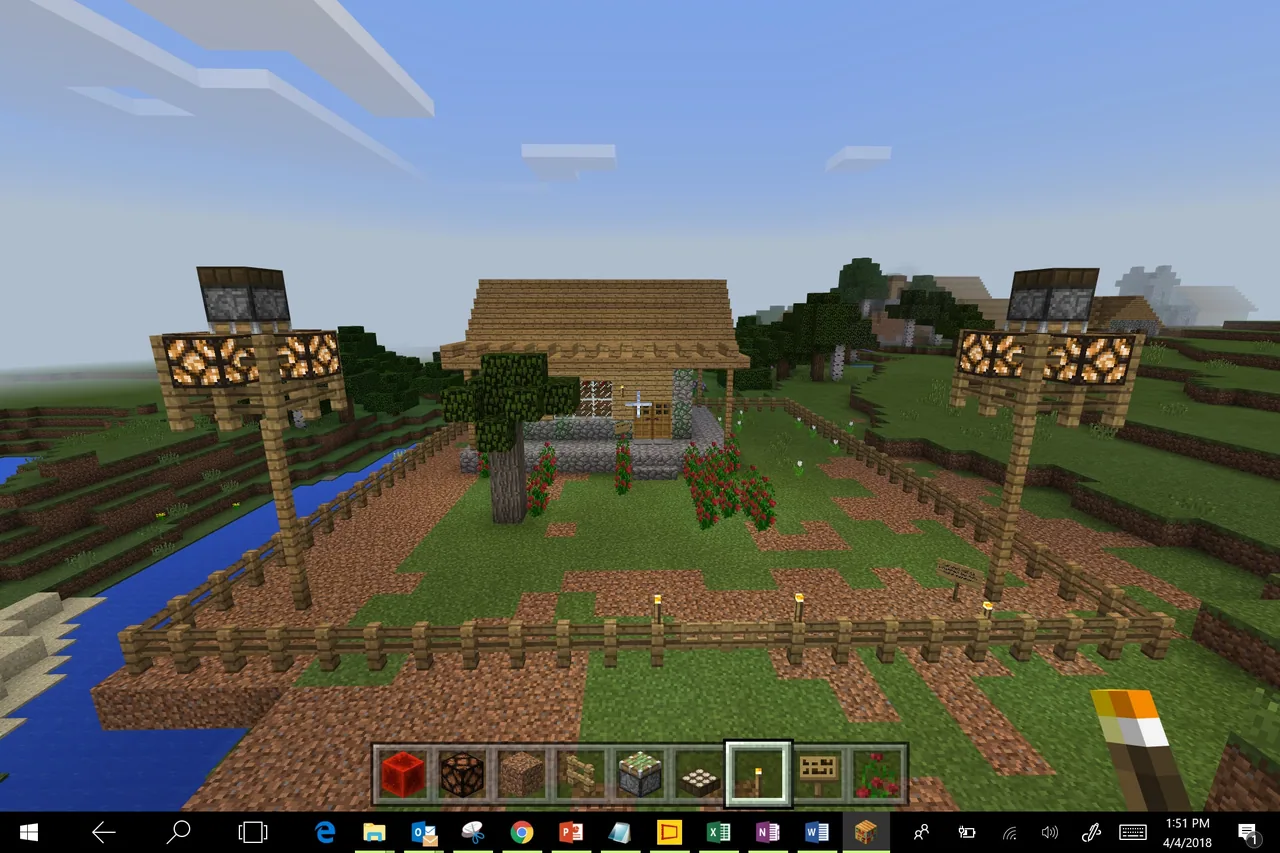
In this lesson, students explore these concepts hands-on by engineering functional automated systems in Minecraft. Using daylight sensors, pressure plates, Redstone dust, lamps, doors, and pistons, learners construct a house equipped with automated entrance and garden lighting systems, culminating in a video presentation explaining the real-world advantages of sensor automation.
Learning objectives
By the end of this lesson students will be able to:
- Define what a sensor is and identify whether it functions as an input or output device.
- Build a functioning automated door using a pressure plate and Redstone mechanisms.
- Construct an automated lighting system using daylight sensors and Redstone lamps.
- Explain how real-world monitoring and control systems benefit from pressure and light sensors.
Blocks and items used in this lesson


Key vocabulary
- Sensor
- An input device that detects physical changes in the environment and sends a signal to a control system.
- Input
- A signal or data fed into a system to trigger a response or action.
- Daylight Sensor
- A Minecraft block that detects sunlight levels and outputs a Redstone signal.
- Pressure Plate
- A Minecraft component that generates a Redstone signal when stepped on.
- Monitoring and Control System
- A system that observes environmental conditions and automatically manages devices based on sensor readings.
Before class
Lesson sequence
Suggested timing: about 65 minutes in total.
- Introduction to Sensors10 min
Introduce the driving question and ask students whether a sensor is an input or an output device. Discuss real-world examples, such as automatic supermarket doors and streetlights that turn on at sunset.
- Component Exploration15 min
Have students open Minecraft to test daylight sensors and pressure plates. Learners experiment with connecting these components to Redstone dust, Redstone lamps, doors, and pistons to observe how signals activate mechanisms.
- House and Automation Build25 min
Students construct their own house in the build area. They must integrate an automatic entrance door operated by a pressure plate and an automated lighting system for the house and garden using daylight sensors.
- Video Demonstration and Reflection15 min
Students record a brief walkthrough video of their completed house. In the recording, they explain how their sensors operate, compare them to real-world pressure and light sensors, and discuss the advantages of solar-powered lighting systems.
Assessment: success criteria
- Student accurately defines a sensor and identifies it as an input device.
- Student builds a working automatic door powered by a pressure plate.
- Student builds a functional garden or house lighting system controlled by a daylight sensor.
- Student produces an explanatory video discussing real-world applications and advantages of sensors.
Differentiation
Provide a small demonstration circuit showing a direct connection between a daylight sensor and a Redstone lamp, and a pressure plate next to a door.
Challenge learners to incorporate pistons into complex entry mechanisms and explain how sensors operate within larger monitoring and control systems.
Knowledge check
5 questions to check understanding after the lesson. Tap an answer to see if it is right; the score appears at the end.
1What is the primary function of a sensor in an automated system?
Answer: C. Sensors function as inputs by gathering data from the environment and sending signals to control systems.
2Which Minecraft item can be used to simulate an automated solar-powered street light?
Answer: A. A daylight sensor detects natural light levels and triggers Redstone components accordingly.
3An automated door opened by stepping on a pressure plate models what kind of real-world device?
Answer: D. Pressure plates respond to physical weight or contact, just like real-world pressure sensors.
4What is a major advantage of using daylight sensors for outdoor lighting?
Answer: B. Daylight-activated systems improve efficiency and safety by turning on lights only when natural light is insufficient.
5Which collection of components is used in this lesson to build automated house mechanisms?
Answer: C. The lesson specifically tasks students with wiring sensors to Redstone lamps, doors, and pistons using Redstone dust.
Resources
Frequently Asked Questions
Do I need a custom world file to teach this lesson?
No custom world download is required. Students can build their houses and wire their automated systems in any standard flat or open creative mode world.
What age levels can participate in this lesson?
The lesson accommodates learners ages 8 through 18. Younger students can focus on basic cause-and-effect wiring, while older students can delve deeper into monitoring and control systems.
How do students demonstrate their understanding?
Students construct an automated build and record a video walkthrough explaining their mechanisms, the role of sensors as inputs, and the real-world benefits of automated lighting.
Adapted from Sensors by Shyni Sudheer on Minecraft Education, last updated Apr 9, 2018. This classroom version, the timings and the quiz were written by 9Minecraft Education.