- Type
- Lesson plan
- Subject
- Language Arts
- Topics
- Reading and Writing
- Ages
- Ages 6-13
- Includes
- Quiz: 5 questions
How can our favorite gaming worlds inspire us to read, write, and revise our own stories?
Overview
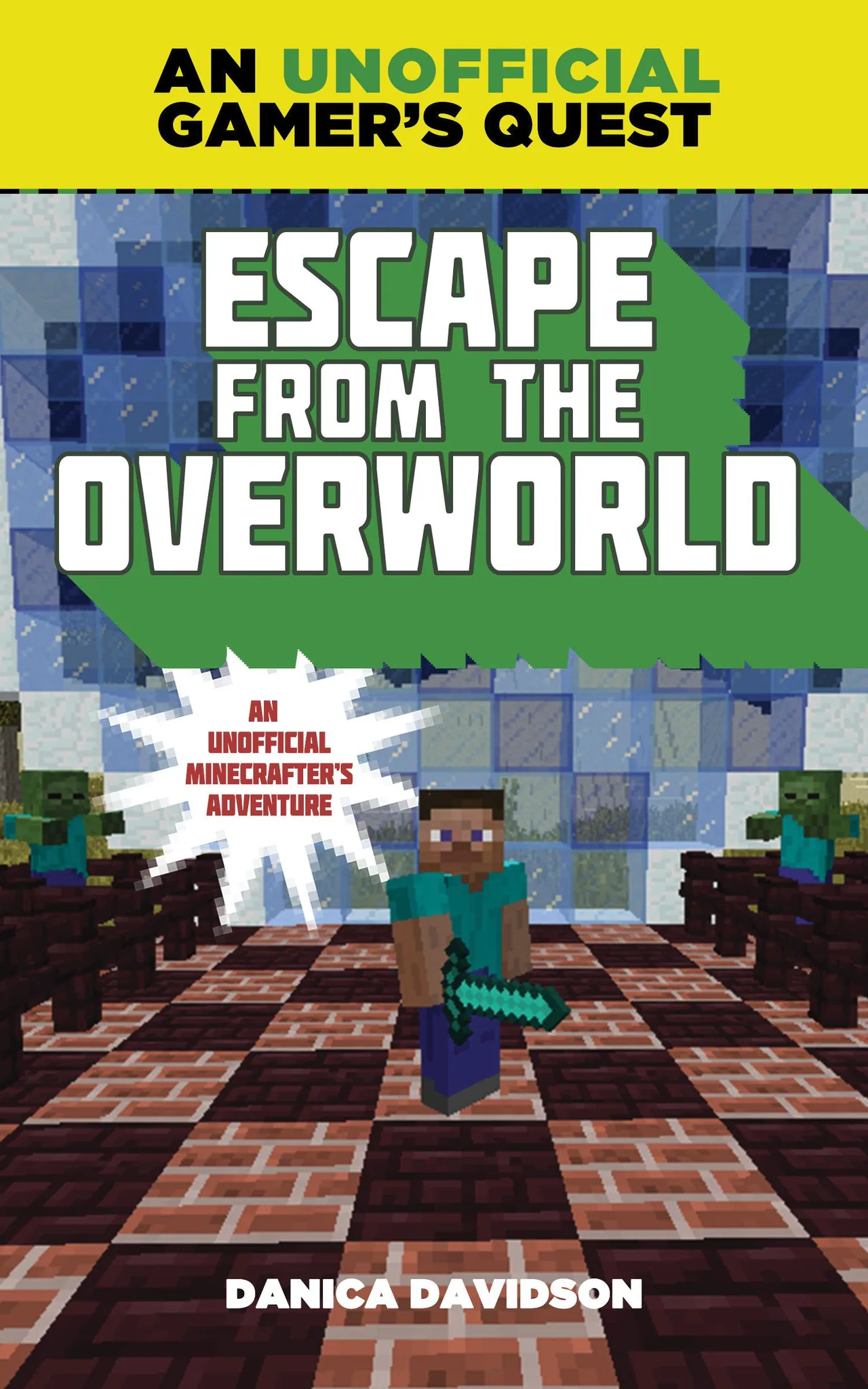
This lesson connects students' enthusiasm for Minecraft with core literacy and creative writing skills. By reading a chapter book set in a world where Minecraft elements are real, learners discover that the topics they enjoy in play can also exist in literature. This helps students feel confident pursuing their interests through reading and writing.
Students engage with creative prompts that include compare-and-contrast reflections, problem-solving scenarios, and personal world-building. In addition, learners inspect draft revisions from the author to understand that editing and correcting grammar is a regular, constructive part of every author's workflow.
Learning objectives
By the end of this lesson students will be able to:
- Read or listen to the novel Escape from the Overworld to build reading comprehension.
- Compare and contrast elements of the real world with the fictional world of Stevie.
- Draft and illustrate an original story based on Minecraft adventures or a custom fantasy world.
- Examine an author's rough draft to identify how revision improves writing quality.
Blocks and items used in this lesson


Key vocabulary
- Rough draft
- An early, unpolished version of a piece of writing where ideas are recorded before editing.
- Revision
- The process of reviewing, altering, and refining written work to improve flow and clarity.
- Compare and contrast
- Examining two or more subjects to discover how they are similar and how they differ.
Before class
Lesson sequence
- Read and Listen
Read Escape from the Overworld together as a class. Students may read print copies or follow along with the audiobook version to support literacy development across age groups.
- Analyze Draft Revisions
Display the first page of the book's rough draft alongside the final published page. Discuss how the author revised sentences to make the story flow better, reinforcing that drafting and revising are normal steps for all writers.
- Select a Story Prompt
Present writing options and let students choose the topic that interests them most:
- Imagine arriving on Earth from Minecraft and observing differences like small spiders or car travel.
- Write as Stevie solving the problem of a creeper exploding your tree house without help.
- Describe what happens when Stevie arrives at your school as an exchange student.
- Write an adventure traveling back to Stevie's world with Stevie and Maison.
- Narrate an original adventure featuring a custom Minecraft character.
- Design an original fantasy or mythology-inspired world if unfamiliar with Minecraft.
- Drafting and Illustrating
Have students draft their narratives and design accompanying illustrations, assembling them into small books. Encourage them to capture ideas freely without worrying about spelling or grammar during the initial draft.
- Polishing and Library Extension
Review completed drafts to correct spelling and grammar errors constructively. Optionally, invite students to share their finished books, list personal interests, and visit the school library to find related reading material.
Assessment: success criteria
- Student produces an original story and accompanying illustration based on a chosen prompt.
- Student participates in comparing the rough draft to the published text.
- Student reviews their draft and addresses grammar and spelling corrections after writing.
- Student generates a list of personal interests for library exploration.
Differentiation
Allow students to listen to the audiobook, discuss prompt ideas verbally before writing, or develop an original fantasy setting instead of a Minecraft theme.
Encourage students to extend their stories into longer chapters, incorporate math connections through building designs, or research world mythologies for world-building.
Knowledge check
5 questions to check understanding after the lesson. Tap an answer to see if it is right; the score appears at the end.
1Which chapter book serves as the reading foundation for this lesson?
Answer: B. The lesson plan is based on reading the chapter book Escape from the Overworld.
2Why do students review the author's rough draft alongside the final book text?
Answer: D. Examining the rough draft shows students that revision is a normal part of writing used to improve text.
3According to the lesson guidance, when should teachers review grammar and spelling?
Answer: C. The source advises against stressing grammar during drafting so students do not get anxious, reviewing it once ideas are written down.
4What alternative prompt is suggested for students who are unfamiliar with Minecraft?
Answer: A. Students who are unsure about Minecraft are encouraged to create their own fantasy world or use world mythology.
5What activity is suggested after students complete their writing projects?
Answer: C. After the project, students list topics of interest and take a trip to the school library to find related books.
Frequently Asked Questions
Do students need computers or the Minecraft game running to complete this lesson?
No, this lesson does not require game software or digital devices. It uses print or audio versions of the book, paper, and drawing supplies to create physical storybooks.
How long should student stories be?
Story length should be adjusted according to student age and ability. Teachers can set a reasonable minimum length while allowing enthusiastic writers to write as much as they like.
Adapted from Reading and Writing Minecraft by Danica Davidson on Minecraft Education, last updated Aug 23, 2018. This classroom version, the timings and the quiz were written by 9Minecraft Education.