- Type
- Lesson plan
- Subject
- History & Social Studies
- Ages
- Ages 8-13
- Includes
- Quiz: 5 questionsLesson files
How can we design an accurate, sustainable representation of Australia's first colonies that reflects the varied experiences of the people who lived there?
Overview
In this project-based history lesson, students explore the establishment of Australia's first colonies by examining early settlement life, governance, sustainability, and interactions with Indigenous peoples. Guided by core inquiry questions, learners use authentic research to understand the social hierarchy and survival challenges of early colonial communities.
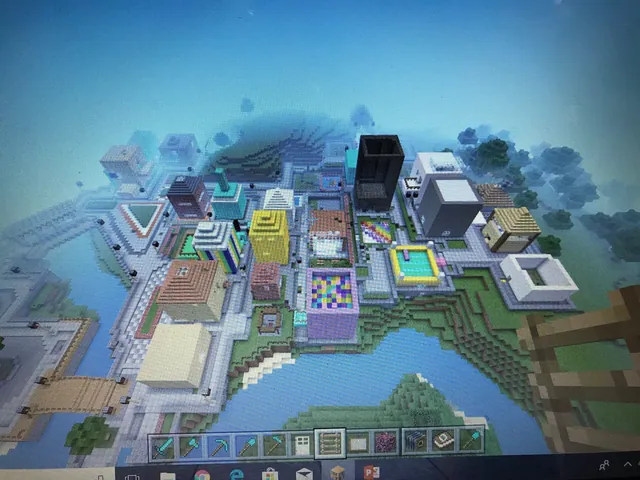
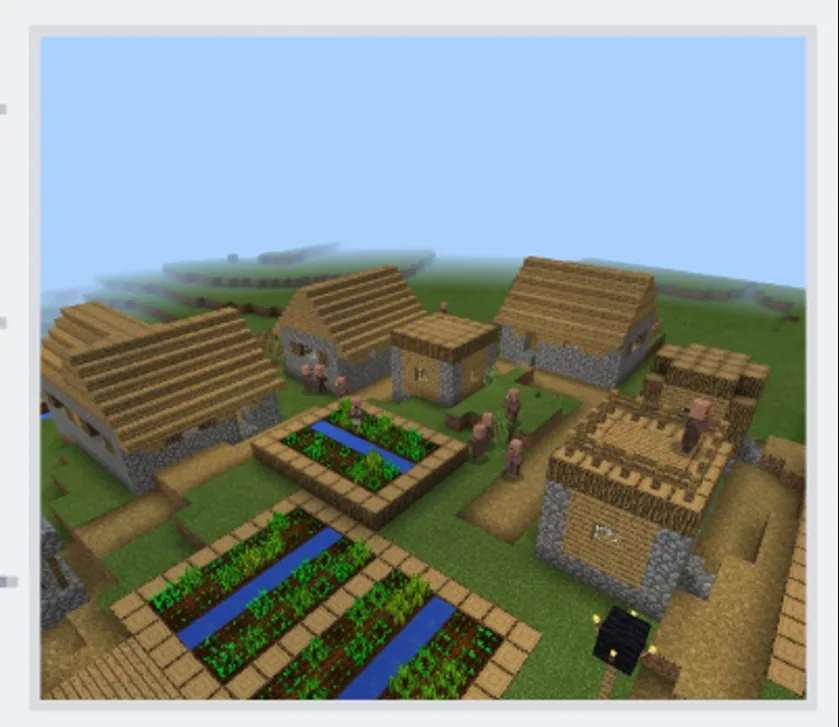
Working collaboratively in Minecraft, teams design and construct a functional settlement layout. They incorporate contrasting housing, agricultural systems, infrastructure, and interactive characters to represent the experiences and viewpoints of convicts, free settlers, colonial leaders, and Indigenous peoples.
Learning objectives
By the end of this lesson students will be able to:
- Investigate historical sources to gather evidence about daily life, governance, and sustainability in early Australian settlements.
- Design and construct a historically grounded settlement layout in Minecraft reflecting diverse quarters, infrastructure, and agriculture.
- Integrate non-player characters (NPCs) and signage to represent multiple viewpoints, including convicts, Indigenous people, free settlers, and colonial officials.
- Collaborate within a team to organize shared workloads, record source citations, and justify colonial design decisions.
Blocks and items used in this lesson


Key vocabulary
- Colony
- A settlement established by a group of people in a new territory, governed by their home country.
- Convict
- A person found guilty of a crime and sentenced to penal transportation or imprisonment in early colonial Australia.
- Infrastructure
- The basic physical structures and systems needed for a community to operate, such as paths, shelters, and water supplies.
- Non-Player Character (NPC)
- An interactive, computer-controlled character in Minecraft used to display historical biographies, dialogue, and information.
Before class
Lesson sequence
- Inquiry and Driving Questions
Introduce the project and guide students through the core inquiry questions. Discuss what defines a colony, how safety and law were maintained, how communities achieved sustainability, and how relationships between British settlers and Indigenous people developed.
- Collaborative Historical Research
Form student teams of 3 to 4. Groups divide research tasks using library books, online media, and other historical sources. Students compile notes, sketches, maps, and bibliographic references into a shared group resource folder.
- Settlement Design and Minecraft Construction
Teams plan their town layout and construct their colony in Minecraft. Builds must feature contrasting housing (such as convict tents versus officer quarters), agricultural setups, functional infrastructure, and slates or signs labeling key locations inside and outside the settlement.
Students place NPCs throughout the community, programming them with biographies that represent multiple viewpoints, including convicts, soldiers, officials, free settlers, family members, and Indigenous people.
- Review and Reflection
Teams evaluate their built environments against the inquiry questions, verifying that their choices reflect historical accuracy, balanced perspectives, and long-term sustainability.
Assessment: success criteria
- Completion of a group resource folder containing notes, sketches, graphics, and cited historical sources.
- Accurate representation of contrasting living quarters reflecting different social classes and roles in the colony.
- Inclusion of NPCs and informative slates presenting balanced viewpoints from diverse colonial and Indigenous perspectives.
- Clear evidence of functional town planning, including sustainable agricultural systems, infrastructure, and safety measures.
Differentiation
Provide graphic organizers and guided checklists to assist teams in dividing research topics and building assignments evenly.
Have students write in-depth NPC biographical narratives that highlight specific recorded historical interactions between settlers and Indigenous inhabitants.
Knowledge check
5 questions to check understanding after the lesson. Tap an answer to see if it is right; the score appears at the end.
1What size student group is recommended for this colonial inquiry project?
Answer: C. The lesson specifically indicates that students carry out this project in groups of 3 to 4.
2What must groups assemble to store their notes, sketches, and citations during the research phase?
Answer: A. The source specifies that a physical or digital resource folder should be created to collect the group's research findings.
3Why are Non-Player Characters (NPCs) placed throughout the settlement?
Answer: B. NPCs are used to display linked biographies reflecting diverse perspectives, including convicts, soldiers, settlers, and Indigenous people.
4How should housing in the colony be constructed to reflect historical reality?
Answer: D. The guidelines instruct students to build contrasting designs such as convict tents alongside residences for free settlers and colonial officials.
5Which element must be incorporated to ensure the colony is sustainable over time?
Answer: B. Students are required to plan infrastructure and agriculture systems that allow the settlement to remain sustainable over a long period.
Resources
Frequently Asked Questions
Is there a pre-built world download required for this lesson?
No downloadable world is supplied with the source material, allowing students to design and shape their settlement from the ground up in a standard world.
How should teams decide who does the research and who builds?
Teams are expected to collaborate and distribute the workload themselves, ensuring all members contribute equally to both the historical inquiry and the Minecraft build.
Adapted from Pioneering Challenge by Victorian Minecraft Innovators on Minecraft Education, last updated Apr 27, 2021. This classroom version, the timings and the quiz were written by 9Minecraft Education.