- Type
- Lesson plan
- Subject
- History & Social Studies
- Ages
- Ages 8-13
- Duration
- 45 min
- Level
- Beginner
How did the transition from hunting and gathering to settled village life reshape human society?
Overview
The Neolithic Revolution marked a fundamental turning point in human development, shifting societies from nomadic hunter-gatherer bands to settled agricultural communities. This transition brought profound social and economic changes, including permanent settlements, new food production methods, and significant population growth.
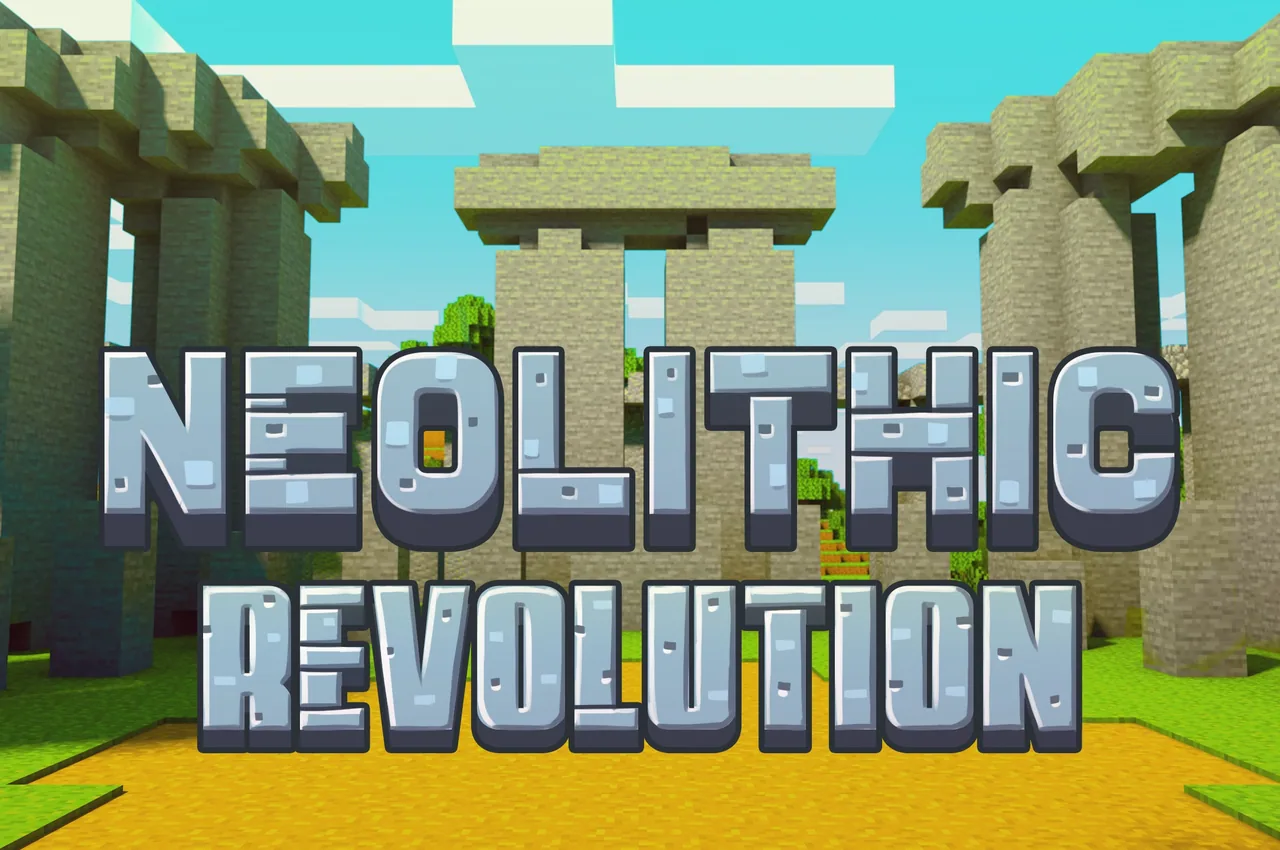
Using a dedicated Minecraft Education world, students investigate an ancient settlement, interact with non-player characters, domesticate livestock, and construct matching period dwellings. Through hands-on exploration and building, learners analyze the challenges and lasting impacts of settled life.
Learning objectives
By the end of this lesson students will be able to:
- Identify key differences between nomadic foraging lifestyles and settled Neolithic communities.
- Demonstrate early agricultural practices by domesticating animals and guiding them into pens.
- Construct new village dwellings that match the materials and architectural style of the Neolithic settlement.
- Explain the social and environmental consequences of sedentary farming, including deforestation and population growth.
Blocks and items used in this lesson


Key vocabulary
- Neolithic Revolution
- The prehistoric shift from nomadic hunting and gathering to settled farming and food production.
- Sedentary
- A way of life based on establishing permanent dwellings in one place.
- Domestication
- The process of taming wild animals and cultivating plants for human use.
- Menhir
- A large, upright standing stone set up by humans during prehistoric times.
- Dolmen
- A prehistoric megalithic tomb typically made of upright stone slabs supporting a flat roof stone.
Before class
Lesson sequence
Suggested timing: about 45 minutes in total.
- Village Arrival and NPC Exploration10 min
Introduce the transition to settled life and launch the world. Direct students to explore the Neolithic settlement, speak with non-player characters, and observe how ancient villagers lived and worked.
- Domestication and Environmental Impact10 min
Task students with completing the animal domestication challenges by luring livestock into pens. Lead a short discussion on the consequences of clearing forests for farmland and where deforestation for agriculture still occurs today.
- Collaborative Settlement Expansion15 min
Group students to expand the village by building additional houses. Emphasize that their structures should closely follow the materials, scale, and architectural style of the existing Neolithic settlement.
- Megaliths and Class Reflection10 min
Introduce terms such as menhir and dolmen, inviting students to theorize why ancient peoples erected massive stone monuments. Conclude by discussing why settled agricultural life prompted rapid population growth.
Assessment: success criteria
- Students successfully complete the in-game challenges to domesticate and pen animals.
- Student-built homes accurately reflect the architectural style and materials of the Neolithic village.
- Students can explain why the shift to sedentary farming supported rapid population growth.
Differentiation
Pair students together to complete the animal-penning challenges and provide visual examples of the village house styles before they begin building.
Challenge advanced students to construct a menhir or dolmen using megalithic techniques and explain their theory about its cultural purpose.
Knowledge check
5 questions to check understanding after the lesson. Tap an answer to see if it is right; the score appears at the end.
1What major transition defined the Neolithic Revolution?
Answer: A. The Neolithic Revolution is defined by humans settling into permanent villages and producing food through farming.
2Which environmental impact of early farming does the lesson ask students to examine?
Answer: B. Early farmers cut down forests to create farmland, a practice that continues in many parts of the modern world.
3How do students practice animal domestication in this lesson?
Answer: C. Students complete the world challenge by luring animals into pens to represent early domestication.
4What is a prehistoric dolmen?
Answer: D. A dolmen is a type of prehistoric megalithic tomb constructed from large standing stones topped by a flat stone.
5Why did sedentary village life lead to significant population growth?
Answer: B. Having steady food reserves and permanent dwellings allowed agricultural communities to sustain more people than nomadic bands could.
Resources
- Lesson package (.zip)Everything the author attached to this lesson in one download.
- WorldMinecraft: Education Edition world with Neolithic village and Stonehenge
Frequently Asked Questions
Do students need advanced building skills for this lesson?
No, the lesson is designed for beginners. The expansion task focuses on observing existing structures and recreating their basic shape and materials.
How does this lesson connect history to modern geography and ecology?
Students analyze the deforestation caused by early agricultural land clearance and discuss where similar forest clearing for farming takes place in the world today.
Adapted from Neolithic Revolution by Shapescape ApS on Minecraft Education, last updated May 15, 2025. This classroom version, the timings and the quiz were written by 9Minecraft Education.