- Type
- Lesson plan
- Ages
- Ages 6-13
- Duration
- about 70 min (suggested)
- Includes
- Quiz: 5 questions
How do individual ants communicate and collaborate as a collective mind to maintain a thriving colony?
Overview
In this collaborative science and citizenship lesson, students explore how social insects organize complex societies through shared instincts and non-verbal communication. Acting as members of a single ant colony, learners reach consensus on their ant species, diet, and habitat before entering a shared digital environment.
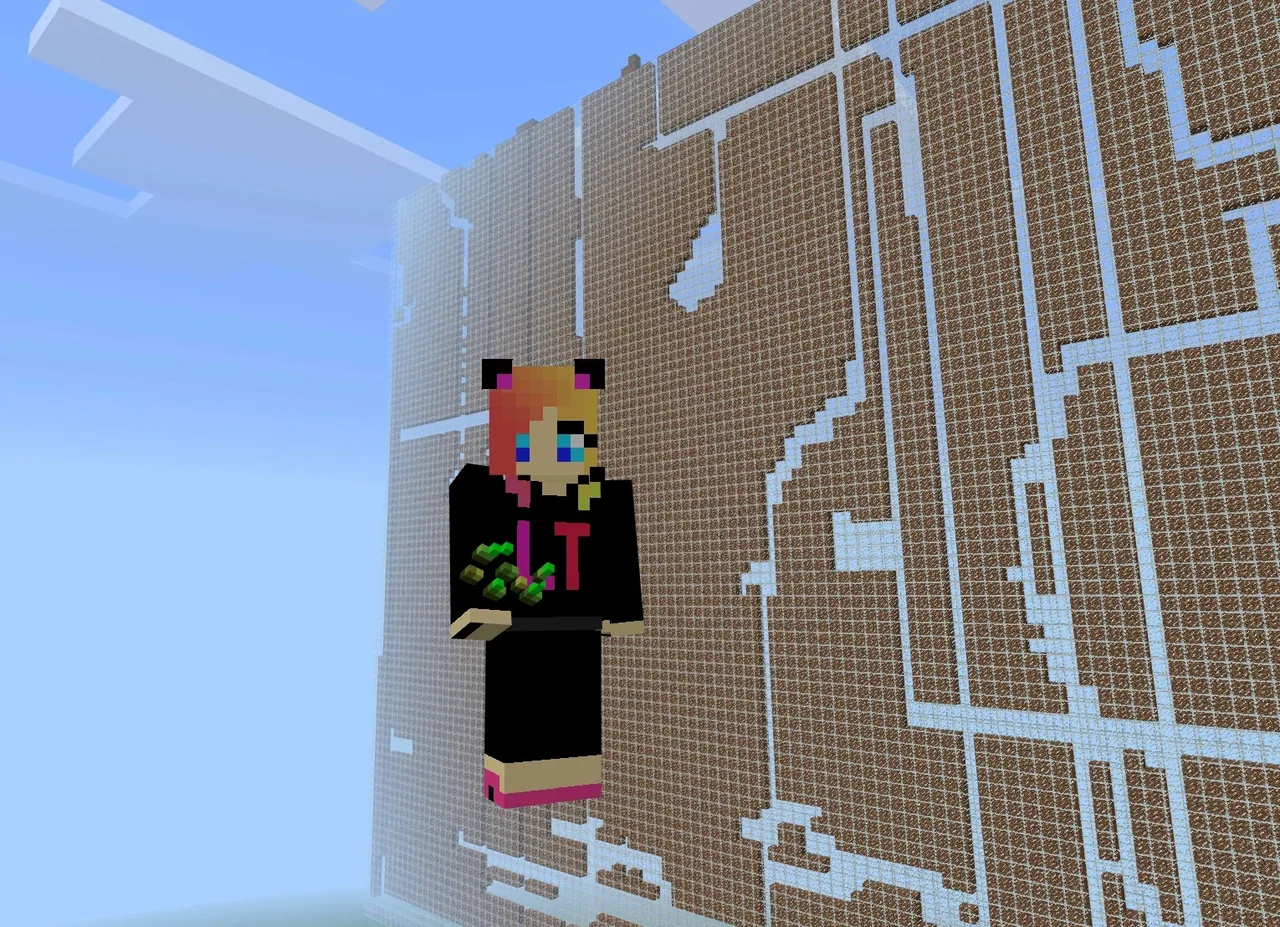
Inside an 80-by-80 block two-dimensional ant farm, students work together in creative mode to construct essential chambers for their queen, nursery, food storage, and waste. The project challenges students to operate as a unified collective mind, balancing individual tasks with the needs of the whole nest while documenting their findings.
Learning objectives
By the end of this lesson students will be able to:
- Identify the habitat, food sources, and social roles of a chosen ant species.
- Collaborate with peers to establish a functioning ant nest with distinct functional chambers.
- Simulate colony communication and collective decision-making during the building process.
- Document colony organization and chamber functions using in-game posters and photos.
Blocks and items used in this lesson


Key vocabulary
- Super Mind
- A collective intelligence where many individual organisms act together as a single unified group.
- Colony
- A community of social animals living and working cooperatively in a shared nest.
- Chamber
- An excavated room inside an ant nest used for a specific purpose such as nurseries or food storage.
- Queen
- The primary female in an ant colony responsible for producing all the eggs.
- Nursery
- A secure chamber within an ant nest dedicated to caring for eggs and developing larvae.
Before class
Lesson sequence
Suggested timing: about 70 minutes in total.
- Species and Colony Planning15 min
Introduce the challenge to students as newly settled ants that must establish a home. Guide the group through selecting a single ant species, determining their collective decision-making process, and researching their diet and preferred environment.
Discuss how ants communicate complex tasks without speaking, and challenge students to consider how their classroom can replicate this shared coordination during construction.
- World Entry and System Activation10 min
Students join the world and spawn inside an enclosed observation box overlooking the 80-by-80 two-dimensional ant farm. Have students distribute storage chests to prepare for resource gathering.
Place a minecart on the track and push it to start the automatic food dispensers dropping items at the top of the ant farm, then teleport the class to the surface of the nest.
- Queen Chamber Construction10 min
Direct the students to immediately excavate and build a chamber for the single queen ant. Instruct them to place a red marker block at her precise location.
Collect the coordinates of the red block, locate the command block, and replace the default coordinates so that bone meal begins generating to represent newly laid eggs.
- Nest Expansion and Role Management20 min
Students work cooperatively to excavate and design the remaining chambers of the colony, including nurseries, food stores, and areas for deceased ants.
Periodically pause the activity using classroom controls to have students evaluate the nest's progress, verify that all colony needs are met, and ensure duties are properly distributed.
- Documentation and Reflection15 min
Teleport students to the exterior of the nest structure to add posters that label all chambers and explain each ant role. Have students capture screenshots for their portfolios and gather for a final class photo.
Conclude with a group reflection comparing ant collective intelligence to the way human societies establish rules and maintain community order.
Assessment: success criteria
- The class successfully agrees on a specific ant species, environment, and diet.
- The queen's chamber is built and marked with a red block to activate the egg generation mechanism.
- The ant farm includes functional chambers for food storage, nurseries, and waste disposal.
- Students clearly label nest chambers and ant responsibilities using in-game posters or portfolio photos.
Differentiation
Assign specific chamber assignments, such as food hauling or nursery maintenance, to students who need defined tasks.
Challenge advanced students to design additional specialized chambers, such as disposal zones, or study the redstone food generator mechanics.
Knowledge check
5 questions to check understanding after the lesson. Tap an answer to see if it is right; the score appears at the end.
1How many queens are present in the simulated ant colony?
Answer: B. The lesson specifies that the colony functions with only one queen.
2What item appears at the queen's coordinates to represent ant eggs?
Answer: A. Once the teacher inputs the queen's chamber coordinates into the command block, bone meal spawns to symbolize eggs.
3What block color must students place to mark the queen's location for the teacher?
Answer: C. The instructions state that students must place a red block where the queen is located.
4Which item is placed in chests to represent meat or insects for the ants to eat?
Answer: D. The source notes that rotten flesh looks like meat or insects to match the chosen diet.
5What are the dimensions of the two-dimensional ant farm structure in the world?
Answer: A. The ant farm build area is described as an 80 by 80 block two-dimensional structure.
Frequently Asked Questions
How do students leave the initial viewing box?
Students cannot dig or walk out of the starting box on their own; the teacher must use the teleport command to move all players to the top of the ant hill once setup is complete.
How does the egg generator begin working in the world?
Students identify the queen's location with a red block and share the coordinates with the teacher, who updates the command block to begin spawning bone meal at that location.
What should be placed in the supply chests to represent ant food?
Teachers can stock the chests with sugar cane to represent plant material or seeds, and rotten flesh to represent meat or insects.
Adapted from Join an ANT Colony! by Lynne Telfer on Minecraft Education, last updated Sep 21, 2018. This classroom version, the timings and the quiz were written by 9Minecraft Education.