- Type
- Lesson plan
- Ages
- Ages 6-13
- Includes
- Quiz: 5 questions
How can we identify injustices or problems in our communities and design positive solutions to build peace and fairness?
Overview
This lesson introduces students to United Nations Sustainable Development Goal 16, which centers on peace, justice, and strong institutions. Learners begin by discussing what is good and bad in the world, connecting broad societal challenges or personal experiences to the concepts of conflict, fairness, and mutual respect.
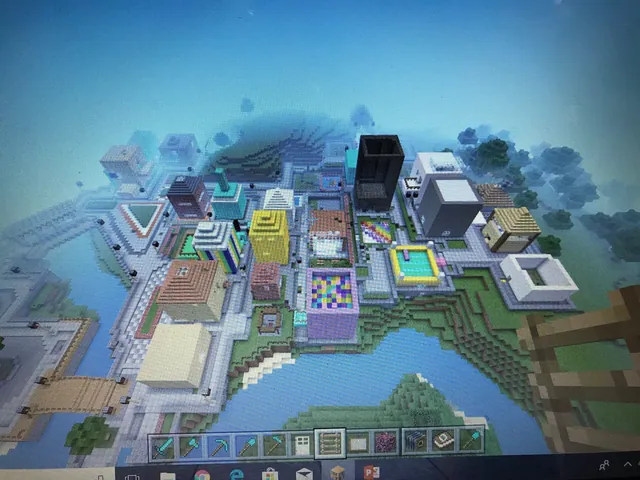
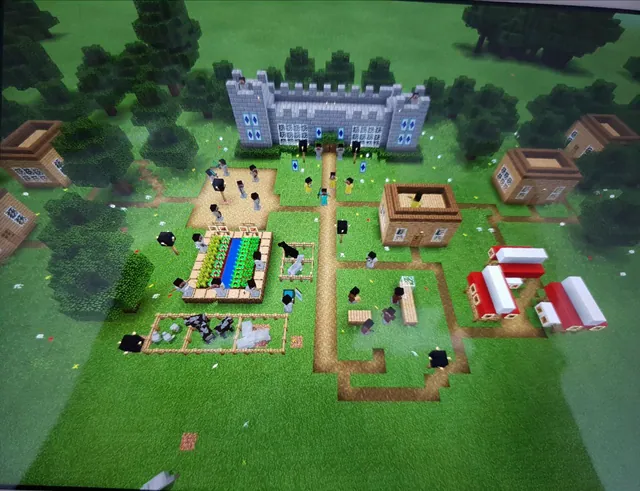
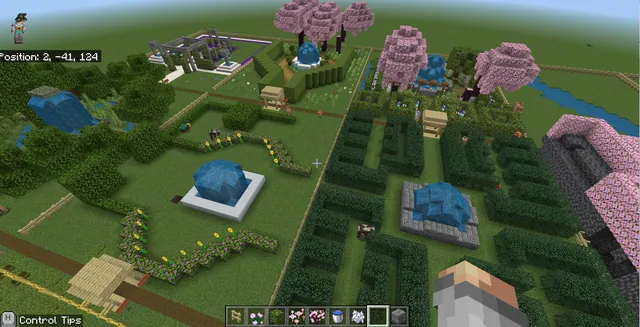
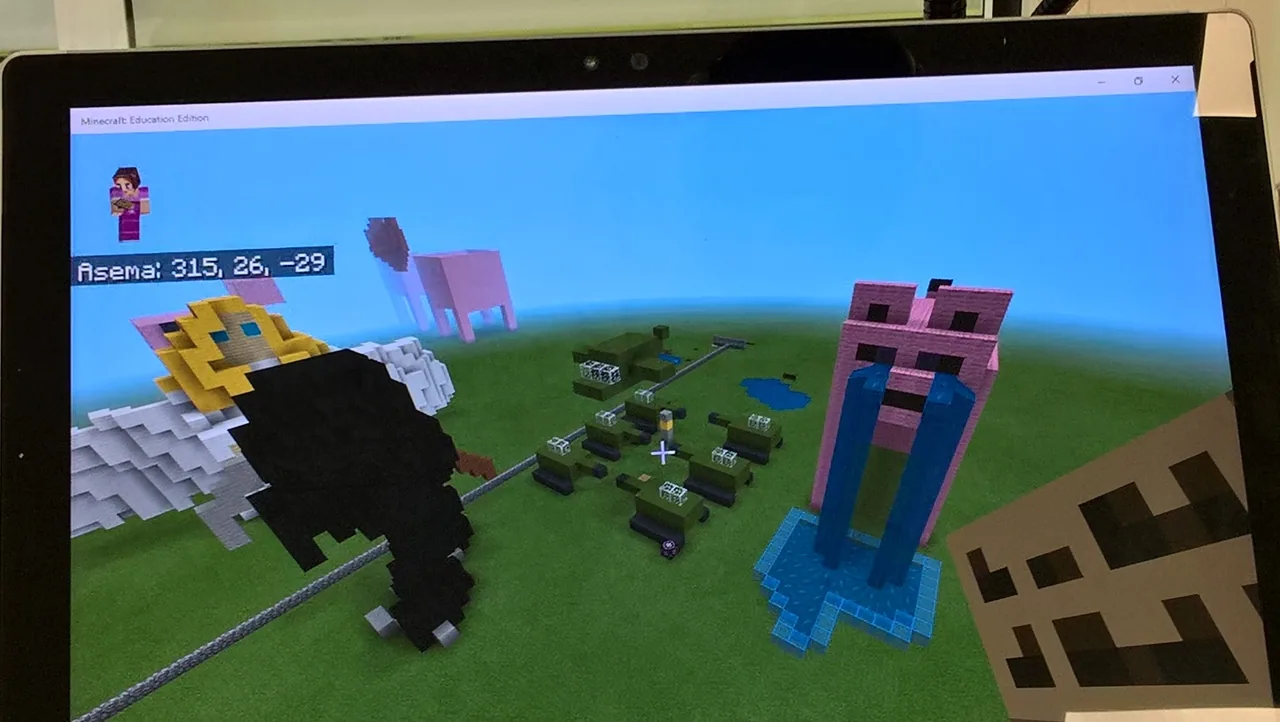
Working in small collaborative teams, students select a specific issue, sketch their concepts, and build two contrasting models in a shared Minecraft world: one depicting the problem and the other displaying a constructive solution. Afterward, learners write an explanatory essay and present their builds to practice public speaking and peer feedback.
Learning objectives
By the end of this lesson students will be able to:
- Identify and discuss real-world or personal issues related to peace, justice, and strong institutions.
- Draft a visual plan contrasting a chosen problem with a proposed solution.
- Collaborate in a shared Minecraft world to build representations of both the problem and its solution.
- Write an explanatory essay analyzing the selected issue, its scope, and how the proposed resolution helps society.
- Present group creations to classmates and exchange constructive feedback.
Blocks and items used in this lesson


Key vocabulary
- SDG 16
- A United Nations Sustainable Development Goal focused on promoting peaceful, just, and inclusive societies.
- Problem
- An injustice, conflict, or harmful situation in society or personal life that needs to be addressed.
- Solution
- An idea, system, or action designed to fix a problem and create positive change.
- Constructive Feedback
- Helpful and respectful advice given by peers to support and improve someone's work.
Before class
Lesson sequence
- Whole-Class Brainstorming
Introduce SDG 16 and lead an open discussion asking what is good and what is wrong in the world. Create a mind map or list of student contributions. For older learners, encourage topics such as war, hunger, clean water, or human rights; for younger learners, focus on personal experiences such as bullying, friendship, or unfair rules.
- Group Formation and Planning
Organize students into small teams, ideally around three members each. Have each group select one specific problem and draw a draft that shows both the problem and a corresponding positive solution.
- Minecraft Collaborative Build
Have one student in each group create a new world and invite their teammates. Together, students build two distinct elements: one representing their chosen bad thing and the other representing the good solution. Builds may take the form of symbolic statues, working machines, or community structures.
- Reflective Essay Writing
Each student independently writes a short essay detailing the problem they modeled, whether it is local or worldwide, why it matters, and how their proposed build or idea provides a workable solution that improves the world.
- Presentations and Constructive Feedback
Teams present their Minecraft builds to the class, explaining their concepts and practicing audience engagement. Classmates listen attentively and offer constructive feedback on the ideas and designs.
Assessment: success criteria
- Active contribution to class discussions regarding peace, justice, and social issues.
- Clear visual draft illustrating both a problem and a solution prior to building.
- Creation of two distinct, contrasting builds in Minecraft representing the problem and its resolution.
- Completion of an individual essay addressing the nature, scale, and solution of the chosen topic.
- Clear presentation of group work and respectful delivery of constructive feedback to peers.
Differentiation
Guide students needing extra help to focus on familiar everyday situations, such as playground bullying or sharing, using simple guided questions to design their solution.
Encourage advanced students to investigate complex international issues, such as child rights or institutional justice, and explain multi-step systemic solutions in their essays.
Knowledge check
5 questions to check understanding after the lesson. Tap an answer to see if it is right; the score appears at the end.
1What two contrasting elements must students design and build in this lesson?
Answer: A. The lesson requires students to choose a bad thing or problem and build an opposite good thing or solution.
2Which United Nations Sustainable Development Goal serves as the foundation for this project?
Answer: B. The lesson specifically focuses on SDG 16, which addresses peace, justice, and strong institutions.
3What preparation step do students complete right before opening Minecraft to build?
Answer: D. Students draw a visual draft of their problem and solution before entering Minecraft to construct them.
4How do students set up their digital workspace in Minecraft for this activity?
Answer: C. The source specifies that one student creates the world and the other team members join it to collaborate.
5What individual task must each student complete alongside their group build?
Answer: B. Each student writes an individual essay detailing the problem, why it is an issue, whether it is local or worldwide, and how their solution will work.
Frequently Asked Questions
Does this lesson require a specific custom world download?
No special world download is required. One student in each group simply creates a standard world and hosts it so teammates can join and build together.
What style of structures should students build in Minecraft?
Students have full creative freedom to decide how they represent their ideas, whether they choose to construct symbolic statues, functional machines, or representational scenes.
How can teachers adapt the discussion for younger elementary students?
Younger learners can focus on personal and immediate experiences such as friendship challenges, playground sharing, or bullying, while older students explore global topics like human rights and international conflict.
Adapted from Good vs bad by Piia Martikainen on Minecraft Education, last updated Nov 1, 2018. This classroom version, the timings and the quiz were written by 9Minecraft Education.