- Type
- Lesson plan
- Subject
- AI & Digital Citizenship
- Topics
- Digital Literacy
- Ages
- Ages 8-13
- Duration
- about 60 min (suggested)
- Skills
- CharacterCollaboration
- Includes
- Quiz: 5 questions
How can we create a shared agreement that helps everyone collaborate and play together productively in Minecraft?
Overview
Establishing shared community standards enables learners to take genuine ownership of digital environments. Instead of imposing rules from above, this lesson guides students to observe how individual choices affect collective enjoyment, helping them learn how to self-regulate their digital behavior.
Using an unguided initial play session in Minecraft, students experience group dynamics firsthand. Through the What makes you say that thinking routine, learners unpack friction points and successes, then collaboratively draft, test, and revise an essential agreement for future play.
Learning objectives
By the end of this lesson students will be able to:
- Identify behaviors that support or disrupt positive group collaboration in a digital space.
- Formulate clear guidelines for an essential agreement through group consensus.
- Support personal reflections with observable evidence using the What makes you say that thinking routine.
- Demonstrate self-moderation and conflict resolution during collaborative gameplay.
Blocks and items used in this lesson


Key vocabulary
- Essential Agreement
- A collectively agreed set of principles and rules that guide how a group interacts and works together.
- Consensus
- A general agreement reached by all members of a group.
- Self-moderation
- The ability to monitor and control one's own actions and words without needing continuous adult intervention.
Before class
Lesson sequence
Suggested timing: about 60 minutes in total.
- Free Play Observation15 min
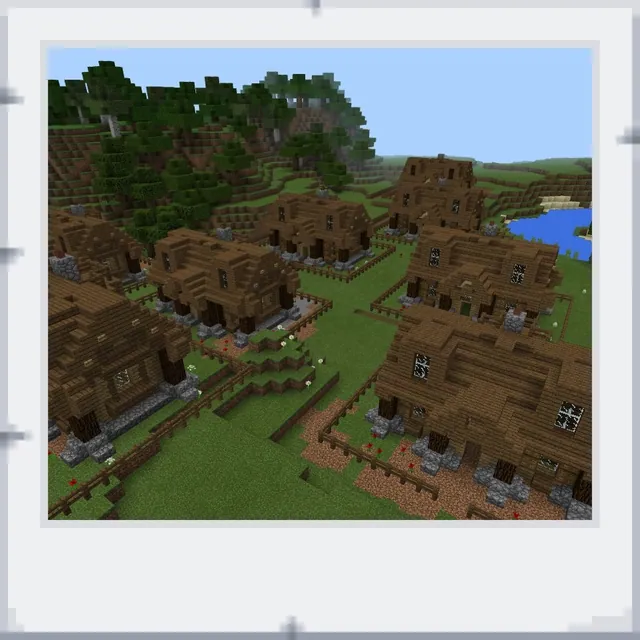
Introduce students to a shared Minecraft world with minimal constraints. Allow free play time so natural collaborative behaviors and points of friction can emerge organically.
- Reflective Inquiry15 min
Gather the class away from their screens. Ask students to share how the play session went and suggest improvements. Follow up every student interpretation with the prompt: What makes you say that? to encourage evidence-based reflections.
- Drafting the Agreement15 min
Guide the group to synthesize their feedback into a set of shared rules. Discuss each proposal until the class reaches consensus on what constitutes fair, respectful play.
- Testing and Revision15 min
Return students to the shared world to play under the newly drafted agreement. Conclude with a brief debrief to assess how well participants followed the rules and revise any points that need clarification.
Assessment: success criteria
- Students justify their opinions during reflection by referencing specific events from gameplay.
- Students actively contribute constructive rules toward the group consensus.
- Students demonstrate independent conflict resolution and adherence to the agreed norms during the second play session.
Differentiation
Offer sentence starters to help students explain their experiences and connect feelings to specific in-game events.
Have students act as peer mediators to facilitate consensus when drafting or revising contested rules.
Knowledge check
5 questions to check understanding after the lesson. Tap an answer to see if it is right; the score appears at the end.
1What is the primary goal of creating an essential agreement before ongoing play?
Answer: B. The essential agreement helps students agree collectively on standards for behavior and collaborative play.
2Which thinking routine prompt is used to help students justify their feedback?
Answer: A. The lesson specifically uses the 'What makes you say that?' routine to scaffold evidence-based reasoning.
3Why do students participate in free play before drafting rules?
Answer: C. Experiencing unguided play allows learners to observe what works and what causes issues before making rules.
4What should the class do after testing their drafted agreement in a second play session?
Answer: D. The lesson design relies on a cycle of play, reflection, and revision to make sure the agreement is effective.
5Which digital literacy skill are students primarily developing throughout this process?
Answer: B. The learning objectives focus on collaboration, self-moderation, and applying conflict resolution skills online.
Frequently Asked Questions
Do I need to download a special Minecraft world for this lesson?
No, this lesson does not require a downloadable template. A blank world or any standard multiplayer environment is suitable for free play and group observation.
What should I do if students encounter major disagreements during the first play session?
Unless safety is compromised, allow minor conflicts to serve as authentic learning points that students can analyze and solve during the guided reflection phase.
Adapted from Essential Agreement by Niko Lewman on Minecraft Education, last updated Jun 21, 2018. This classroom version, the timings and the quiz were written by 9Minecraft Education.