- Type
- Lesson plan
- Subject
- History & Social Studies
- Topics
- Government and Politics
- Ages
- Ages 8-18
- Duration
- 2 hours
- Level
- Beginner
How do citizens and political parties negotiate compromises to govern a community fairly?
Overview
Democracy relies on balancing competing interests, collaborating across differences, and finding workable compromises. Rather than treating civic institutions as abstract theories, this lesson immerses learners in the practical realities of representative democracy and policy trade-offs.
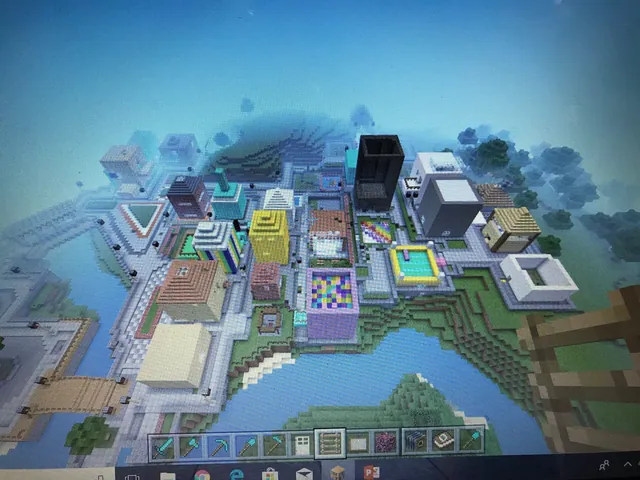
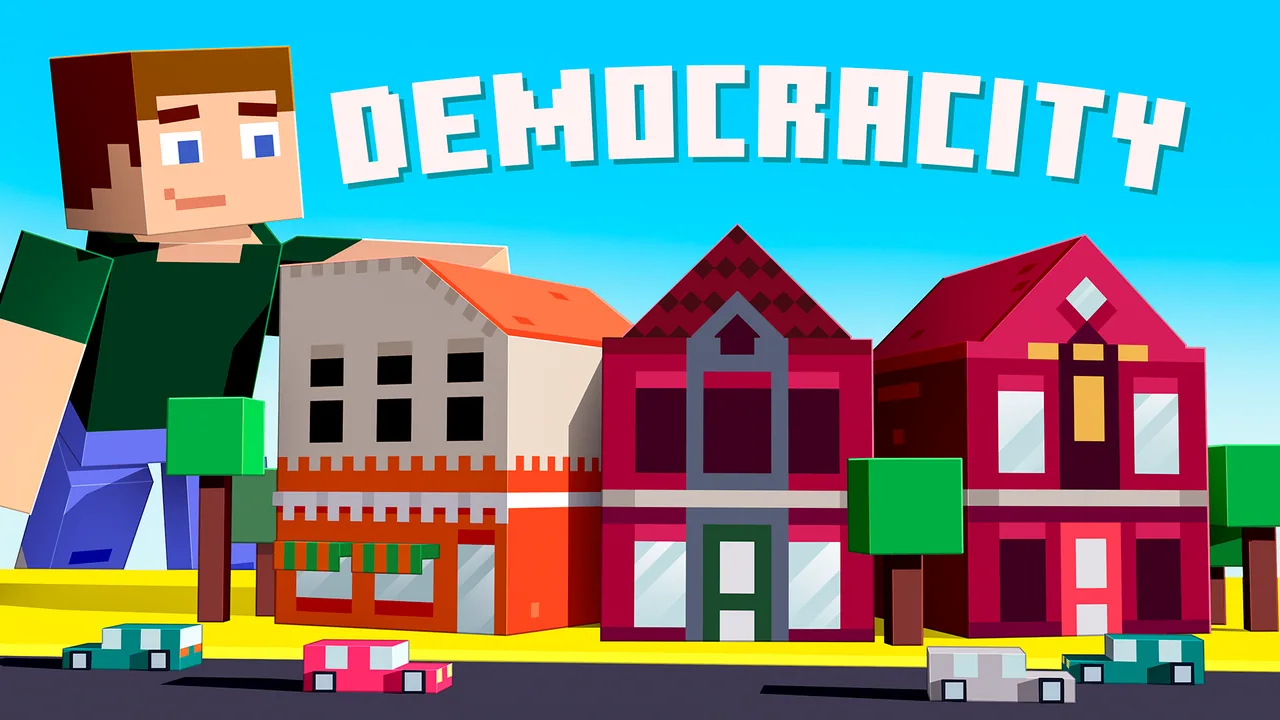
Using the Democracity Minecraft template, students form political parties, assign defined roles, and debate priorities such as housing, transport, and healthcare. As they place buildings and manage municipal resources, they experience legislative negotiations and witness the concrete consequences of civic decision-making.
Learning objectives
By the end of this lesson students will be able to:
- Explain the core mechanics of democratic governance, including legislative debate and decision-making.
- Negotiate and prioritize political policies within a team through consensus and compromise.
- Collaborate to create a unified political party featuring specific member roles, core values, a name, and a visual identity.
- Evaluate the civic trade-offs of resource allocation and building choices within a simulated municipality.
Blocks and items used in this lesson


Key vocabulary
- Democracy
- A system of government where decisions are made by citizens or their elected representatives.
- Compromise
- An agreement reached when different sides each give up part of their demands to find common ground.
- Political Party
- An organized group of people with shared values and goals who seek to influence government policy.
- Platform
- A declared set of principles and policy goals supported by a political group.
Before class
Lesson sequence
Suggested timing: about 120 minutes in total.
- Brainstorming Prior Knowledge15 min
Lead a class discussion on concepts like democracy, governance, and the role of politicians. Record student ideas on the board to document initial perspectives and highlight common preconceptions.
- Policy Prioritization25 min
Have students review topics such as education, healthcare, and transit on their worksheets. Learners first rank priorities individually to clarify personal values, then collaborate in small groups to negotiate a shared list through democratic consensus.
- Role Assignment and Party Foundation30 min
Students assign formal leadership roles within their teams, such as Chairman, Secretary, Designer, or Spokesperson. Groups then establish their party name, slogan, visual logo, and foundational political platform.
- City Governance and Building Simulation35 min
Enter the Democracity Minecraft world. Student parties propose initiatives, manage limited resources, debate trade-offs, and strategically place city buildings that represent their policy commitments.
- Plenary Defense and Reflection15 min
Spokespersons present their party identity and civic choices to the class. Facilitate a closing discussion where students compare their final community results against their initial brainstorming notes.
Assessment: success criteria
- Students justify their party's policy priorities and defend their choices during discussions.
- Teams effectively present a complete political party profile, including a name, slogan, logo, and platform.
- Students demonstrate strategic decision-making and compromise during the building placement phase in Minecraft.
- Students reflect on how their group's decisions and trade-offs mirror real-world democratic processes.
Differentiation
Provide structured sentence starters and pre-filled priority prompts for students working through the role sheets and policy debates.
Challenge students to draft counter-arguments addressing how opposing parties might critique their chosen building placements.
Knowledge check
5 questions to check understanding after the lesson. Tap an answer to see if it is right; the score appears at the end.
1What is the primary purpose of the individual ranking step in the policy prioritization activity?
Answer: B. Individual ranking prompts students to form independent opinions on civic topics before joining group discussions.
2Which role within the political party focuses specifically on public speaking and presenting during plenary sessions?
Answer: A. The spokesperson role is responsible for public speaking and defending the party platform.
3What core reality of governance do students encounter during municipal resource allocation?
Answer: C. Governance involves managing competing interests and limited resources where no single group receives everything it wants.
4Which teacher tools are specifically mentioned for managing the Democracity Minecraft simulation?
Answer: B. The source notes teachers should familiarize themselves with the Change Phase tool and the Teleport students tool.
5How does the initial brainstorming board serve students at the end of the lesson?
Answer: D. Recording initial ideas allows students to look back during reflection and track their intellectual growth over the lesson.
Resources
- Lesson package (.zip)Everything the author attached to this lesson in one download.
- Democracity Manual - EnglishEnglish version of the Democracity Manual
- Democracity Mode d'emploi - FrancaisVersion française du mode d'emploi Democracity.
- Democracity Handbuchs - DeutschDeutsche Version des Democracity Handbuchs
- Handbuch Democracity - LëtzebuergeschLëtzebuergesch Versioun vum Democracity Handbuch
- Handleiding Democracity - NederlandsNederlandse versie van de Democracity handleiding
Frequently Asked Questions
What materials need to be printed or distributed before starting?
Teachers should prepare the Democracity Role Sheets, the Policy Priorities worksheet, and the Creating Your Political Party worksheet alongside the Minecraft world file.
Can this activity be adapted across different age groups?
Yes, the lesson is designed for ages 8 to 18, allowing teachers to simplify debate prompts for younger learners or explore sophisticated policy trade-offs with older students.
Adapted from Democracity by Shapescape ApS on Minecraft Education, last updated Nov 21, 2025. This classroom version, the timings and the quiz were written by 9Minecraft Education.