How can communities prepare for, respond to, and recover from bushfire emergencies?
Overview
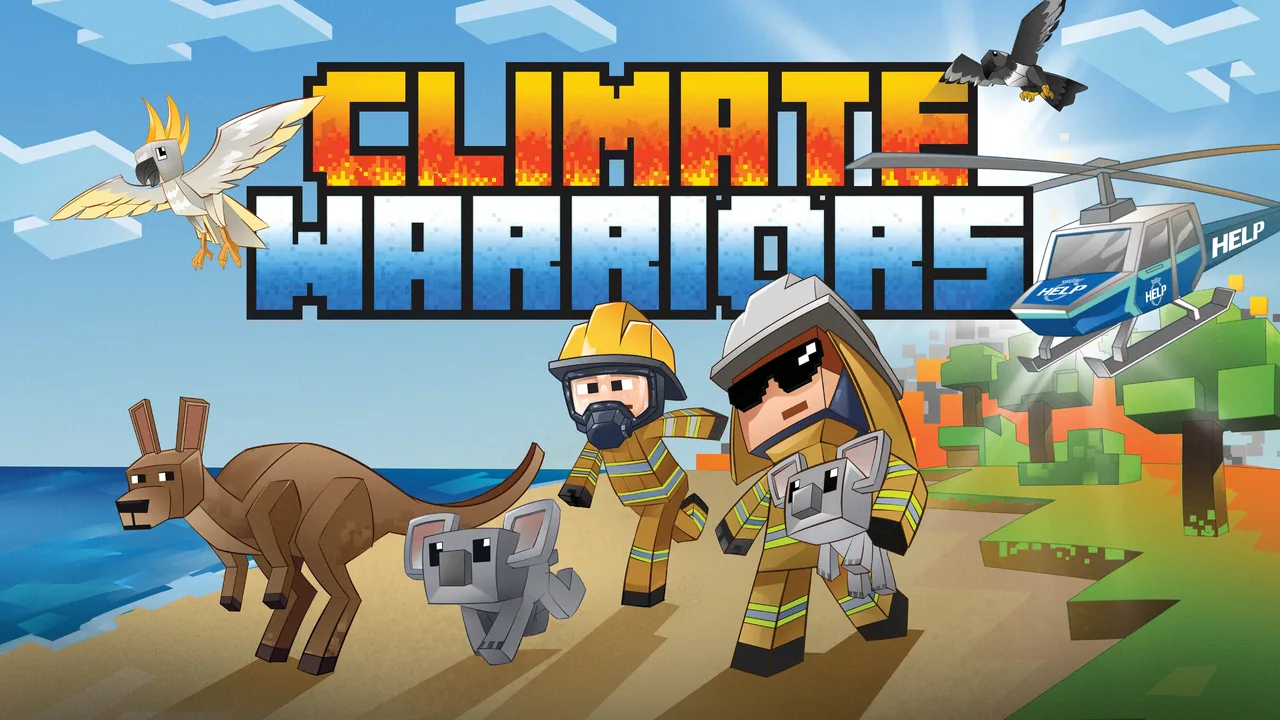
Bushfires pose a serious danger to communities, ecosystems, and human infrastructure, especially as climate impacts shift weather patterns. Understanding how to interpret risk ratings, select resilient building materials, and execute coordinated emergency responses helps build lasting resilience in vulnerable regions.Using the Climate Warriors world, learners step into the role of active citizens across the full cycle of a disaster. They gather scientific data with a climate researcher, test the flammability of common construction materials, rescue wildlife under emergency conditions, and deliver critical post-disaster aid through aerial supply drops and reforestation.
Learning objectives
By the end of this lesson students will be able to:
- List three practical safety measures that protect houses and communities before a bushfire occurs.
- Explain which building materials best resist fire after testing wood, steel, and brick.
- Describe the key responsibilities community members have before, during, and after a bushfire emergency.
Blocks and items used in this lesson


Key vocabulary
- Fire Danger Rating
- A calculated estimate of potential fire behavior and threat level based on environmental and weather data.
- Mitigation
- Steps taken in advance to lessen the damage and risk caused by an emergency or natural hazard.
- Reforestation
- The process of replanting trees in natural areas that have been cleared or destroyed by fire.
Before class
Lesson sequence
- Risk Prediction and Material Testing
Students collaborate with an in-game Climate Scientist to analyze environmental data and calculate the local fire danger rating. Next, learners conduct tests to evaluate how wood, steel, and brick react to fire, recording which materials are safest for residential construction.
- Pre-Fire Property Preparation
Learners identify and apply three preventative safety measures around homes and communal areas that minimize the risk of structural loss before an active fire starts.
- Emergency Response and Wildlife Rescue
When the bushfire begins, students listen to emergency personnel and assist in maintaining community safety. Working within the disaster zone, they locate an endangered koala and transport it to a secure location.
- Community Recovery and Restoration
Following the fire, students participate in restoration efforts. They fly a helicopter to drop critical supplies into affected areas and replant native trees across scorched land.
- Debrief and Real-World Reflection
Students review their worksheet data and discuss how their in-game actions reflect real-world disaster preparation, community recovery, and household safety planning.
Assessment: success criteria
- Student accurately records the fire resistance of wood, steel, and brick on their worksheet.
- Student names three specific actions that can be taken before a bushfire to safeguard properties.
- Student articulates appropriate steps taken during and after a bushfire event, including wildlife rescue and replanting.
Differentiation
Allow students to work in pairs while recording test results and completing the material resistance lab.
Ask fast finishers to outline a family evacuation and bushfire preparedness checklist based on the safety actions explored in class.
Knowledge check
5 questions to check understanding after the lesson. Tap an answer to see if it is right; the score appears at the end.
1Which three building materials do students test for fire resistance?
Answer: B. The curriculum specifies testing the fire resistance of wood, steel, and brick.
2Which animal do students rescue during the active bushfire emergency?
Answer: A. The student activities require players to find and rescue a koala and return it to safety.
3How do students deliver recovery supplies to key locations after the fire?
Answer: C. Learners assist recovery operations by transporting relief supplies via helicopter.
4What post-fire environmental restoration task do students carry out?
Answer: D. Students directly aid landscape rehabilitation by replanting trees in scorched zones.
5Who do students assist when calculating the fire danger rating?
Answer: A. The source identifies the Climate Scientist as the individual students help to calculate ratings.
Resources
- Lesson package (.zip)Everything the author attached to this lesson in one download.
- Lesson PlanLessons plan for Climate Warriors
- Student WorksheetStudent Worksheet for Climate Warriors
- Curriculum LinksCurriculum Links for Climate Warriors
- Lesson worldOpens the world page in Minecraft Education (sign-in with a school account may be needed).
Frequently Asked Questions
What age group is this lesson plan appropriate for?
The source lists this lesson across multiple educational bands, accommodating learners from age 6 up through high school and adult learners depending on how deeply teachers unpack the scientific concepts.
Are external worksheets required for this activity?
Yes, the lesson materials include a student worksheet used to record test observations, calculate fire ratings, and reflect on emergency decisions.
Adapted from Climate Warriors by BlockWorks on Minecraft Education, last updated May 23, 2025. This classroom version, the timings and the quiz were written by 9Minecraft Education.