- Type
- Lesson plan
- Topics
- ScienceTechnologyAnimals
- Ages
- Ages 8-13
- Duration
- More than 3 hours
- Level
- Beginner
- Includes
- Quiz: 5 questions
How can we design and build a practical product that improves the physical and emotional welfare of animals?
Overview
Students take on the role of animal care product designers tasked with improving the well-being of rescue animals or family pets. Grounded in animal welfare science and the Five Domains Model, learners explore animal sentience and identify specific physical and emotional needs across daily routines, such as feeding, rest, exercise, and vet visits.
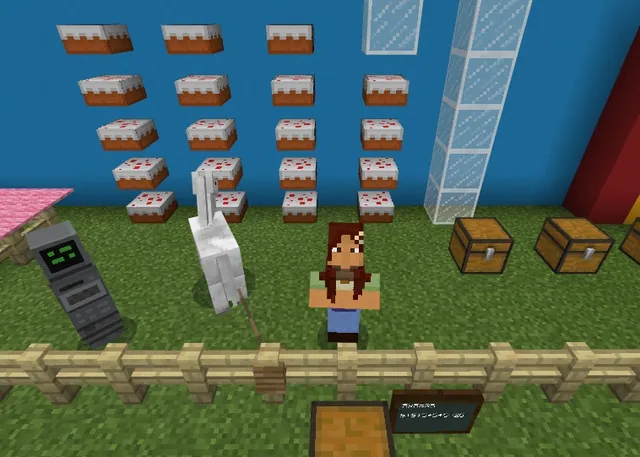
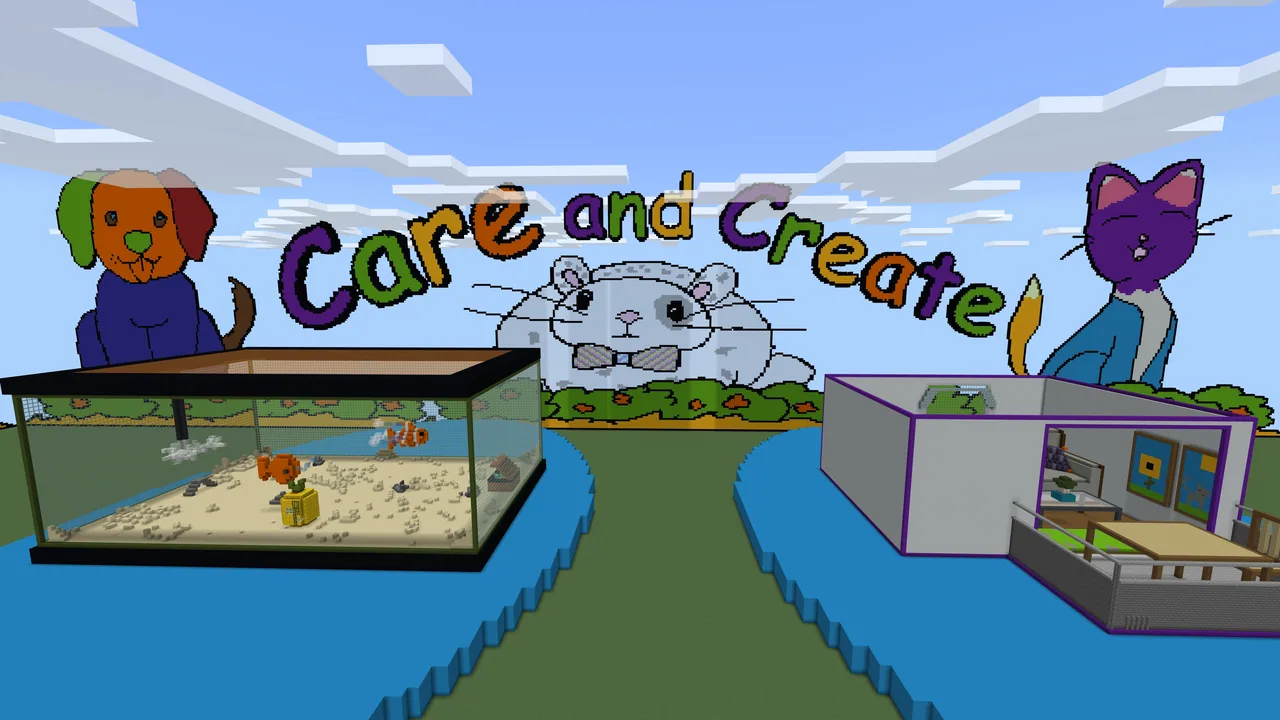
Using the SPCA Care and Create Minecraft world, students select one of four domestic environments—a kitchen, laundry, apartment living area, or aquarium—to prototype their ideas. Working through a formal design brief, students iterate their builds virtually, review peers' models, and create procedural guides or infomercial pitches to showcase their solutions.
Learning objectives
By the end of this lesson students will be able to:
- Explain the concepts of animal sentience and the Five Domains Model of animal welfare.
- Formulate an informative design brief that outlines animal needs, functional criteria, and safety constraints.
- Build and test a virtual 3D prototype of an animal care product inside a designated Minecraft environment.
- Evaluate a prototype using structured feedback and communicate its use through procedural writing or a video presentation.
Blocks and items used in this lesson


Key vocabulary
- Animal Sentience
- The ability of animals to experience positive and negative feelings, such as pleasure, comfort, fear, and pain.
- Five Domains Model
- A framework used in animal welfare science to assess the physical and mental well-being of animals.
- Design Brief
- A written document that outlines the goals, constraints, materials, and success criteria for an engineering or design project.
- Prototype
- A preliminary test model constructed to trial and improve a design before making the final product.
- PMI Chart
- An evaluation tool used to examine the Plus (positives), Minus (negatives), and Interesting elements of an idea.
Before class
Lesson sequence
Suggested timing: about 240 minutes in total.
- Welfare Research and Animal Sentience45 min
Introduce the design challenge and the concept of animal sentience: animals experience both positive emotions, like comfort and pleasure, and negative emotions, like pain and fear. Guide students through the Five Domains Model to understand core animal needs during feeding, rest, play, and vet visits.
- Design Brief and Planning45 min
Organize students into project teams or independent designers. Have them select a target animal and identify an enrichment or care problem. Students analyze product ideas using a PMI chart and draft a design brief outlining target functions, material safety, and dimensions.
- Minecraft Prototyping60 min
Students load into the SPCA Care and Create Minecraft world and choose an environment suited to their pet: the kitchen, laundry, apartment living area, or aquarium. Learners build a scale 3D prototype of their product directly inside the chosen environment.
- Testing and Peer Feedback45 min
Teams conduct walkthroughs of each other's virtual prototypes. Reviewers assess whether the design satisfies the design brief and animal safety requirements. Students record feedback and revise their virtual models or plan real-world versions.
- Documentation and Presentation45 min
Students complete procedural writing explaining how to operate their animal care product safely. They record an infomercial pitch using Flipgrid, followed by self, peer, and teacher evaluations against the project rubric.
Assessment: success criteria
- The student clearly applies the Five Domains Model to explain how their product supports animal welfare.
- The completed design brief includes clear functional criteria, safety considerations, and evidence of revision.
- The virtual prototype is constructed to an appropriate scale within one of the four Minecraft care environments.
- The final pitch or written procedural guide accurately describes how the product operates and benefits the animal.
Differentiation
Provide a scaffolded design brief with sentence stems and pair learners together to collaborate on a single build.
Have students build a physical scale model using craft materials, design retail packaging, and develop target-audience advertisements.
Knowledge check
5 questions to check understanding after the lesson. Tap an answer to see if it is right; the score appears at the end.
1What is meant by the term animal sentience?
Answer: B. Animal sentience refers to an animal's capacity to experience both positive and negative emotional states.
2Which framework must students use to guide their product design?
Answer: A. The unit requires students to research and apply the Five Domains Model to address animal welfare needs.
3Which of these is one of the four build environments in the SPCA Care and Create world?
Answer: B. The four environments in the world are the kitchen, the laundry, an apartment living space, and a household or classroom aquarium.
4What thinking tool do students use to examine the positive, negative, and interesting features of a product idea?
Answer: C. The source specifies using a PMI (Plus, Minus, Interesting) chart to analyze product attributes.
5Which tool is suggested for students to record their product pitch in the style of an infomercial?
Answer: C. The source explicitly recommends presenting the product in the style of an infomercial using Flipgrid.
Frequently Asked Questions
Can students complete this project individually, or must they work in groups?
Students can work individually or in small teams structured as design companies, depending on classroom needs and device availability.
Are students required to build a physical product, or can they stay entirely within Minecraft?
Teachers can keep the project purely digital inside the Minecraft world, or extend it to include physical craft prototypes, packaging, and real-world testing.
Who designed the SPCA Care and Create Minecraft world?
The world was designed and built for the SPCA by Year 5 and 6 students from Elmwood Normal School in Christchurch, New Zealand.
Adapted from Care and Create - Design an Animal Care Product by Wilj Dekkers on Minecraft Education, last updated Jun 3, 2022. This classroom version, the timings and the quiz were written by 9Minecraft Education.