- Type
- Lesson plan
- Ages
- Ages 8-13
- Duration
- about 60 min (suggested)
- Skills
- CommunicationCreativity
- Includes
- Quiz: 5 questions
How do subatomic particles determine an element's atomic identity and whether it is active or inert?
Overview
Atomic structure is a foundational chemistry concept where understanding the relationships among protons, neutrons, and electrons determines an element's identity and chemical behavior. Exploring how these subatomic particles correspond to atomic numbers and mass numbers helps learners classify elements and understand chemical reactivity.
Using Minecraft Education chemistry features, students work in small groups with the Element Constructor tool to build and inspect assigned elements. By directly manipulating particle counts, learners record data in tables to identify atomic numbers, calculate atomic mass, and distinguish between active elements and inert gases.
Learning objectives
By the end of this lesson students will be able to:
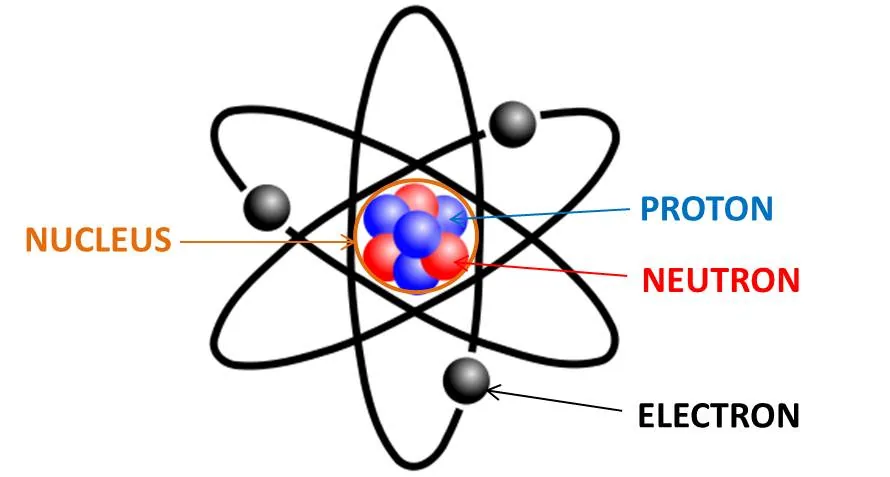
- Identify the location, charge, and mass of protons, neutrons, and electrons.
- Determine the atomic number and mass number of elements using subatomic particle counts.
- Construct assigned elements using the Minecraft Element Constructor tool.
- Distinguish between chemically active elements and inert gases based on atomic structure.
Blocks and items used in this lesson
 Element Constructor
 Hydrogen (Element 1)
 Helium (Element 2)
 Oxygen (Element 8)
 Carbon (Element 6)
 Neon (Element 10)
Key vocabulary
- Atom
- The basic unit of a chemical element, composed of protons, neutrons, and electrons.
- Subatomic Particle
- A particle smaller than an atom, including protons, neutrons, and electrons.
- Atomic Number
- The number of protons found in the nucleus of an atom.
- Mass Number
- The total number of protons and neutrons in an atom's nucleus.
- Inert Gas
- An unreactive chemical element that does not readily form compounds.
- Active Element
- An element that easily takes part in chemical reactions with other substances.
Before class
Lesson sequence
Suggested timing: about 60 minutes in total.
- Introduction and Theory10 min
Introduce the lesson by defining the atom and showing an introductory video on atomic structure. Guide students to create a comparison table reviewing subatomic particles—protons, neutrons, and electrons—by their location, electrical charge, and relative mass.
- Element Constructor Investigation20 min
Divide students into groups of five and assign each group five distinct elements. Have students open Minecraft, place an Element Constructor, and adjust particle sliders to build and observe each assigned element.
- Data Recording and Analysis15 min
Working in their groups, students log the count of protons, neutrons, and electrons for each element into their tables. Students use these counts to conclude the atomic number and calculate the mass number for every element studied.
- Reactivity Synthesis and Discussion15 min
Reconvene as a class to review student findings. Guide groups to analyze their data and conclude whether each investigated element functions as an active element or an inert gas based on its atomic structure.
Assessment: success criteria
- Accurately records the number of protons, neutrons, and electrons for five assigned elements.
- Correctly derives the atomic number and mass number from subatomic particle data.
- Explains the defining differences between active elements and inert gases.
Differentiation
Provide a guided reference chart listing the charges and locations of subatomic particles to help learners navigate the Element Constructor.
Ask advanced learners to compare elements across different periods to evaluate how varying neutron counts influence total atomic mass.
Knowledge check
5 questions to check understanding after the lesson. Tap an answer to see if it is right; the score appears at the end.
1Which Minecraft chemistry tool is used to examine and assemble atomic structures in this lesson?
Answer: A. The lesson explicitly uses the Element Constructor to study the atomic structure of elements.
2Which subatomic particles are combined to determine the mass number of an atom?
Answer: B. The mass number represents the total count of protons and neutrons in the nucleus.
3The atomic number of an element is defined by the total count of which particle?
Answer: C. An element's atomic number is determined directly by the number of protons it possesses.
4How does an inert gas differ from an active element?
Answer: D. Inert gases are characterized by low reactivity, whereas active elements react readily with other substances.
5When comparing subatomic particles in the introductory table, which three properties are examined?
Answer: A. The lesson guiding ideas specify comparing subatomic particles according to their location, charge, and mass.
Frequently Asked Questions
Do students need a custom world download for this lesson?
No custom world download is required. Teachers simply need to create a standard world with Minecraft Education chemistry features enabled so students can use the Element Constructor.
How are students organized during the building activity?
Students work cooperatively in groups of five, with each group assigned five distinct chemical elements to build, log, and analyze.
Adapted from Atomic Structure by Soheir Zaki on Minecraft Education, last updated Jul 21, 2025. This classroom version, the timings and the quiz were written by 9Minecraft Education.