- Type
- Lesson plan
- Ages
- Ages 8-18
- Duration
- about 2.2 hours (suggested)
How do internal perceptions and external social factors shape who we are, and how can we visually represent those traits?
Overview
This lesson invites students to examine identity through three distinct lenses: personal self-perception, social structures, and interpersonal interactions. Learners examine key terminology and map their personal characteristics to identify traits that are visible, hidden, static, or dynamic over time, all while maintaining personal boundaries in a safe classroom environment.Learning objectives
By the end of this lesson students will be able to:
- Analyze how personal, social, and interpersonal factors shape and influence identity.
- Distinguish between static characteristics and dynamic traits that can change over time.
- Build and curate a collection of visual representations inside a Minecraft museum.
- Reflect on how developing self-understanding supports our ability to understand others.
Blocks and items used in this lesson


Key vocabulary
- Identity
- The qualities, beliefs, personality, and traits that define who an individual is.
- Social Construct
- A concept or category created and developed by a society rather than existing naturally.
- Static Characteristics
- Traits or aspects of a person that generally do not change over time.
- Dynamic Characteristics
- Traits or aspects of a person that can grow, develop, or alter over time.
- Intrapersonal
- Relating to internal thoughts, feelings, and a person's view of self.
- Interpersonal
- Relating to relationships, communication, and interactions between people.
Before class
Lesson sequence
Suggested timing: about 135 minutes in total.
- Whole-Class Discussion5 min
Introduce the guiding ideas of identity across interpersonal, intrapersonal, and social contexts. Prompt students to discuss what identity means, how it influences interactions, and how traits can be static or dynamic.
- Vocabulary and Identity Mapping45 min
Have students complete a fishbone diagram connecting key terminology like race, gender, and social constructs to identity. Students then complete their identity web template to record visible and non-visible characteristics.
- Categorization and Build Planning45 min
Working individually and in small groups, students sort their traits into static and dynamic categories. They then brainstorm symbolic artifacts, visuals, and structures to represent these aspects in Minecraft.
- Minecraft Museum of Me30 min
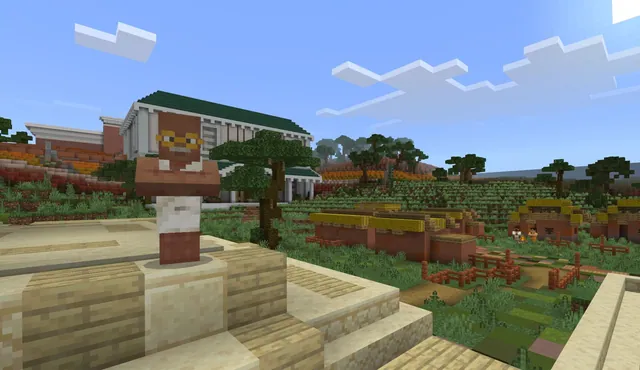
Students load the museum build in Minecraft and curate an exhibit collection representing their identity components. Optionally, students may arrange their exhibits by personal importance or record a video tour narrating their collection.
- Reflection10 min
Learners complete a short written or video response answering why understanding our own identity helps us better understand other people.
Assessment: success criteria
- Student successfully categorizes traits into static and dynamic components on their anchor chart.
- Student creates symbolic builds in the Minecraft museum representing their chosen identity traits.
- Student articulates key vocabulary correctly during discussions or written work.
- Student explains how self-understanding connects to understanding others in the final reflection.
Differentiation
Provide visual prompts and sentence stems to help learners select and categorize identity characteristics before building.
Have students arrange exhibits in order of importance, record a narrated walkthrough video, or research and curate an exhibit for a peer.
Knowledge check
5 questions to check understanding after the lesson. Tap an answer to see if it is right; the score appears at the end.
1Which term describes aspects of identity that remain mostly unchanged over time?
Answer: C. Static characteristics are components of identity that do not typically shift over time.
2What is an intrapersonal context focused on?
Answer: A. Intrapersonal context addresses personal self-reflection and internal views of self.
3What safety guideline should teachers follow during this lesson?
Answer: B. Students must have the option to keep sensitive personal details private to ensure safety from microaggressions.
4What do students build and curate inside the Minecraft world?
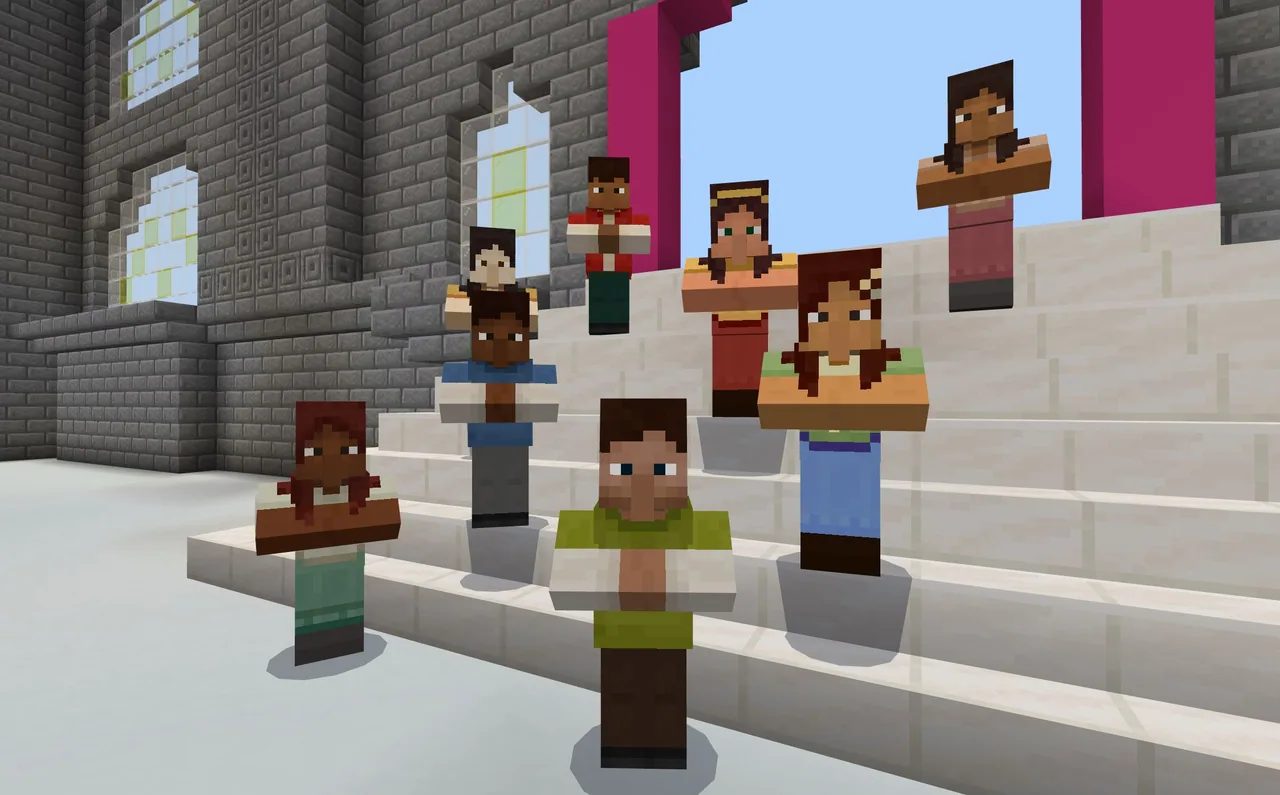
Answer: D. Students load into a museum world to create a curated collection representing components of who they are.
5Why is it useful to categorize characteristics as static or dynamic?
Answer: A. Analyzing static versus dynamic traits helps students understand that identity consists of stable elements as well as aspects that change over time.
Resources
- Lesson package (.zip)Everything the author attached to this lesson in one download.
- The I in Identity LessonThis is the PDF version of the I in Identity Lesson
- Lesson worldOpens the world page in Minecraft Education (sign-in with a school account may be needed).
Frequently Asked Questions
Are students required to publicly share every part of their identity?
No. Educators should ensure safety by making sharing optional so that students are never forced to reveal personal elements that could make them vulnerable.
What can students do if they finish their museum display early?
Students can record a narrated video tour of their gallery, organize exhibits by importance, or interview a classmate to curate a collection for them.
Adapted from The I in Identity by Felisa Ford, Ken Shelton, Natasha Rachell on Minecraft Education, last updated Feb 12, 2025. This classroom version, the timings and the quiz were written by 9Minecraft Education.