- Type
- Lesson plan
- Ages
- Ages 8-13
- Duration
- 30 min
- Level
- Beginner
How can understanding someone else's daily challenges help us choose the kindest way to help them?
Overview
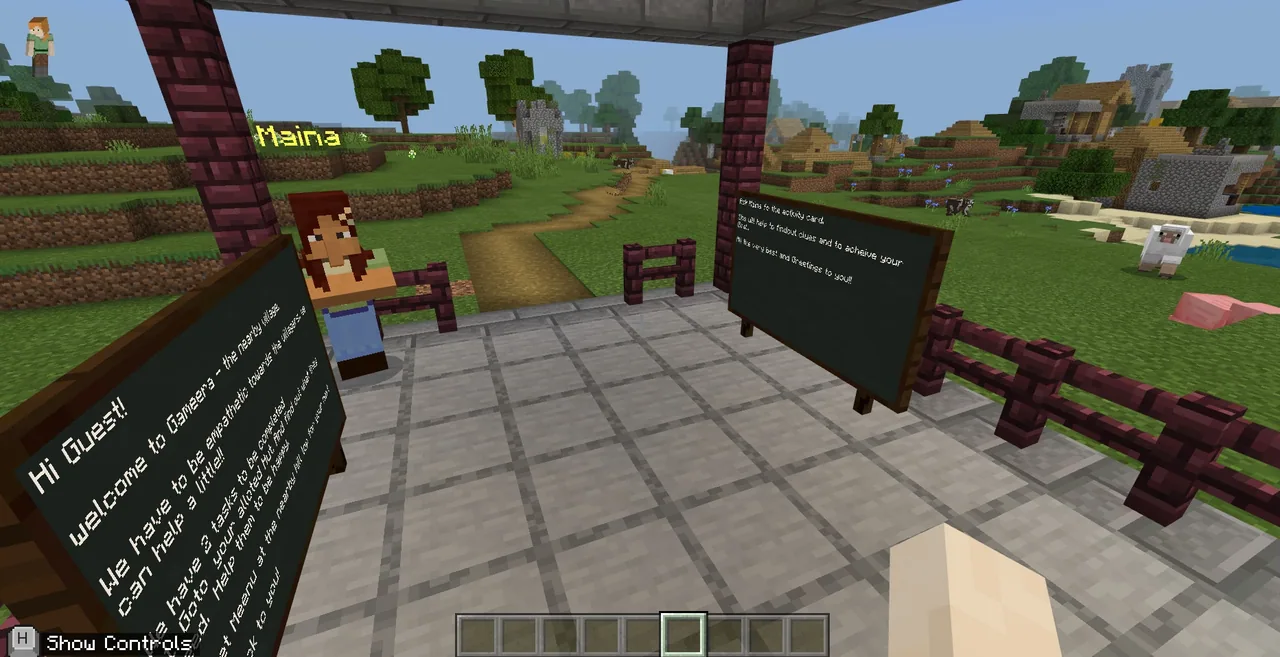
Empathy Village introduces students to social-emotional understanding through collaborative problem-solving. Learners are challenged to imagine life from another person's perspective by stepping into their shoes, recognizing emotional and practical needs, and responding with helpful, supportive actions.
Inside a custom Minecraft world designed for five individuals or teams, students locate specific huts, read diary clues left by village workers, and craft or build the tools those workers are missing. Afterwards, students inspect another peer's modified hut to analyze whether the occupant's needs were truly satisfied.
Learning objectives
By the end of this lesson students will be able to:
- Define empathy and discuss examples of caring for people in need.
- Investigate clues inside village huts to identify missing tools and resources.
- Build or craft helpful solutions based on the occupant's specific profession.
- Evaluate whether peer modifications successfully satisfy the needs of village inhabitants.
Blocks and items used in this lesson


Key vocabulary
- Empathy
- The ability to understand and share the feelings of another person by imagining what it is like in their position.
- Profession
- A specific job or line of work that someone does to earn a living and serve their community.
- Perspective
- A particular way of seeing or experiencing the world based on one's role or situation.
Before class
Lesson sequence
Suggested timing: about 30 minutes in total.
- Introduction and Guiding Questions5 min
Introduce the concept of empathy by asking students what it means to put themselves in someone else's shoes. Discuss examples of recognizing others' needs and explain that students will explore a village to help working residents who lack essential supplies.
- Task 1: Investigate and Build12 min
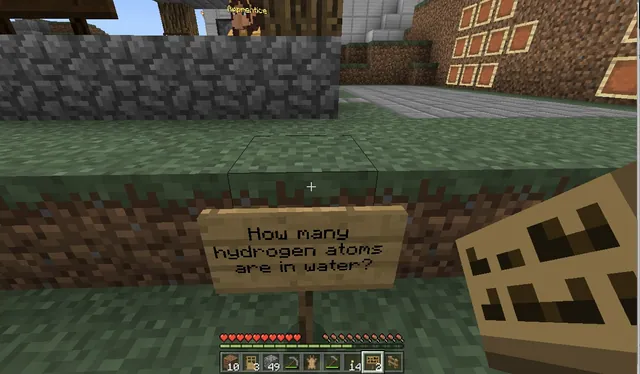
Assign each student or group to a designated hut. Students locate their assigned home, read the resident's diary to identify their profession and missing tools, and craft or build what is needed. Remind learners to leave the diary in its original location for others to find.
- Task 2: Peer Review and Evaluation8 min
Direct students to rotate to a different hut that was modified by a peer. Students examine the diary clues and the new additions to analyze whether the resident's problem was genuinely solved and whether the worker would be satisfied with the solution.
- Class Reflection and Reporting5 min
Gather the class for a brief discussion or report presentation. Students share their observations, discuss how helping others creates happiness, and explore how these empathetic behaviors connect to real-life situations.
Assessment: success criteria
- Student successfully identifies the missing items described in the assigned hut's diary clues.
- Student constructs or crafts relevant tools that align directly with the worker's profession.
- Student thoughtfully analyzes a peer's modified hut and determines occupant satisfaction.
- Student explains how showing empathy and kindness positively affects people in daily life.
Differentiation
Pair struggling readers with a partner to help decode the diary clues and identify the needed tools together.
Have advanced learners write an evaluative report suggesting additional community improvements that could help the village worker thrive.
Knowledge check
5 questions to check understanding after the lesson. Tap an answer to see if it is right; the score appears at the end.
1What is the primary skill students practice throughout this lesson?
Answer: B. The guiding idea of the lesson is to promote empathy and understand others by stepping into their shoes.
2How many players or groups is the Empathy Village world specifically built for?
Answer: C. The source states that the village was built for five players or five groups of children.
3In Task 1, where do students discover clues about what a resident is lacking?
Answer: A. Task 1 requires students to search the hut and find what the occupant is lacking using clues in a diary.
4What must students do with the diary after reading it in Task 1?
Answer: D. The instructions note that students need to keep the diaries in the same place so others can find them later.
5What is the goal of Task 2 in the village?
Answer: B. In Task 2, students visit a hut modified by someone else to analyze whether the inhabitant would be satisfied.
Resources
- Lesson package (.zip)Everything the author attached to this lesson in one download.
- Empathy VillageThis is the Minecraft world file for this lesson.
- Task 1The first task for all the 5 players.
- Task 2The second task for all the 5 players.
Frequently Asked Questions
How can I run this lesson if I have more than five students in my class?
The activity can easily scale by dividing the class into five small teams. Each group shares an assigned hut for Task 1 and rotates together to analyze another group's work during Task 2.
What should students do once they complete both tasks in the world?
Students conclude the lesson by participating in a whole-class discussion or presenting a brief report to peers and the teacher about their findings and solutions.
Adapted from Empathy Village - Gameera by Elavarasan Ramalingam on Minecraft Education, last updated Dec 10, 2021. This classroom version, the timings and the quiz were written by 9Minecraft Education.