- Type
- Lesson plan
- Ages
- Ages 8+
- Duration
- 45 min
- Level
- Beginner
How do teams use communication, role assignment, and strategic planning to succeed during timed challenges?
Overview
Effective communication, role specialization, and tactical planning are central to successful esports competition. In this lesson, students explore what makes a collaborative team function efficiently under pressure while navigating competitive gameplay and dynamic decision-making.
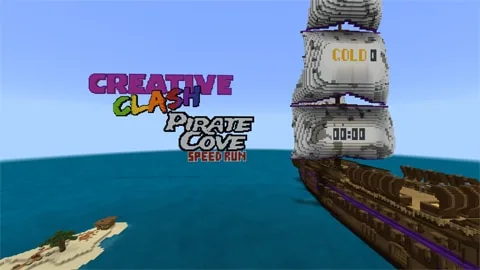
Using the Creative Clash: Pirate Cove world, learners assume the roles of Pirate Captains or crew members on an island featuring cannons, skulls, and a giant galleon. Teams use specialized pirate gear, such as Fishflingers and Puffernades, to retrieve treasure and deposit it into deck chests while tracking their strategic choices in a reflective journal.
Learning objectives
By the end of this lesson students will be able to:
- Formulate a team strategy and assign specific player roles to search for island treasure quickly.
- Communicate and adapt tactical plans during active gameplay to overcome time constraints.
- Document gameplay experiences and team dynamics within a Professional Play Journal.
- Evaluate team performance against shared criteria to set future collaborative goals.
Blocks and items used in this lesson


Key vocabulary
- Strategy
- A planned approach or set of actions designed to achieve a specific goal.
- Speed Run
- Completing a game objective as quickly as possible under time pressure.
- Shoutcaster
- A commentator who provides live play-by-play observation and insight during an esports match.
- Reflection
- The process of reviewing team actions and outcomes to identify strengths and areas for improvement.
Before class
Lesson sequence
Suggested timing: about 45 minutes in total.
- Team Formation and Strategy10 min
Group students into teams of 4 to 10 players and establish roles such as Pirate Captain or crew. Have each team establish criteria for evaluating their own performance and agree upon a search strategy across the island.
- Pirate Cove Speed Run20 min
Launch the match where teams race against time to locate hidden treasure, manage tools like the Fishflinger or Puffernade, and deposit items into the galleon's chests. Students not actively playing can take on roles as shoutcasters, press, coaches, or gameplay analysts.
- Reflection and Goal Setting15 min
Direct students to complete their Professional Play Journals using prompt questions to analyze team communication and tactical choices. Teams evaluate their performance against their initial criteria and set specific goals for future rounds or league matches.
Video
Assessment: success criteria
- Student actively contributes to team strategy planning and assigned crew duties.
- Student demonstrates clear communication and adaptive decision-making during the timed run.
- Student completes journal reflections analyzing team strengths and learning opportunities.
- Team sets measurable goals for future play based on self-evaluation and match results.
Differentiation
Assign struggling learners a specific, focused role such as treasure runner or chest manager alongside a supportive teammate.
Have advanced learners serve as gameplay analysts or shoutcasters who track team metrics and coordinate league tournament play.
Knowledge check
5 questions to check understanding after the lesson. Tap an answer to see if it is right; the score appears at the end.
1What is the primary objective for teams during the Pirate Cove speed run?
Answer: B. Teams compete to locate hidden treasure across the island, bring it to the ship, and fill the deck chests as quickly as possible.
2What is the recommended number of players per team in this activity?
Answer: A. The lesson recommendations specify organizing groups into teams of between 4 and 10 players.
3Which items are mentioned as equipment used by players in the world?
Answer: C. Players use pirate-themed gear such as the Fishflinger or the Puffernade during gameplay.
4What role can spectating students take on during a match?
Answer: C. Spectators can engage by serving as shoutcasters, media, coaches, or gameplay analysts.
5How do students document and evaluate their teamwork and gameplay?
Answer: B. Students reflect on their collaboration and set improvement goals inside their Professional Play Journal.
Resources
Frequently Asked Questions
How can spectating students stay engaged if team slots are full?
Students not competing in the active round can act as shoutcasters, team coaches, media reporters, or gameplay analysts to evaluate strategies from the sidelines.
Can this single session be expanded across multiple class periods?
Yes, teachers can organize a league format where multiple teams compete across several matches, allowing students to test new strategies and adjust based on previous journal reflections.
Adapted from Creative Clash: Pirate Cove - Speed Run by Minecraft Education on Minecraft Education, last updated Apr 15, 2025. This classroom version, the timings and the quiz were written by 9Minecraft Education.