- Type
- Lesson plan
- Ages
- Ages 8-13
- Duration
- 45 min
- Level
- Beginner
How can we use specialized English vocabulary and teamwork in Minecraft to sequence and explain the life stages of a sunflower?
Overview
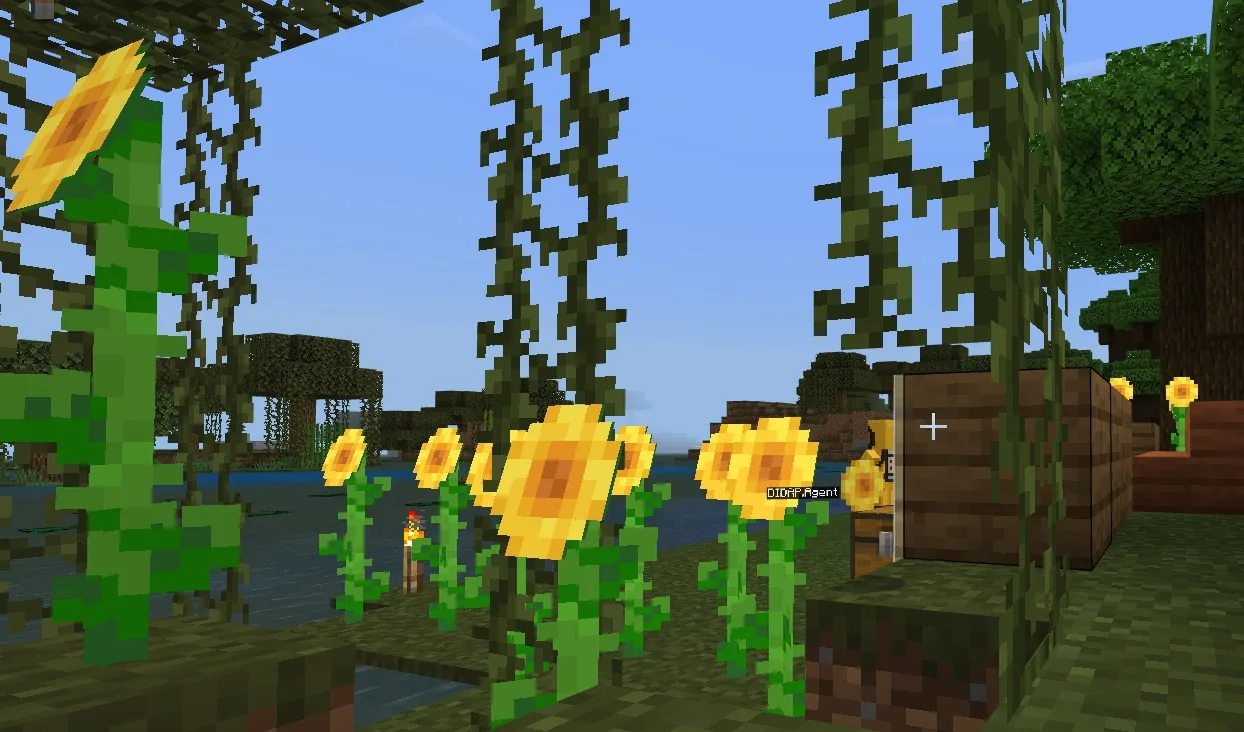
This Content and Language Integrated Learning (CLIL) lesson connects English language practice with natural science. Students explore the life cycle of a sunflower, building familiarity with scientific vocabulary and concepts such as sprouting, pollination, and plant death while speaking and working together in English.
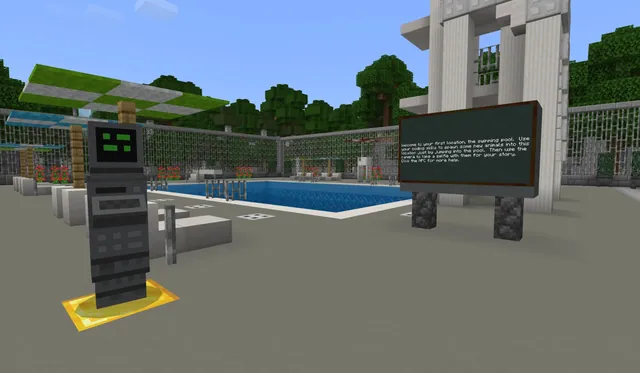
Inside a custom Minecraft Education world, small groups navigate between posters showing sunflower stages, following guidance from non-player characters. Learners pause to discuss instructions, sequence the growth phases using numbered signs, and turn to simple block coding when challenges require technical problem-solving.
Learning objectives
By the end of this lesson students will be able to:
- Sequence the stages of a sunflower life cycle from sprouting to death using numbered signs.
- Communicate in English with group members to complete non-player character tasks and compare findings against a timeline.
- Explain the role and environmental importance of pollination using topic-specific vocabulary.
- Apply basic block coding when needed to overcome in-game challenges.
Blocks and items used in this lesson


Key vocabulary
- Sprouting
- The beginning stage when a plant seed starts to grow shoots and roots.
- Pollination
- The process where pollen moves to a flower so it can produce new seeds.
- Timeline
- A visual sequence that shows the order in which events or stages happen over time.
- CLIL
- Content and Language Integrated Learning, a method where students learn subject content through an additional language.
Before class
Lesson sequence
Suggested timing: about 45 minutes in total.
- Warm-up & Group Setup10 min
Students organize into small teams sharing a device, assign a group leader to monitor communication and record unfamiliar vocabulary, and review their prepared sunflower timelines before entering the world.
- In-Game Investigation & Sequencing20 min
Teams navigate the Minecraft world together, interacting with non-player characters who provide instructions, questions, and tasks. Learners pause at each poster depicting a life cycle stage and place numbered signs in the correct chronological order.
- Coding Challenges & Timeline Verification10 min
Learners review their completed sign sequence against their reference timeline and discuss whether simple block coding is needed to solve any navigation or environmental challenges encountered.
- Class Reflection & Wrap-up5 min
The teacher facilitates a brief debrief on language difficulties, coding solutions, and collaboration. Students prepare to write a follow-up blog post for the school blog about their learning experience.
Assessment: success criteria
- Students accurately order the sunflower life cycle stages from sprouting to death using numbered signs.
- Students actively communicate in English during group decision-making and non-player character tasks.
- Students explain pollination and plant growth stages using targeted scientific vocabulary.
- Students evaluate peer collaboration, technical problem-solving, and their own language performance.
Differentiation
Provide visual reference cards of the timeline and encourage peers to help with laptop controls and target vocabulary.
Have students write detailed explanations of pollination or experiment with block coding to automate solutions in the world.
Knowledge check
5 questions to check understanding after the lesson. Tap an answer to see if it is right; the score appears at the end.
1What is the main task students complete next to the sunflower posters in the world?
Answer: C. Students navigate posters of the sunflower stages and use numbered signs to place them in chronological order.
2What should students do whenever they encounter an NPC giving instructions or tasks?
Answer: A. The teacher instructs students to pause gameplay and interact with each other whenever an NPC gives notes or tasks.
3What is the responsibility of the designated group leader?
Answer: D. The group leader monitors the group, notes difficulties, and records target vocabulary for later review.
4Which teaching approach combines science topics with English language instruction in this lesson?
Answer: B. The lesson utilizes CLIL to integrate scientific life cycle content with target language practice.
5What follow-up activity is assigned after the Minecraft session?
Answer: B. The teacher assigns a school blog post where learners share their gains and experiences using Minecraft for CLIL.
Resources
- Lesson package (.zip)Everything the author attached to this lesson in one download.
- Teacher's GuideFacilitating the lesson process.
Frequently Asked Questions
How do students manage sharing a single laptop in their group?
Students nominate a group leader who monitors participation and records vocabulary, while team members pause gameplay to discuss decisions whenever non-player characters deliver instructions.
Do students need prior coding experience to participate?
No, the lesson relies on beginner-level navigation and simple block coding, which students decide whether to apply when encountering specific challenges.
What reference material should students prepare before opening the game?
Students should prepare a sunflower life cycle timeline before the session, such as from their coursebook, to cross-check their sign sequencing inside the world.
Adapted from The Life of a Sunflower by DIDA PAPALEXIOU on Minecraft Education, last updated Mar 7, 2025. This classroom version, the timings and the quiz were written by 9Minecraft Education.