- Type
- Lesson plan
- Ages
- Ages 8-18
- Duration
- 1 hour
- Level
- Beginner
How can the core moral values of judo help us make responsible and respectful choices in our everyday lives?
Overview
Judo is grounded in a moral code that emphasizes personal discipline, fairness, and mutual welfare both on and off the mat. In this lesson, students explore core values including courage, respect, sincerity, self-control, and politeness, discovering how physical discipline translates into everyday social and emotional health.
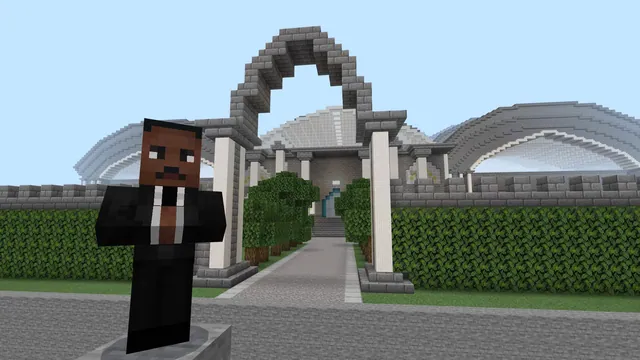
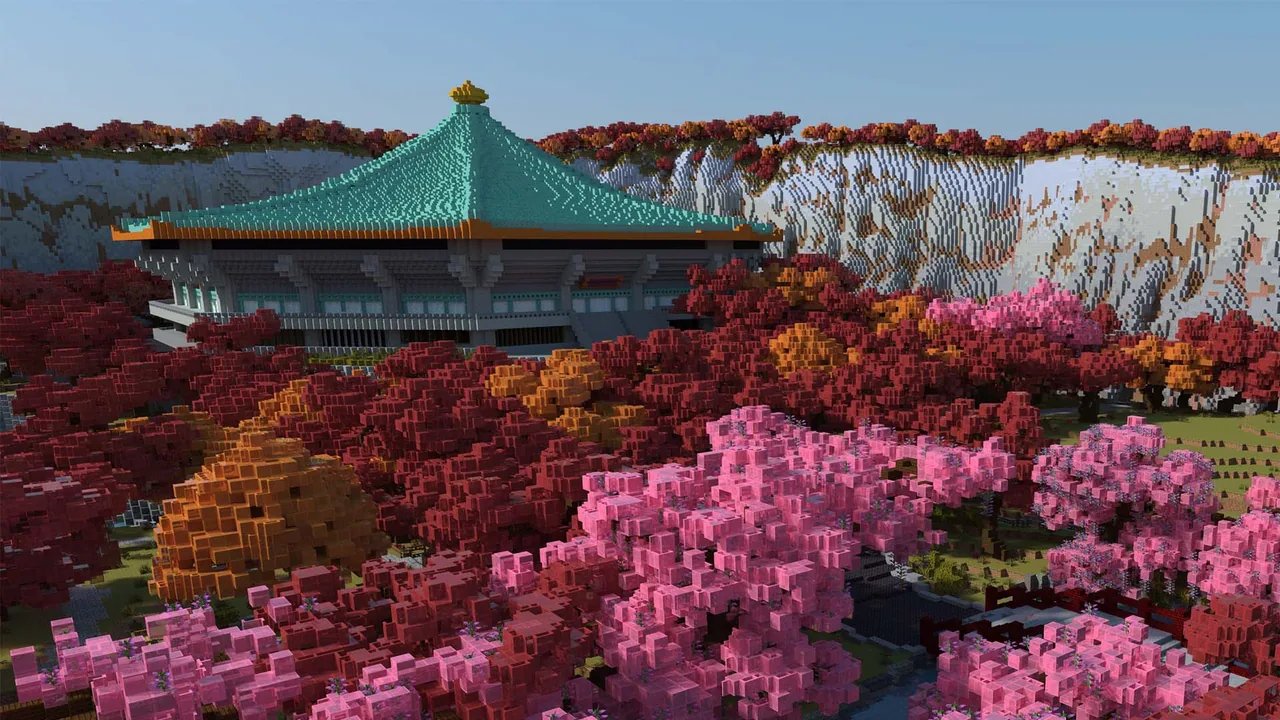
Inside Minecraft, students navigate value-focused quests. They test courage on a parkour course, design a symbolic judo companion, solve obstacles through calm breathing rather than force, and assist villagers to practice politeness. In-game portfolios and classroom partner exercises reinforce these lessons in daily life.
Learning objectives
By the end of this lesson students will be able to:
- Identify and distinguish among six different types of courage, including physical, emotional, intellectual, social, moral, and spiritual courage.
- Build a symbolic judo partner using character attributes to demonstrate respect for diversity, self, and the environment.
- Demonstrate self-control by remaining calm during Minecraft obstacle challenges and physical balance exercises.
- Examine moral choices by writing a story with three distinct outcomes based on sincerity and truthfulness.
Blocks and items used in this lesson


Key vocabulary
- Tatami
- The traditional mat used for training and matches in judo.
- Rei
- A respectful bow exchanged by judo practitioners before and after a match.
- Judoka
- A person who studies or practices the martial art of judo.
- Moral courage
- The determination to stand up for what is right even when it is uncomfortable or unpopular.
- Self-control
- The ability to master your emotions, remain patient, and stay calm under pressure.
Before class
Lesson sequence
Suggested timing: about 60 minutes in total.
- Courage and the Parkour Challenge15 min
Introduce judo's emphasis on facing challenges without fear. Review the six types of courage: physical, emotional, intellectual, social, moral, and spiritual. Students complete the in-game parkour run, take a screenshot, and write about which form of courage resonated most with their personal experiences.
- Respect and Companion Building15 min
Discuss how judoka show respect through the traditional bow (rei). In-game, students construct a judo companion using provided character archetypes (such as Lion, Panda, Fox, Deer, Pig, Sheep, Elephant, and Rabbit). Students photograph their build, write why they selected those traits, and discuss respect for self, others, and the environment in groups of 3 to 4.
- Sincerity and Moral Pathways10 min
Explain that sincerity means seeking truth and being honest in our actions. Students author a short narrative featuring a central character facing a dilemma, branching into three different endings based on the moral decisions made along the way.
- Self-Control Obstacles and Balance15 min
Students navigate three in-game tests: an intricate maze, a wall that dissolves only when calm breathing is practiced instead of detonating TNT, and a mob chamber passed by crouching slowly. Afterwards, students pair up in the classroom on one leg, gently attempting to unbalance one another without causing harm to practice focus and emotional control.
- Politeness and Generosity Portfolio5 min
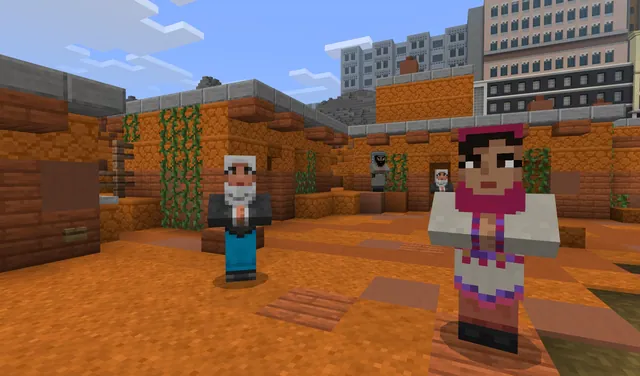
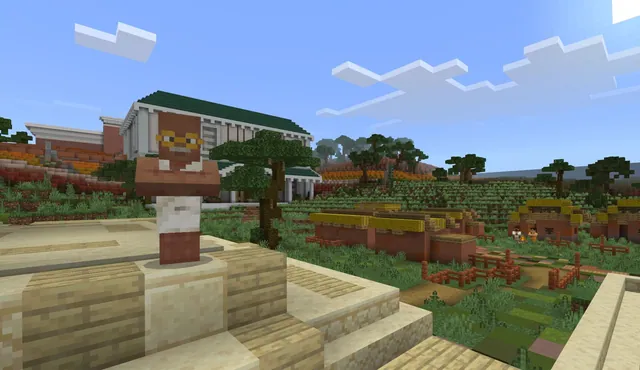
Students complete tasks to assist in-game villagers, capturing a selfie with each one saved into their portfolio. To conclude, each learner writes one concrete action they can take in their own life to show greater generosity toward others.
Assessment: success criteria
- Student accurately identifies the six types of courage and reflects on one type using in-game documentation.
- Student designs a judo companion and articulates how chosen character traits show respect for internal and external differences.
- Student produces a branching story demonstrating how distinct moral choices reflect sincerity and honesty.
- Student successfully navigates the self-control challenges and observes safety rules during the physical balancing activity.
Differentiation
Allow students to focus on two types of courage during the reflection and work in pairs during the self-control obstacle run.
Challenge students to write dialogue for all three branching story paths, evaluating which ending required the greatest moral courage.
Knowledge check
5 questions to check understanding after the lesson. Tap an answer to see if it is right; the score appears at the end.
1What does the bow (rei) represent in judo before and after a contest?
Answer: A. Judoka bow to one another to demonstrate respect and appreciation for the teachings and each other.
2How does the wise elder instruct players to get past the large wall during the self-control quest?
Answer: C. The wise elder advises remaining calm and using breathing exercises to make the wall slowly disappear.
3Which animal archetype is used to represent the environment when building a judo companion?
Answer: A. According to the character list, the elephant represents the environment while the rabbit represents recycling.
4Which form of courage involves standing up for what is right even when it is unpopular or uncomfortable?
Answer: D. Moral courage is defined as doing the right thing despite discomfort, social pressure, or lack of popularity.
5How must players travel through the mob room in the self-control challenge to prevent conflict?
Answer: B. Rushing through angers the mobs, so players must crouch and proceed slowly to avoid fighting.
Resources
- Lesson package (.zip)Everything the author attached to this lesson in one download.
- Printable PDF Lesson PlanPrintable PDF Lesson Plan
Frequently Asked Questions
What equipment is required for the classroom balance activity?
No special equipment is needed, but an open area free of desks and tripping hazards is essential so paired students can safely stand on one leg and test their balance gently.
How do students record their achievements during the quests?
Students capture in-game photographs of their parkour progress, constructed companions, and assisted villagers, compiling them into their portfolio alongside written reflections.
Adapted from The Mystery of the Budokan by Adam Clarke on Minecraft Education, last updated Sep 13, 2021. This classroom version, the timings and the quiz were written by 9Minecraft Education.