- Type
- Lesson plan
- Ages
- Ages 8-18
- Duration
- about 11 hours (suggested)
- Includes
- Quiz: 5 questionsLesson files
How did civilians protect themselves during the Blitz, and how can we use coding to construct accurate models of World War Two shelters?
Overview
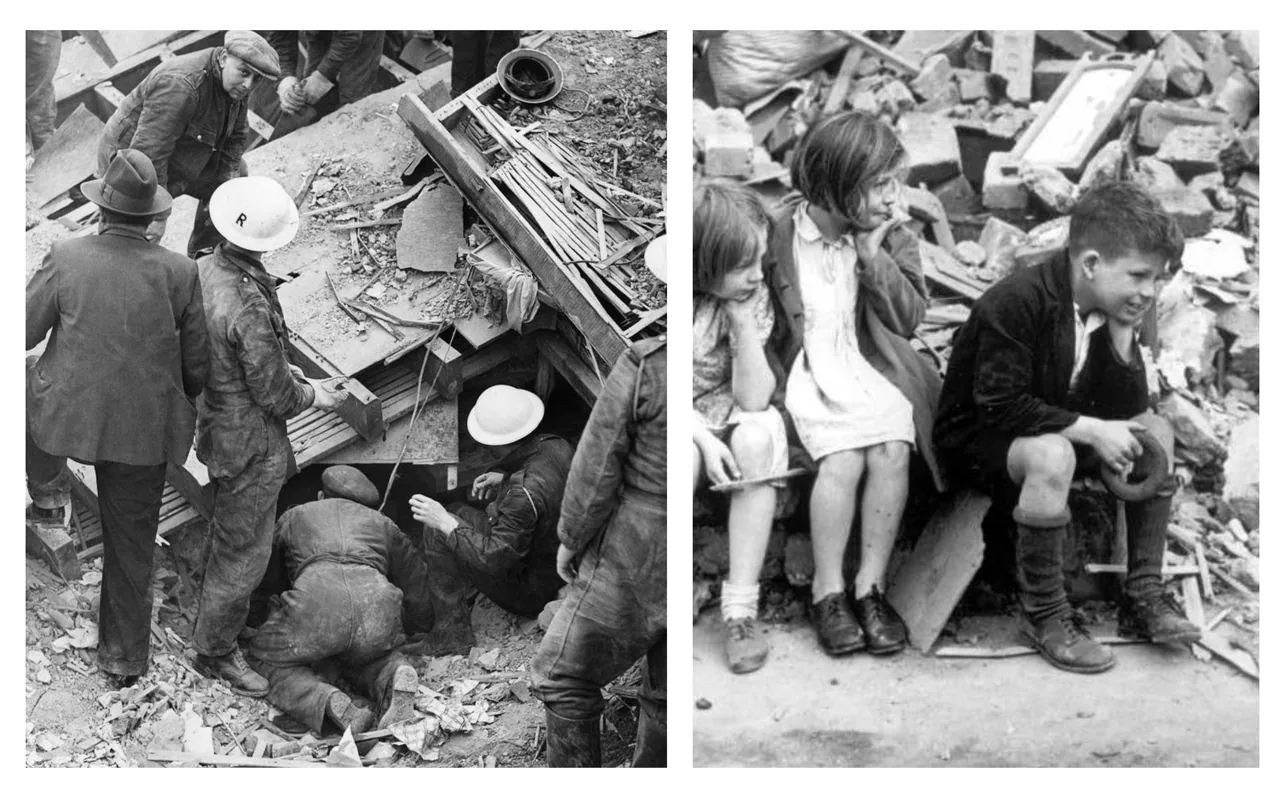
During the Blitz in World War Two, civilians faced devastating bombing raids that forced communities to find innovative ways to protect themselves. In this cross-curricular unit, students explore the historical impact of the Blitz on daily civilian life and investigate how specific structures, such as Anderson and Morrison shelters, were designed and constructed to withstand blast damage.
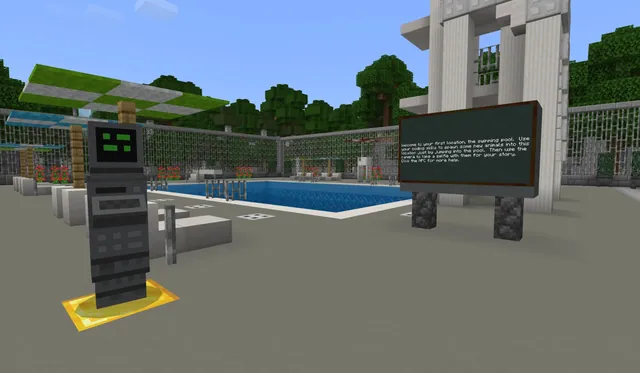
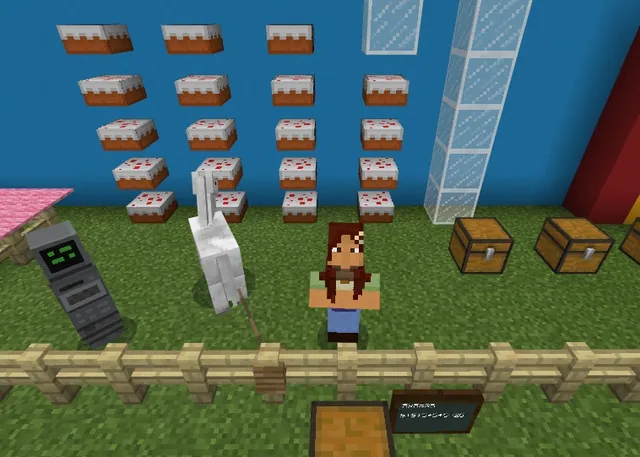
Using Minecraft: Education Edition, students translate historical research and mathematical dimensions into virtual builds. Learners use Code Builder to write algorithms that direct their Agent to construct the core structural elements of their shelters, finish complex details manually, and use in-game communication tools like NPCs and Chalkboards to present their historical research and inspire creative writing.
Learning objectives
By the end of this lesson students will be able to:
- Investigate the impact of the Blitz on civilians and identify structural features of Anderson and Morrison shelters.
- Formulate plans and calculate dimensions for a historical shelter build.
- Apply block-based coding and algorithms in Code Builder to command the Agent to construct shelter components.
- Communicate historical information within Minecraft using Signs, Chalkboards, and Non-Player Characters (NPCs).
- Produce a piece of descriptive, diary, or instructional writing inspired by the completed build.
Blocks and items used in this lesson


Key vocabulary
- The Blitz
- A sustained campaign of aerial bombing attacks against British cities during World War Two.
- Anderson Shelter
- A small shelter made from curved corrugated steel sheets, partially buried in home gardens.
- Morrison Shelter
- An indoor, steel cage-like shelter designed to protect people inside homes if the building collapsed.
- Code Builder
- The coding interface in Minecraft: Education Edition used to write programs and command the Agent.
- Algorithm
- A step-by-step set of instructions or rules followed by a computer to complete a task.
- Agent
- A programmable companion robot inside Minecraft that can place blocks and move based on code.
Before class
Lesson sequence
Suggested timing: about 660 minutes in total.
- Inquiry and Blitz Research120 min
Introduce the Blitz through a video clip to spark inquiry. Have students formulate research questions regarding how civilians coped with bombings and direct them to gather evidence from multiple historical sources.
- Shelter Planning and Blueprinting120 min
Guide students to examine specific shelter designs, notably Anderson and Morrison shelters. Students identify key protective characteristics and draft blueprint designs with precise dimensions to prepare for building.
- Code Builder Fundamentals120 min
Direct students into Minecraft: Education Edition to work through introductory Code Builder tutorials. Learners practice assembling block code algorithms to control the Agent's movement and block placement.
- Coding and Constructing the Shelter180 min
Students use Code Builder to program their Agent to erect the main framework of their planned shelter. Learners then manually add intricate or detailed components that are difficult to automate.
- In-Game Documentation and Writing120 min
Students place Signs, Chalkboards, and NPCs with hyperlinks to explain their shelter's historical features. Afterwards, learners write reflective diary entries, wartime letters, or step-by-step coding instructions based on their builds.
Assessment: success criteria
- The student can describe how the Blitz affected civilians and contrast Anderson and Morrison shelters.
- The student designs a shelter that reflects accurate dimensions and functional protective features.
- The student successfully constructs functional algorithms in Code Builder to direct the Agent.
- The student integrates clear historical explanations using NPCs, Signs, or Chalkboards.
- The student writes a clear diary entry, informational text, or coding guide inspired by the project.
Differentiation
Provide step-by-step pseudocode handouts or grid paper templates to help students plan block dimensions before programming the Agent.
Have advanced students program the Agent to build more complex structural features or configure NPCs with embedded hyperlinks to external research.
Knowledge check
5 questions to check understanding after the lesson. Tap an answer to see if it is right; the score appears at the end.
1What historical event provides the central context for this shelter-building project?
Answer: B. The unit focuses on the Blitz and the dangers faced by civilians during World War Two.
2Which two types of World War Two shelters are specifically highlighted in the lesson?
Answer: C. The learning objectives specifically focus on Anderson and Morrison shelters.
3How do students construct the core structure of their shelter in Minecraft?
Answer: A. Students develop algorithms to program the Agent to build their air raid shelter.
4Which in-game tools are used to present research and link to external information?
Answer: D. The objectives specify sharing information and hyperlinks via NPCs, Signs, and Chalkboards.
5What culminating activity follows the completion of the shelter builds?
Answer: C. Students use the completed builds as a stimulus to write diaries, letters, informational texts, or instructions.
Resources
Frequently Asked Questions
What type of Minecraft world should be set up for this lesson?
A flat grass template or a standard Plains Biome is recommended to provide clear, open ground for surveying dimensions and building shelters.
Must the entire shelter be built using code?
No. Students develop algorithms to have the Agent build the primary structure, but they are encouraged to construct more intricate or complex components manually.
What subjects are covered in this unit?
This unit integrates History (civilian life during the Blitz), Computer Science (algorithms and Agent coding), and Reading and Writing (research and post-build compositions).
Adapted from Surviving the Blitz by Hwb MLCs on Minecraft Education, last updated Jun 13, 2023. This classroom version, the timings and the quiz were written by 9Minecraft Education.