- Type
- Lesson plan
- Subject
- Language Arts
- Topics
- World Languages
- Ages
- Ages 8-18
- Includes
- Quiz: 5 questionsLesson files
How can we use Japanese vocabulary and visual environments in Minecraft to deliver an authentic weather broadcast?
Overview
In this world languages project, students learn to convey meteorological conditions, seasonal contexts, and regional settings using Japanese vocabulary and script. By studying authentic broadcast formats, learners build practical communication skills and script a detailed weather forecast using Hiragana and Katakana.Learning objectives
By the end of this lesson students will be able to:
- Compose a written weather broadcast transcript containing at least thirty sentences in Hiragana and Katakana.
- Speak Japanese accurately to present weather conditions, temperatures, and appropriate clothing.
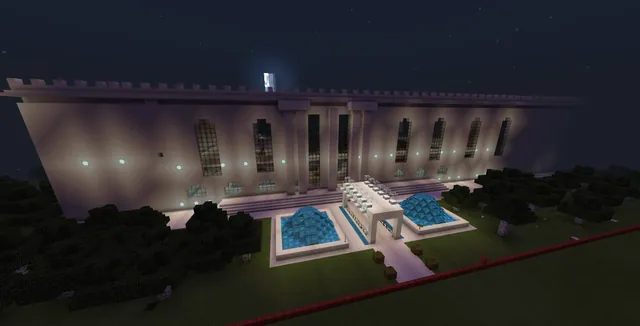
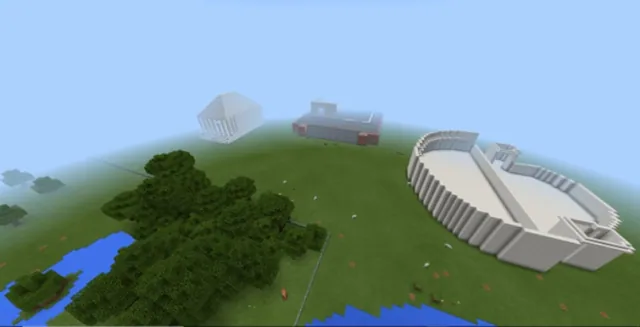
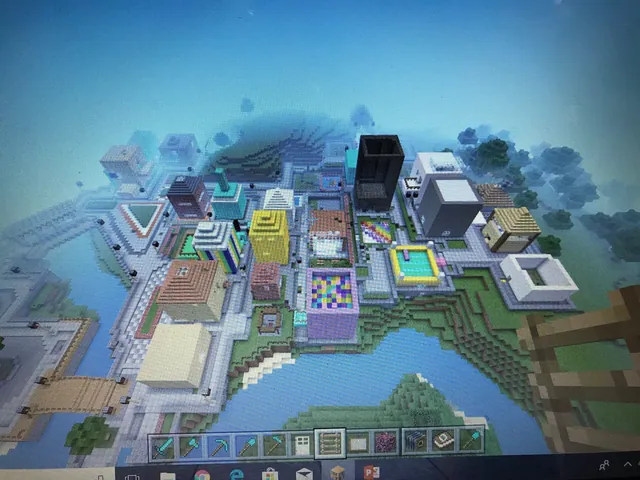
- Construct Minecraft environments representing locations in Japan and dynamic weather conditions.
- Evaluate peer presentations using a rubric focused on problem-solving, creativity, and reasoning.
Blocks and items used in this lesson


Key vocabulary
- Tenki (てんき)
- The Japanese word for weather.
- Ame (あめ)
- The Japanese word for rain.
- Yuki (ゆき)
- The Japanese word for snow.
- Kumori (くもり)
- The Japanese word for cloudy.
- Atsui / Samui (あつい / さむい)
- Japanese terms for hot and cold temperatures.
- Kisetsu / Seasons
- Seasonal terms including Haru (Spring), Natsu (Summer), Aki (Autumn), and Fuyu (Winter).
Before class
Lesson sequence
- Broadcast Analysis and Language Warm-Up
Students watch authentic Japanese and Australian weather broadcasts to study presentation structure, tone, and pacing. The class reviews essential weather questions and descriptions, including phrases such as Tenki wa doo desu ka and seasonal terms.
- Scripting the Forecast
Using textbook resources such as Mirai 2 Chapter 7, students draft their full forecast transcript. The script must reach at least thirty sentences and be written entirely in Hiragana or Katakana, noting locations in Japan, temperature changes, and appropriate clothing choices.
- Minecraft World Building
Students construct backdrops in Minecraft that illustrate their selected Japanese settings, active weather conditions, and seasonal elements. Learners can also capture scenes using the in-game Camera and Portfolio or prepare for video recording.
- Recording the Report
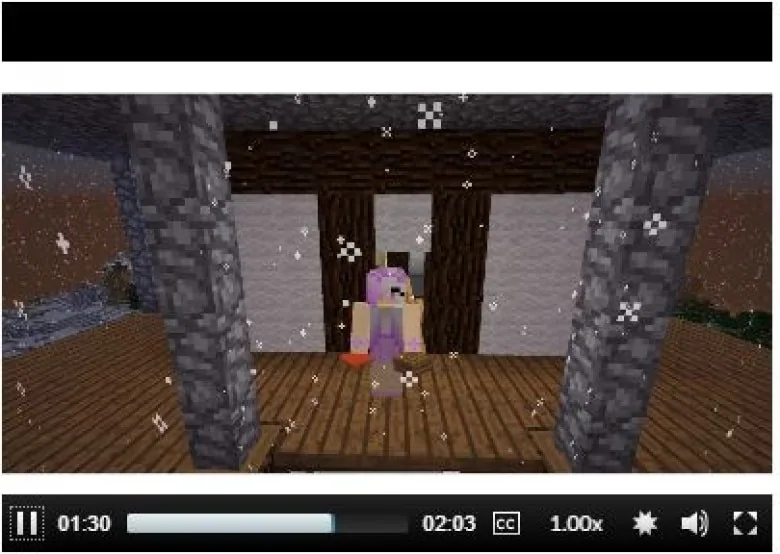
Learners record their spoken Japanese weather report against their Minecraft backdrop. Students display their character's temperature-appropriate attire and showcase simulated weather variations during the delivery.
- Peer Assessment and Reflection
Students submit their written scripts and recorded broadcasts. Working with the creative and critical thinking rubric, peers evaluate projects out of ten marks by discussing the creative process, technical challenges encountered, and solutions used.
Assessment: success criteria
- Written transcript submitted with at least thirty sentences written in Hiragana and Katakana.
- Spoken presentation delivered clearly with accurate Japanese pronunciation of weather terms and sentence patterns.
- Minecraft backdrop clearly visualizes Japanese locations, weather conditions, and suitable clothing.
- Peer assessment completed reflecting on creative decision-making, challenges, and problem-solving.
Differentiation
Allow students to reference sentence stems and vocabulary charts for weather and seasons while drafting their scripts.
Challenge students to describe rapid weather transitions across multiple distinct regions in Japan within their script.
Knowledge check
5 questions to check understanding after the lesson. Tap an answer to see if it is right; the score appears at the end.
1What script system must students use to hand in their 30-sentence written transcript?
Answer: B. The source specifies that the transcript must contain a minimum of thirty sentences written in Hiragana / Katakana.
2What is the minimum sentence requirement for the weather report script?
Answer: C. The assignment guidelines state that the report must contain a minimum of 30 sentences.
3Which Japanese phrase means 'The weather is bad' or 'The weather is awful'?
Answer: A. According to the weather notes, 'Tenki ga warui desu' translates to 'The weather is awful / bad.'
4How are the ten marks for Minecraft creativity evaluated?
Answer: C. The source notes that the ten marks for Minecraft creativity will be marked by peers based on students' ability to discuss their process, learnings, challenges, and solutions.
5What visual evidence should the Minecraft scene demonstrate alongside the weather?
Answer: B. The instructions state students should use Minecraft to demonstrate where they are in Japan, the weather, and what they might be wearing for the temperature.
Resources
Frequently Asked Questions
Do students need expert-level building skills in Minecraft to get top marks?
No. The assessment rubric notes that expert building levels are not required; marks are based on creative application, reasoning, problem-solving, and transferring knowledge into new contexts.
What options are available if students cannot record live video footage?
Students can capture visual evidence from their build using the in-game Camera and Portfolio tools, or create presentations using screen capture and instructional media tools.
What textbooks or curricular references support this weather unit?
Teachers can use Chapter 7 of Mirai 2 or other relevant Stage 5 Japanese language curriculum resources addressing weather vocabulary.
Adapted from Japanese Weather Report by Stacy Lambert on Minecraft Education, last updated Jan 13, 2022. This classroom version, the timings and the quiz were written by 9Minecraft Education.