How can everyday sports and digital stadium design help communicate the importance of good health, education, and peace?
Overview
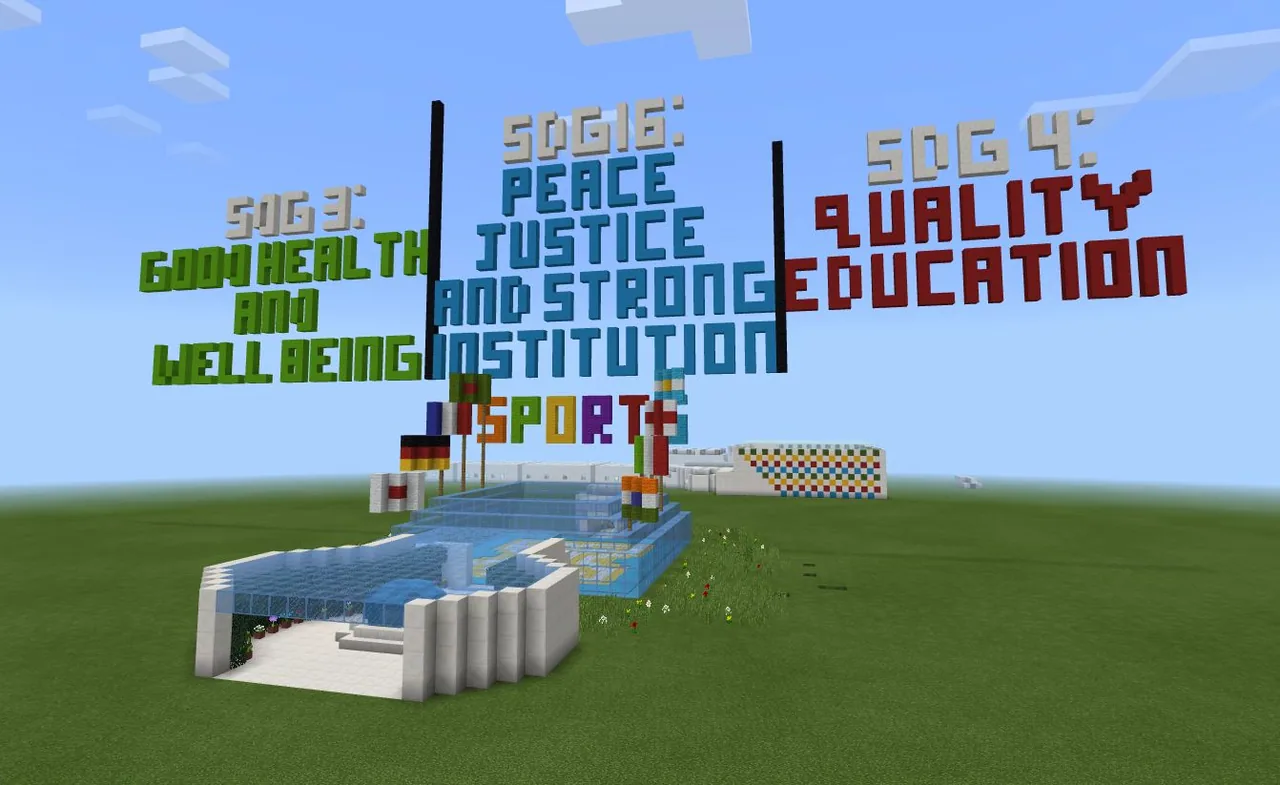
Sports and physical games contribute directly to physical health, mental resilience, and global peace. This lesson connects everyday indoor and outdoor sports to the United Nations Sustainable Development Goals, specifically focusing on Good Health and Well-being (SDG 3), Quality Education (SDG 4), and Peace, Justice, and Strong Institutions (SDG 16). Learners explore how traditional and modern games cultivate values such as teamwork, citizenship, empathy, and strategic thinking.
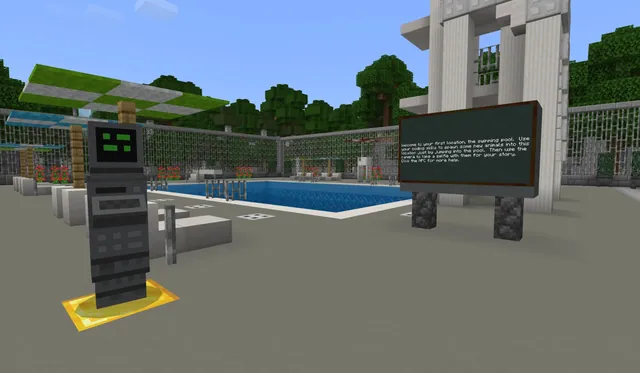
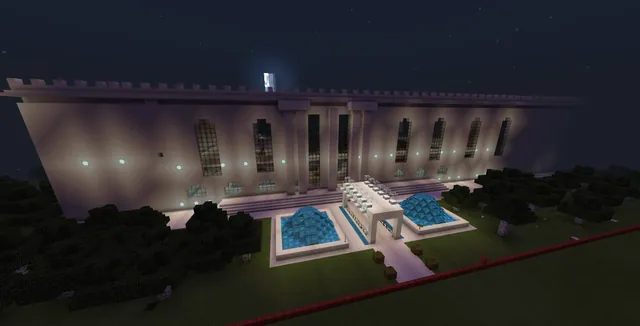
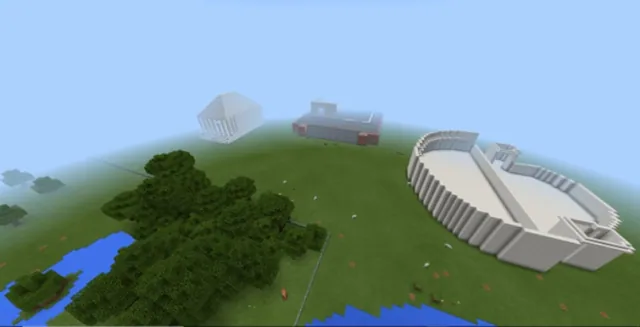
Using Minecraft as a collaborative workspace, students design and build detailed indoor and outdoor stadiums. They highlight games with Indian origins alongside international sports, combining structural design with narrative tools like non-player characters, signs, and boards. Students also incorporate MakeCode and redstone engineering to add automated construction and interactive switches to their sports facilities.
Learning objectives
By the end of this lesson students will be able to:
- Identify indoor and outdoor sports played in India and connect their benefits to SDG 3, SDG 4, and SDG 16.
- Construct accurate indoor and outdoor sports infrastructure using Minecraft building and world-editing tools.
- Present research, game rules, and health benefits using in-game narrative items such as slates, posters, boards, signs, and NPCs.
- Apply MakeCode and redstone circuitry to build stadium components and interactive mechanisms.
Blocks and items used in this lesson


Key vocabulary
- Sustainable Development Goals (SDGs)
- A set of global targets that promote health (SDG 3), education (SDG 4), and peace (SDG 16).
- NPC (Non-Player Character)
- An in-game guide placed in a world to deliver dialogue, background information, or instructions.
- Redstone
- A Minecraft element that functions like electrical wiring to power devices and switches.
- MakeCode
- A block and text coding environment used to automate structural building in Minecraft.
Before class
Lesson sequence
- Research and Project Planning
Introduce the connection between everyday athletics and UN goals SDG 3, SDG 4, and SDG 16. Students select indoor sports (such as chess, carrom, ludo, wrestling, swimming, or billiards) and outdoor sports (such as cricket, basketball, football, badminton, or tennis). Learners research each sport's origins, rules, and physical or mental benefits, then outline their stadium layouts.
- Stadium Layout and Narrative Development
Students begin constructing their indoor and outdoor arenas using Minecraft blocks. Teams equip their builds with narrative items—including slates, posters, boards, signs, and NPCs—to communicate the history, physical fitness benefits, and character-building aspects of each sport.
- Coding and Redstone Integration
Learners use MakeCode to generate large repetitive stadium elements quickly, then refine the details by hand. As an interactive feature, students install redstone mechanisms, such as switch-operated lighting or arena systems, to enhance the visitor experience.
- Peer Review and Presentation
Students host classmates in their completed sports complexes to test interactivity and read the accompanying narrative texts. Teams explain their structural decisions, receive feedback, and prepare their virtual environments to share with a broader audience.
Assessment: success criteria
- Stadium builds include sports-specific infrastructure suitable for each chosen indoor or outdoor game.
- Narrative items (NPCs, boards, slates, posters, signs) clearly articulate the game's benefits and links to SDG 3, 4, or 16.
- Students can explain their layout choices and how sports contribute to physical and mental well-being.
- Redstone circuitry functions as intended, such as an interactive mechanism operated by a switch.
Differentiation
Provide a structured planning sheet with designated sports and pre-written narrative prompts before students build.
Have advanced learners use MakeCode to script complex seating stands and design advanced redstone systems with multiple activated components.
Knowledge check
5 questions to check understanding after the lesson. Tap an answer to see if it is right; the score appears at the end.
1Which three Sustainable Development Goals are central to this sports project?
Answer: B. The project specifically targets SDG 3 (Good Health), SDG 4 (Quality Education), and SDG 16 (Peace).
2Which group of indoor games is identified in the lesson as originating in India?
Answer: A. The source identifies chess, carrom, ludo, and wrestling as sports originating in India that are now played globally.
3What is the primary function of slates, posters, boards, and NPCs in this project?
Answer: C. These elements are Minecraft narrative tools used to present information, storylines, and educational content.
4How does the lesson suggest using MakeCode during the construction phase?
Answer: D. The lesson advises students to use MakeCode for basic big structures to make building more efficient.
5What engineering task is suggested to test students' critical thinking with redstone?
Answer: A. The assessment suggests challenging students to create a redstone circuit that can be activated or deactivated by a switch.
Resources
- Lesson package (.zip)Everything the author attached to this lesson in one download.
- Everyday Sports A Precursor to Good Health, Quality Education and Peace
- Lesson worldOpens the world page in Minecraft Education (sign-in with a school account may be needed).
Frequently Asked Questions
How can teachers adapt this lesson if students do not have coding experience?
Students can construct their stadiums manually using standard building blocks or in-game commands like clone and fill, reserving MakeCode as an optional extension for those with programming skills.
Does this lesson support collaborative group work?
Yes, the project is structured for teamwork, allowing students to divide responsibilities such as researching SDGs, writing narrative texts, engineering redstone, and constructing sports fields.
Adapted from Everyday Sports by Monica Joshi on Minecraft Education, last updated Mar 27, 2023. This classroom version, the timings and the quiz were written by 9Minecraft Education.