- Type
- Build challenge
- Duration
- about 60 min (suggested)
- Includes
- Quiz: 5 questionsMinecraft world
What conditions and resources are required to establish a sustainable habitat on a newly discovered planet?
Overview
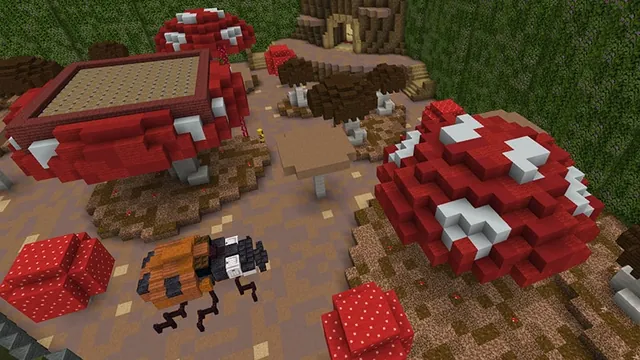
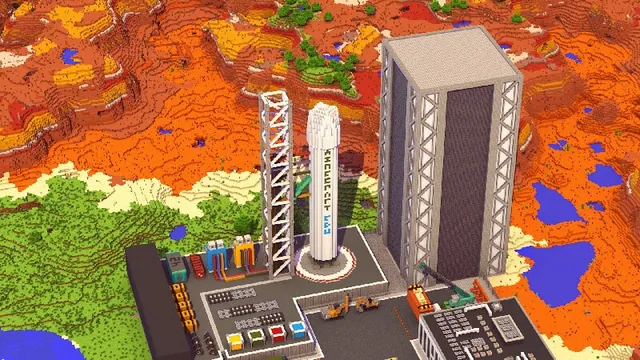
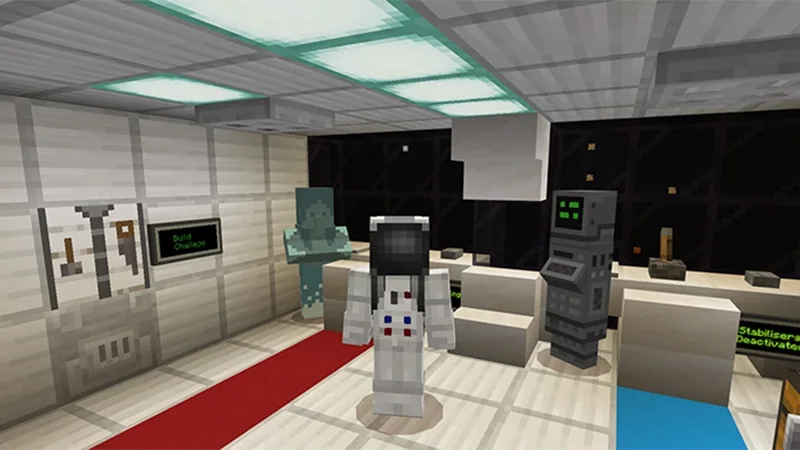
In this Earth and space science challenge, students roleplay as research scientists tasked with surveying three alien worlds. Learners examine unfamiliar environments to determine whether conditions can support living organisms, focusing on human survival requirements and the capacity to cultivate food crops.
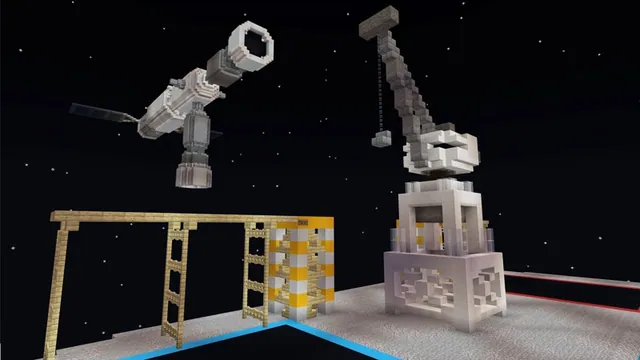
Using Minecraft, students scout planetary surfaces and switch to creative mode to design an extraterrestrial research station. They incorporate life-support concepts into their builds and record their architectural and environmental observations using a book and quill.
Learning objectives
By the end of this activity students will be able to:
- Evaluate three alien planets to determine whether their environments can support living organisms.
- Design and construct a functional base equipped to sustain human life and crop production.
- Document structural features and environmental observations using an in-game book and quill.
- Compare the survival and resource requirements of humans, plants, and animals in an alien habitat.
Blocks and items used in this lesson


Key vocabulary
- Trappist-1
- A real-world star system known for hosting multiple rocky, Earth-sized planets.
- Sustaining Life
- Providing the necessary food, water, air, and environmental conditions for organisms to survive.
- Book and Quill
- An in-game Minecraft item that allows players to write and edit multi-page text notes.
Before class
Lesson sequence
Suggested timing: about 60 minutes in total.
- Mission Briefing10 min
Introduce the mission scenario: students are scientists sent to assess three new planets. Discuss the basic needs of humans, plants, and animals, establishing what essential systems a base must provide.
- Planetary Reconnaissance15 min
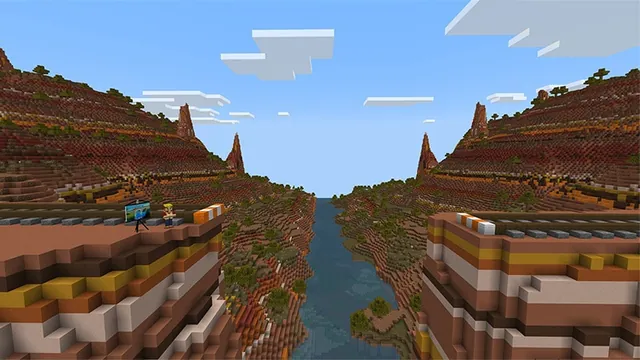
Students explore the three different planets in the challenge map, taking note of terrain differences and assessing whether crops like potatoes could successfully grow in each location.
- Base Construction25 min
Students switch to creative mode, select their preferred planet, and construct an outpost equipped with life-sustaining systems such as farming chambers, living quarters, and water storage.
- Documentation and Reflection10 min
Students open a book and quill to describe the primary features of their station, explain how it keeps inhabitants alive, and state their final verdict on the planet's habitability.
Assessment: success criteria
- Student explores all three distinct planets in the challenge world.
- Student constructs a base containing systems designed for human shelter and food cultivation.
- Student records planetary observations and outpost features using a book and quill.
Differentiation
Provide a simple checklist of essential outpost features, such as an airtight shelter and a dedicated potato garden, to guide the build.
Have students research a real Trappist-1 planet to calculate its year length compared to Earth and estimate the exact food and water needed for a human mission.
Knowledge check
5 questions to check understanding after the lesson. Tap an answer to see if it is right; the score appears at the end.
1What role do students assume during the Trapped in Trappist challenge?
Answer: B. The brief explicitly directs students to become scientists exploring new planets.
2How many alien planets are available for students to explore in this challenge?
Answer: D. The challenge asks students to explore three new planets.
3Which crop is specifically mentioned as a test for sustaining life on the planets?
Answer: B. The source specifies determining if each planet is suitable for sustaining life and growing potatoes.
4Which in-game tool are students instructed to use to record their base features?
Answer: C. The extensions instruct students to use the book and quill to document the various features of their base.
5What real-world planetary system is featured in the research extension?
Answer: A. The extension activity directs students to research one of the planets in the Trappist-1 system.
Resources
Frequently Asked Questions
Should students build in survival mode or creative mode?
While students start by exploring the planets, the extension recommends switching to creative mode to design the outpost and focus on structural planning.
Who created the map used in this challenge?
The Trapped in Trappist challenge world was designed by Block Builders for Minecraft Education.
Adapted from Trapped in Trappist by Minecraft Education on Minecraft Education, last updated Oct 2, 2026. This classroom version, the timings and the quiz were written by 9Minecraft Education.