- Type
- Build challenge
- Subject
- Science
- Topics
- ScienceBiology and Life
- Duration
- about 70 min (suggested)
- Skills
- CommunicationCreativity
- Includes
- Quiz: 5 questionsMinecraft world
How do an insect's physical structures and habitat help it survive in its environment?
Overview
Viewing the natural world from the perspective of an insect allows students to investigate biological structures, environmental requirements, and survival adaptations. Through careful observation of insect anatomy and behavior, learners discover how small organisms navigate their surroundings and meet fundamental life needs.
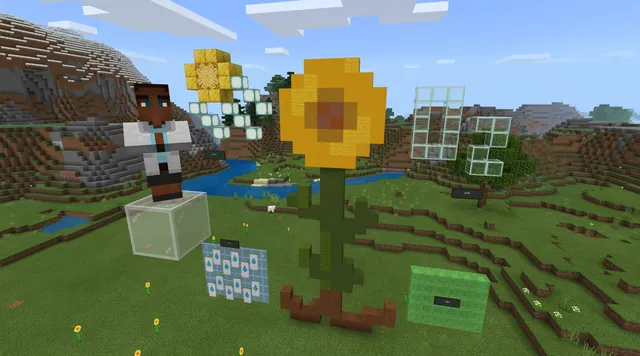
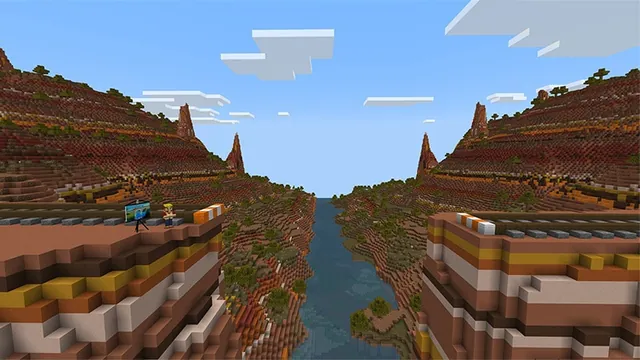
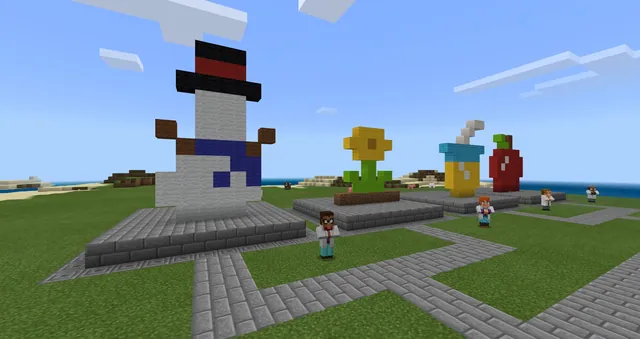
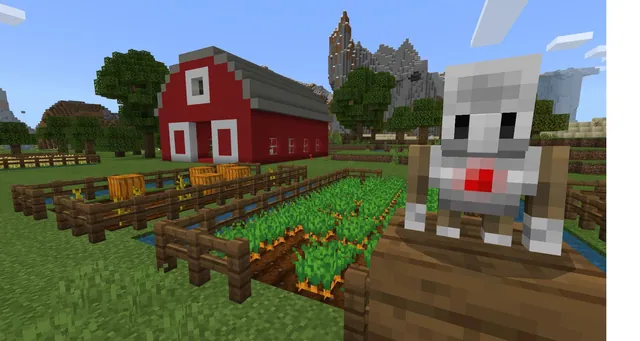
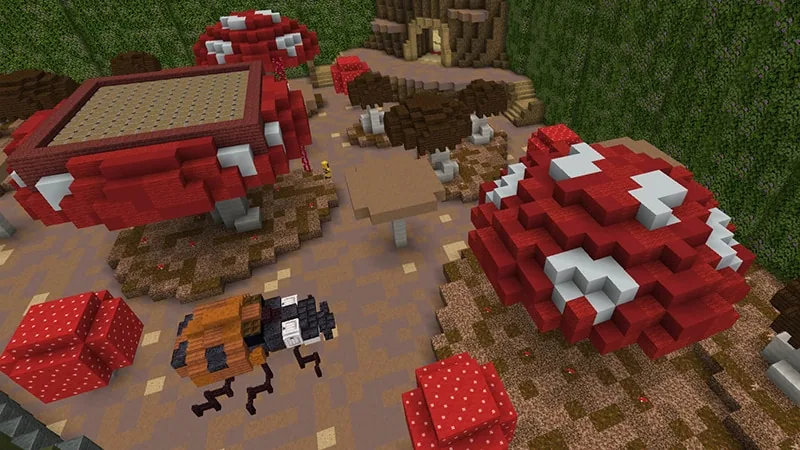
Using Minecraft Education, students shrink down to insect scale within four larger-than-life biomes. Learners construct realistic insects with labeled anatomical features, invent novel creatures, assemble habitats with necessary survival resources, or model life cycle stages such as butterfly metamorphosis.
Learning objectives
By the end of this activity students will be able to:
- Build a detailed model of a realistic or invented insect within an oversized biome.
- Label anatomical body parts of an insect build to demonstrate scientific observation.
- Design an expanded habitat that provides food, water, shelter, and protection from predators.
- Communicate life science concepts through life cycle models or perspective-based storytelling.
Blocks and items used in this lesson


Key vocabulary
- Biome
- A large community of plants and animals occupying a distinct geographic region.
- Habitat
- The natural environment that supplies an organism with food, water, shelter, and protection.
- Metamorphosis
- The process of physical transformation from an immature form to an adult, seen in insects like butterflies.
- Observation
- The careful watching and recording of an organism's physical features and behaviors.
Before class
Lesson sequence
Suggested timing: about 70 minutes in total.
- Observe and Sketch10 min
Introduce the perspective of shrinking down to insect scale. Have students examine real insects outdoors or using reference photos and videos, sketching their subject, labeling key parts, and noting behaviors.
- Biome Exploration10 min
Students enter the Minecraft world to explore the four larger-than-life biomes. Encourage them to consider how a miniature organism interacts with enormous environmental features.
- Bug Construction25 min
Students choose their build challenge: assemble a realistic insect and label its body parts, invent an original creature, or recreate a scene from a favorite bug story.
- Habitat and Life Cycle Extension15 min
Learners expand their builds by adding an appropriate habitat with food, water, shelter, and predator protection, or by constructing stages of an insect life cycle such as metamorphosis.
- Share and Reflect10 min
Students present their completed insect models and environments to peers, explaining anatomical labels, habitat adaptations, or sharing a brief narrative told from their insect's point of view.
Assessment: success criteria
- The student constructs an insect model showing distinct physical structures.
- The student accurately labels the anatomical parts of their insect build.
- The student includes essential survival resources (food, water, shelter, predator protection) in their habitat design.
- The student communicates clear biological observations or narrative details during their presentation.
Differentiation
Provide an anatomical reference card with labeled insect body sections for students to follow block by block.
Have students build each stage of an insect's life cycle in sequence or write and stage a story showing challenges their insect faces.
Knowledge check
5 questions to check understanding after the lesson. Tap an answer to see if it is right; the score appears at the end.
1What point of view do students adopt during this build challenge?
Answer: C. The challenge asks students to shrink down to the size of a bug to explore oversized biomes.
2How many larger-than-life biomes are available for students to explore?
Answer: A. The introduction states that students explore four larger-than-life biomes.
3What documentation task should students complete when constructing a realistic insect?
Answer: B. The challenge specifies building realistic insects and labeling their body parts.
4What four elements must students include when designing an expanded bug habitat?
Answer: D. The habitat extension requires students to incorporate food, shelter, water, and predator protection.
5Which insect process is highlighted in the life cycle extension?
Answer: B. The extension lists butterfly metamorphosis as an example of an insect life cycle model.
Resources
Frequently Asked Questions
Are students required to build only real insects?
No. Students can build realistic insects with labeled parts, recreate scenes from bug literature, or invent their own original creatures.
How can students label insect anatomy in Minecraft?
Students can place in-game signs, slates, or posters next to individual body parts to display their anatomical labels.
What subjects does this lesson connect to?
The lesson covers Science, Biology and Life, with creative storytelling extensions linking into language arts.
Adapted from Build a Bug by Minecraft Education on Minecraft Education, last updated Sep 10, 2026. This classroom version, the timings and the quiz were written by 9Minecraft Education.