- Type
- Build challenge
- Subject
- Science
- Topics
- Science
- Duration
- about 60 min (suggested)
- Includes
- Quiz: 5 questionsMinecraft world
How can we design and implement practical solutions to prevent food waste in our homes, schools, and local communities?
Overview
Roughly one third of all food produced for human consumption worldwide is lost or wasted each year, totaling nearly 1.3 billion tons. Addressing this issue requires critical thinking, responsible citizenship, and community-wide collaboration to change how food is managed from source to disposal.
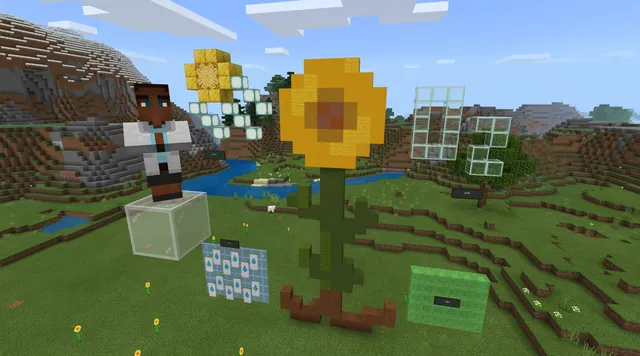
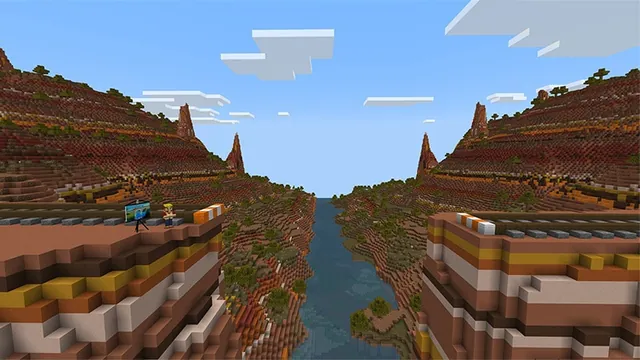
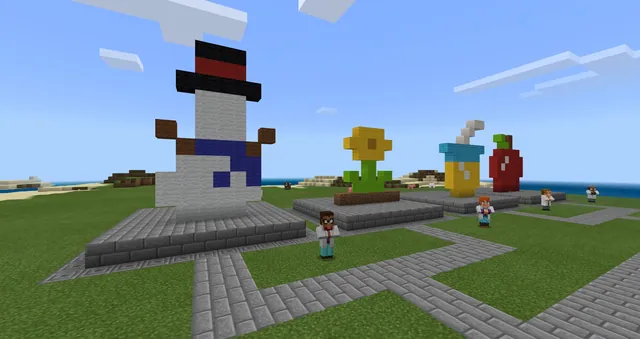
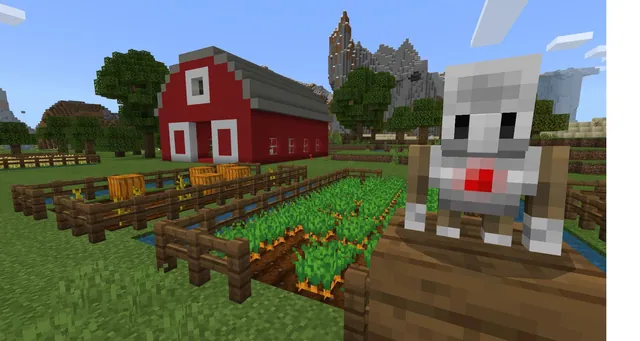
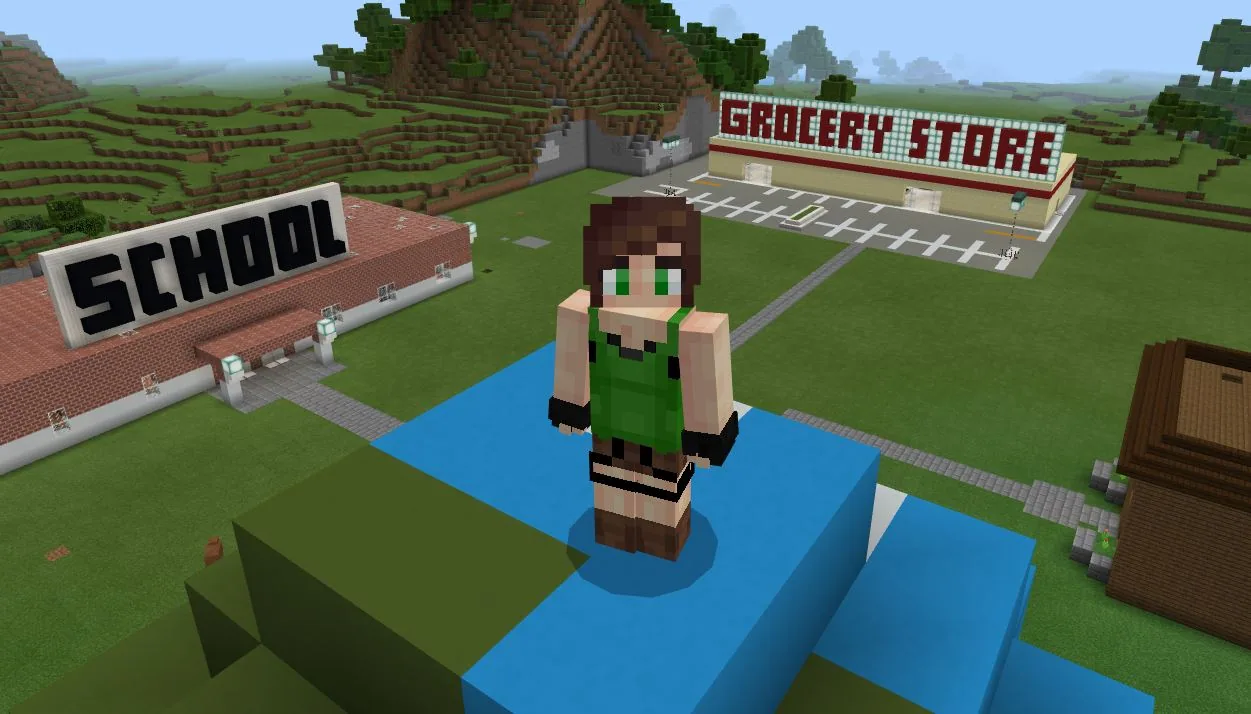
In this activity, students use a Minecraft starter world to design, construct, and document practical systems for cutting down food waste. By building models of solutions for households, cafeterias, and neighborhoods, learners connect real-world science concepts with actionable civic habits.
Learning objectives
By the end of this activity students will be able to:
- Identify the global scale and impact of food waste on human consumption and resources.
- Research proactive methods to prevent and reduce discarded food using reference materials.
- Build model solutions in Minecraft targeting food waste at home, in school, or across the community.
- Document conservation ideas using in-game tools such as the camera, portfolio, or display boards.
Blocks and items used in this lesson


Key vocabulary
- Food Waste
- Edible food intended for human consumption that is discarded or left uneaten.
- Consumption
- The act of using, eating, or drinking resources and goods.
- Proactive
- Taking action to prevent a problem before it happens rather than waiting to react.
Before class
Lesson sequence
Suggested timing: about 60 minutes in total.
- Discover10 min
Introduce the global food challenge: inform students that roughly one third of all food produced globally, or 1.3 billion tons, ends up lost or wasted each year. Discuss where food gets wasted most often in daily life, such as home kitchens or school cafeterias.
- Research & Brainstorm15 min
Have students work in pairs to explore proactive solutions using resources such as the WWF Food Waste Warrior Tool Kit. Encourage groups to brainstorm at least three distinct interventions covering the home, school, and wider community.
- Build Solutions25 min
Students enter the starter world to construct their chosen waste-reduction interventions. Builds can include home preservation stations, school cafeteria sorting systems, or neighborhood food redistribution centers.
- Document & Share10 min
Learners use in-game cameras, chalkboards, and poster boards to explain how their builds function. Optionally, students record a short walkthrough video or export portfolio images to share their ideas with peers.
Assessment: success criteria
- The build clearly demonstrates a feasible method to reduce food waste in a home, school, or community setting.
- The student accurately explains the scale of global food loss using data from class research.
- In-game documentation, such as boards or camera photos, clearly describes how the designed system works.
- The student demonstrates collaborative problem-solving and responsible digital citizenship during the activity.
Differentiation
Allow students to focus their design exclusively on a single setting, such as a school cafeteria, using basic signs to explain their ideas.
Encourage students to design an integrated three-part system connecting home, school, and community, and present it through a recorded video walkthrough.
Knowledge check
5 questions to check understanding after the lesson. Tap an answer to see if it is right; the score appears at the end.
1Approximately how much of the food produced for human consumption is lost or wasted worldwide each year?
Answer: C. Globally, about one third of all food produced for human consumption is lost or wasted.
2What is the estimated total weight of food wasted around the globe annually?
Answer: A. The global annual total of lost or wasted food equals roughly 1.3 billion tons.
3Which educational toolkit is recommended as a research resource for this challenge?
Answer: B. The source specifically suggests the WWF Food Waste Warrior Tool Kit for researching proactive steps.
4Which three areas are students asked to target when building waste reduction solutions?
Answer: B. The challenge asks students to design and document ways to reduce food waste in their home, school, and community.
5What in-game tools are suggested to help students record and explain their designs?
Answer: D. The source suggests using boards, cameras, or video capture to document and share the build.
Resources
Frequently Asked Questions
Do students need to build solutions for all three settings?
Students can collaborate to cover home, school, and community spaces together, or individual learners can focus on one specific area depending on available class time.
How can students share their finished work outside of Minecraft?
Students can export photos captured with the in-game camera into portfolios, record video walkthroughs, or post their work to approved school sharing platforms.
Adapted from Zero Waste by Minecraft Education on Minecraft Education, last updated May 23, 2025. This classroom version, the timings and the quiz were written by 9Minecraft Education.